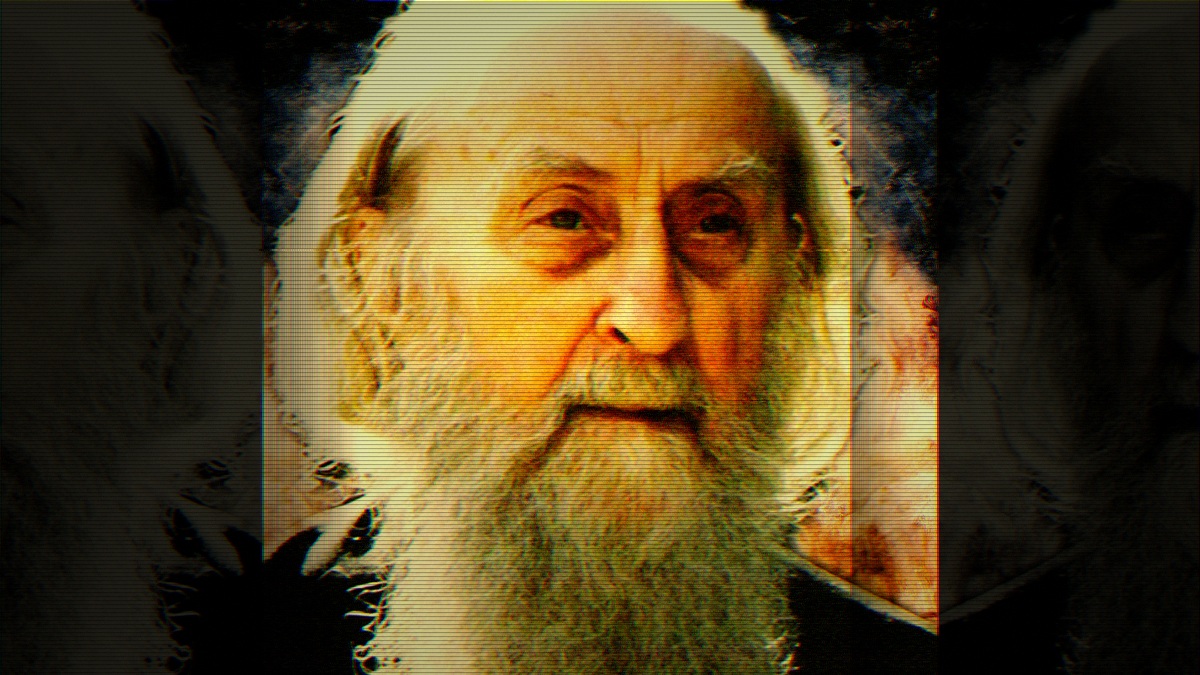
If I ascend up into heaven, thou art there. If I make my bed in hell, behold, thou art there. (Psalm 139:8)
On a trip to Constantinople, now Istanbul, until God returns it to Holy Orthodoxy, as prophesied, I met a man standing outside a Sufi lodge. He did not beg; he simply stood, handing out pamphlets and watching tourists go in for the evening. He had no official ties to the lodge. He had come on his own, guided by what he called destiny. Before this, he had explored yoga, qigong, and meditation, seeking the mystical without ever encountering the Cross, until a chance meeting with a Sufi dervish drew him back into the Islamic faith he had abandoned in youth. I never learned his name. I only remember his eyes, the look of someone who had been waiting outside a door for a long time and had stopped expecting it to open for him, though he still believed something real was happening on the other side. I recognized that look. I had worn it myself, in different cities, before different doors.
By the time I stood near that lodge, I had already run through most of the doors a restless Western mind runs through. I had spent my teenage years running from Christ, specifically, not vaguely, the way you run from a person you suspect exists and might want something from you. Atheism carried me through my twenties. Then came the technique years, a syncretic crawl through yoga, lucid dreaming, Tibetan deity work, and meditation, each a stop on the same escape from Christ, another small rebellion against religion dressed up as an honest search. I sat with Transcendental Meditation the way many creatives my age did, treating a mantra and a cushion as a kind of spiritual multivitamin. For a while, I let myself drift close enough to Freemasonry to understand its appeal from the inside rather than as a caricature, tempted by the promise of hidden knowledge that might help me understand my belief in God again, an initiation into something realer than the world everyone else was stuck in.
None of it delivered what it promised. What pulled me back toward God, oddly, was philosophy rather than any religious experience at first. I began with Aristotle and then the Neoplatonists, who at least had the honesty to insist that the world failed to explain itself and that whatever stood behind it had to be Something rather than nothing. By then, I had moved to Asia, where a series of moral failures shattered whatever illusion I still had that all realities are visible. That gave me the kind of distance from my own culture that makes its substitutes look more like substitutes. I told myself I was seeking wisdom. I was mostly polishing my ego without truly crucifying it, dressing up the same old hunger in better vocabulary. The actual turn, when it came, felt less like an argument winning and more like something I had been resisting simply showing up, where I could no longer pretend not to see it, Christ saving my soul at what felt like the last possible moment. At the far end of that philosophical turning, I was given something I still find hard to discuss without either inflating it or hiding from it, a phenomenon I would only later have the vocabulary to even begin to name, brief and unearned and impossible to argue myself out of afterward, a fleeting experience that helped me understand the Apostle Paul’s story more deeply than any commentary ever had, through lived experience rather than through online apologetics. I understand now why his account includes a road and a light, and a long period afterward of being unable to see clearly in the “ordinary” way. Conversion is not gentle. It rearranges what you thought you were standing on.
I tell you this because I think the man outside the Sufi lodge and I were chasing the same thing, a search for transcendence without repentance, for God without the Crucifixion. So is almost everyone you know who has ever tried a breathing technique, a psychedelic retreat, a yoga teacher training, a guided meditation app, a tarot deck, or a lodge. The hunger is not fake. The hunger is, if anything, the most honest thing about modern people. What is fake, or at least unfinished, is almost everything currently being sold to satisfy it, the propaganda that opposes repentance, accountability, the Cross, and the Truth found in the One, Holy, Catholic, and Apostolic Church, while pretending to offer something deeper than what that Church already holds. The proof of that is a Russian painter named Sergei Sakharov, who pursued the same hunger more intensely than almost anyone I have read about, found exactly what the man outside the lodge and I were circling, and eventually became a saint of the Church under the name Sophrony.
I pray that the man outside the lodge will not be trapped there forever, and that his hunger will one day be satisfied by Truth Himself rather than by yet another substitute for Him. In times like these, we need saints who have traveled that same crooked road, who understand the cost of delusion and the strength of repentance, because even our wanderings can become the gymnasium of the soul if they lead us home.
The Painter Who Wanted More Than Beauty
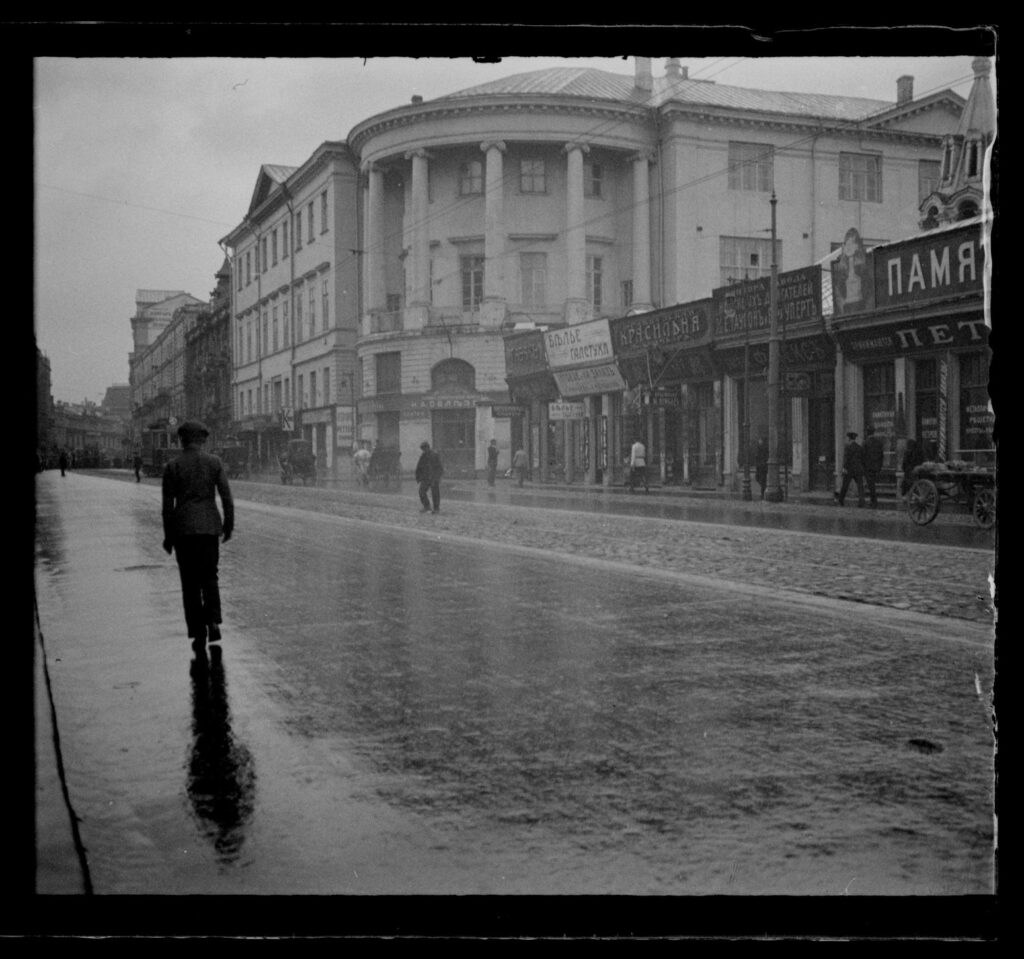
Sakharov was born in Moscow in 1896 into a large Orthodox family, the kind in which a child’s early years are steeped in church attendance without the child’s choosing. He showed real talent for painting, studying at the Academy of Arts and later at the Moscow School of Painting, Sculpture and Architecture. Like many serious artists, he came to think of beauty as a path toward something beyond beauty, a way of breaking through ordinary appearances into what he would later call the Eternal.
St. Sophrony himself later named the trap that such a combination of gifts sets. Looking back on his youth, he confessed that he had been drawn more than once to counterfeit lights that are not the true Light at all, such as the light of artistic inspiration, the light of philosophical contemplation, and the light of scientific knowledge. These lights can feel luminous and convincing in the moment but pale completely next to the Uncreated Light once a person has actually seen the real thing. A painter’s gift and a philosopher’s appetite are not sins. They are simply not the same as God, and St. Sophrony spent years learning that the hard way before he found out what was.
During that same period of his life, still young, he decided that Christianity’s idea of love was too small. A finite, personal love seemed to him a limitation rather than a gift, and he turned instead toward the Eastern religions’ impersonal Absolute, the idea of a formless ground of being behind all particular things, the kind of teaching that tells you your deepest self is already identical with ultimate reality and that the work is simply to stop mistaking yourself for something smaller.
He left Russia in 1921, partly to continue working as an artist in a place where the revolution had not yet swallowed the art world. He traveled first through Italy and then Germany before settling in France the following year. He eventually exhibited paintings at two of Paris’s serious salons in 1923 and 1924. The years that produced this crisis were not gentle. He had come of age during the First World War and the Russian Civil War, watching the world tear itself apart on a scale that made the question of whether human life meant anything at all feel less like an abstraction and more like an emergency. He wondered, in language he later used about himself, whether the human person might simply be marked for extinction, swallowed into nothing.
Suicide in the Metaphysical Sense
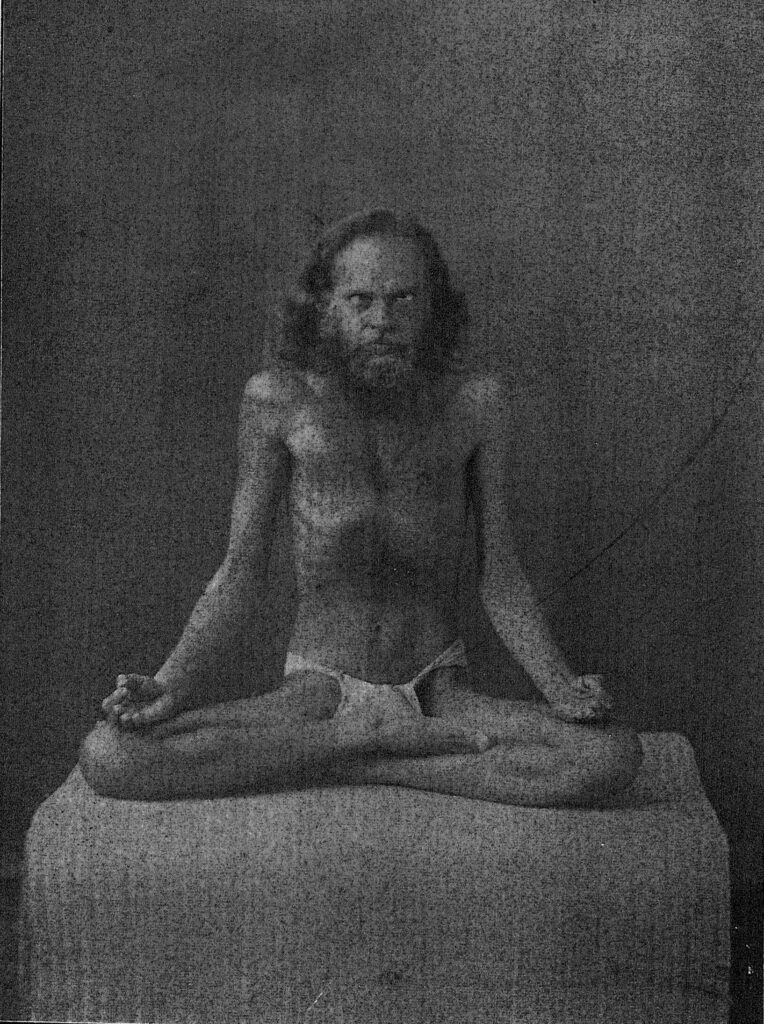
St. Sophrony names what he was doing with more precision than people often credit him with. He calls it transcendental meditation directly, in his own words, describing seven or eight years devoted to the practice. Beyond that, he describes the wider current he had fallen into only in general terms, as the mystical philosophy of the non-Christian East, without sorting it into any specific named tradition. His later theological heirs draw out the deeper architecture underlying that current. Fr. Nikolaos Loudovikos, a professor at the University Ecclesiastical Academy of Thessaloniki and a visiting professor at the University of Balamand and Cambridge’s Institute for Orthodox Christian Studies, makes a distinction in an academic article on St. Sophrony’s theology that does the comparative work for us. There are two kinds of mystical ecstasy in the Greek tradition itself, he argues. One is Platonizing ecstasy, descending from Origen and running parallel to the philosophical mysticism of Plotinus, in which the soul is already secretly divine, trapped in a body and a material world it experiences as foreign, and the goal of contemplation is escape, a recovery of an essence the soul never really lost. The other is Hesychast ecstasy, running from the Cappadocian Fathers through St. Dionysius the Areopagite and St. Symeon the New Theologian to its fullest expression in St. Maximus the Confessor and St. Gregory Palamas, and it works entirely in the opposite direction. The soul ascends to God precisely by descending further into creation rather than fleeing it, embracing the body, the passions once they are transformed rather than annihilated, and other people, rather than treating any of that as an obstacle to burn through. St. Sophrony, Loudovikos argues, stands squarely in this second lineage, a hesychast in the full Palamite and Maximian sense. The first kind of ecstasy, the Platonizing kind, is structurally almost identical to what a great deal of modern non-dual spirituality asks people to do today: dissolve the person, recover the always-already-divine self, and treat the particular and the bodily as the thing standing between you and the truth. St. Sophrony was naming, from within his own life, the oldest version of an error that keeps recurring because the hunger beneath it keeps recurring, too.
He later diagnosed his own state with brutal clarity. He had been chasing a sense of absoluteness within himself, a divine nature that required no other God, the project of dissolving the particular person into what he called the nameless ocean of pure being. He went further still, calling the whole project, in his later words, a kind of suicide in the metaphysical sense. Not because meditation itself is evil, but because what he was actually attempting was the erasure of the one thing Christianity insists cannot and must not be erased, the person, in exchange for a state that felt like peace but was actually a kind of well-organized self-extinction.
The Sentence That Broke the Spell
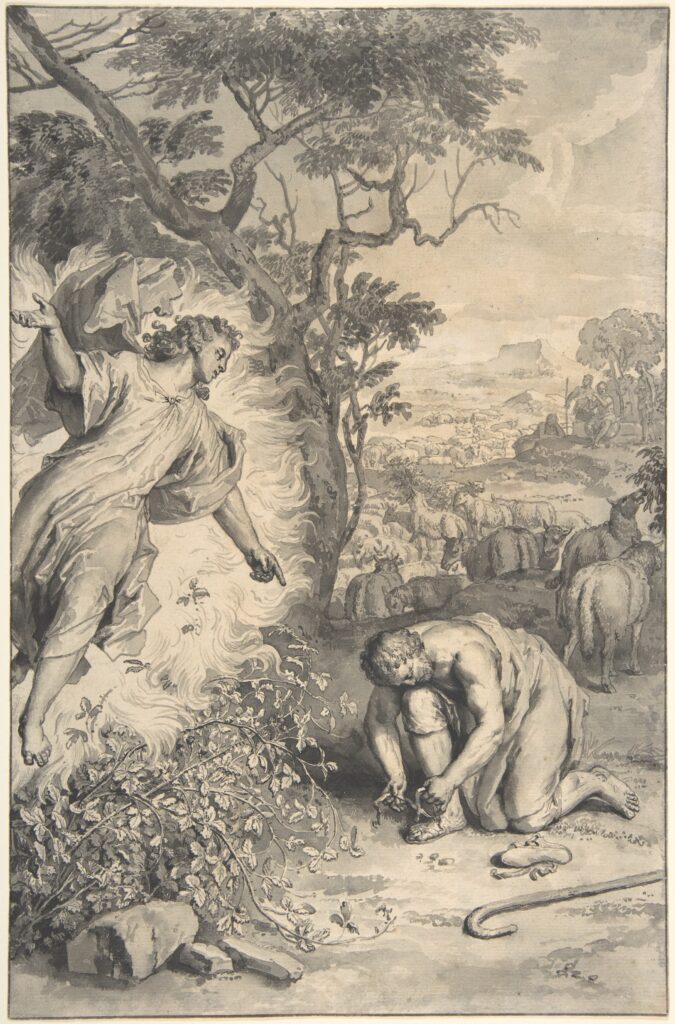
What actually broke the spell in St. Sophrony’s case was a sentence rather than an experience. He had been pursuing what he believed was the impersonal Absolute, and somewhere in the middle of his search, the words God spoke to Moses from the burning bush reached him with a force he had not expected. I AM THAT I AM. By his own account, he came to understand that the absolute being he had been seeking through Eastern techniques was, all along, a Person. The very Person who had spoken those words to Moses, the personal God of Christianity, turned out to be the true content of the abstraction he had been chasing through someone else’s metaphysics. This is the hinge on which the rest of his life turns. The Absolute turns out to be Somebody, and Somebody can be met, addressed, and loved, in a way that an ocean of pure being cannot.
The fruit of that realization arrived on a Holy Saturday in Paris, though by his later admission, St. Sophrony could not be entirely certain of the year, though he believed it was 1924. He experienced what Orthodox tradition calls the Uncreated Light, the same divine illumination the Gospels describe as overtaking Christ on Mount Tabor, not a created brightness but God’s own glory made perceptible to a human being. He described it later, in the careful and slightly formal way he often used when speaking about himself, as a touch of divine eternity on his spirit, gentle and full of peace, that stayed with him for three days and drove out what he called the darkness of unbeing that had stood before him his whole adult life. Those who knew him well later counted four things that mark anyone who has actually been given to see that Light rather than merely feeling moved by it, not emotions but real and recognizable fruits, namely humility, a habit of praying for the whole world rather than only for oneself, a love for one’s enemies that is more than theoretical, and theology in the oldest sense of the word, the kind that comes from having met God rather than from having read about Him. St. Sophrony stopped exhibiting paintings after that. Within a year, he had enrolled at the St. Sergius Orthodox Theological Institute in Paris, sitting under serious theologians of the Russian emigration. In that same year, he abandoned formal academic study as well, judging it bloodless compared to what he had actually experienced, and set out for Mount Athos instead.
He arrived at the Holy Mountain in 1925 and entered the Russian monastery of St. Panteleimon. A few years later, he met the man who would shape the rest of his life and, through St. Sophrony’s own pen, the rest of ours.
The Man Who Saw a Demon in Front of the Icon
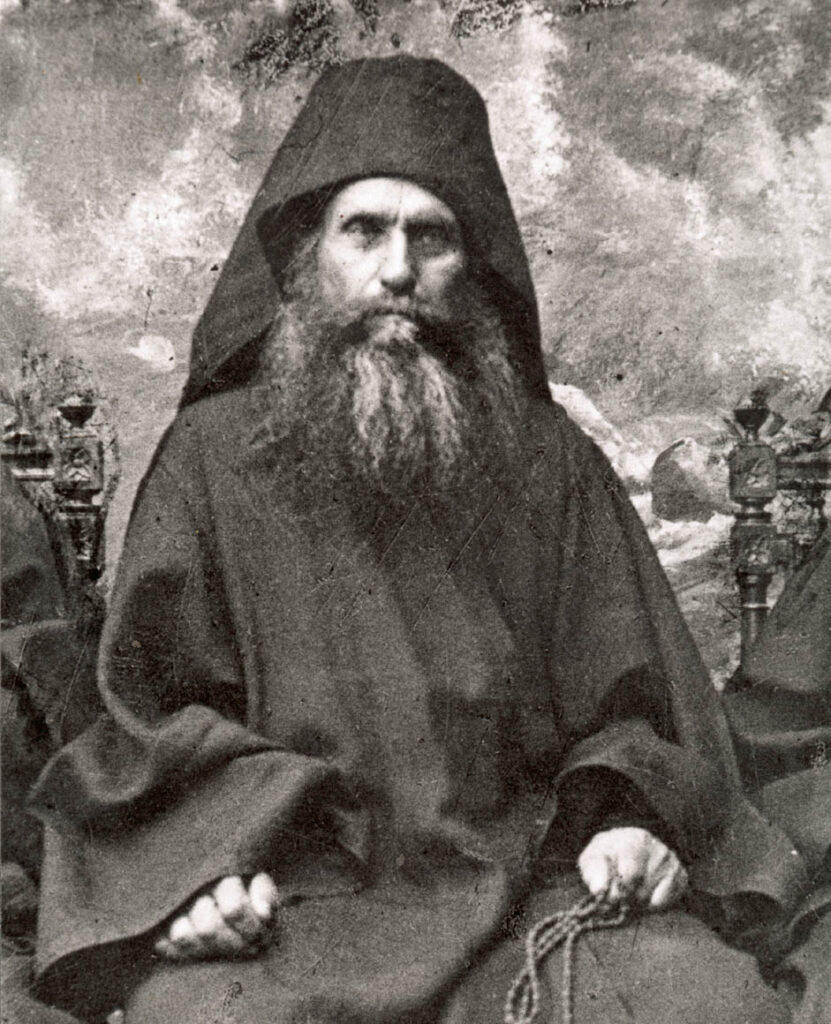
Simeon Antonov, who would become St. Silouan the Athonite, was born in 1866 to a peasant family in the village of Shovsk in Russia’s Tambov province. On the surface, his life was unremarkable. He arrived on Athos in 1892, a grown man with a robust constitution and a temper he had not yet learned to master, and entered the same monastery of St. Panteleimon that St. Sophrony would join three decades later.
The road to grace was not a straight one, even for him. The enemy first tempted him to flee into the wilderness, hoping for an easier, solitary salvation, but only his obedience to his confessor kept him in the monastery. That same confessor told him simply to keep saying the Jesus Prayer, and within three weeks, as St. Sophrony’s own account credits to the help of the Mother of God, the prayer had taken root in his heart and would not leave it for the rest of his life. But the gift came with its own danger. The demons praised him for how quickly he had advanced, working to plant the seed of pride, and on the heels of that, they showed him a light of their own making, one that made him laugh rather than weep, a light so strange that he seemed to see straight through his own body. He sensed that something about it was wrong, and he understood, even as it was happening, that he was being deceived. Not every light is from God, and St. Silouan learned that distinction before he ever earned the right to teach it.
What followed was worse before it was better. Driven nearly to the end of his strength, he fell into the belief that God was simply implacable, that no one could soften Him. For the better part of an hour, his soul sat in something like infernal despair. Only afterward, at Vespers, looking toward the icon of the Savior, did he see the living Christ Himself. The vision lasted only a moment, but it filled his whole being, soul and body alike, with a force of grace that left him drained and never entirely left him again for the rest of his life.
What followed that vision is the part of his story most people skip, and it is also the part that matters most for understanding what the Orthodox tradition means by spiritual progress. The grace he had received drew praise from an older monk at the monastery, Father Anatoly, who told him, more or less, that if he was already like this as a young novice, there was no telling what he would become as an old man. That single sentence of praise opened a wound in him that took fifteen years to heal. He fell into a long, exhausting war against vainglory and pride, the temptation to believe the flattering account of himself rather than staying fixed on the God who had visited him. He fasted, prayed through the night in snatched intervals of fifteen or twenty minutes, and still could not recover the peace he had briefly tasted. The grace would return and then withdraw again, and each withdrawal felt to him like an abandonment by the only thing he truly loved.
The resolution came on what his biographer describes as the worst night of that fifteen-year ordeal. St. Silouan was once again tormented by demonic thoughts he could not pray through. When he rose to bow before the icon in his cell, he saw, standing before it, a vast and terrible demon waiting to be worshipped in Christ’s place. He sat back down in despair and asked God directly what he needed to do to free his mind from this kind of assault. The answer came into his heart in eight words that have outlasted every theological treatise written about them. Keep thy mind in hell, and despair not.
What he had been given, having done exactly that and found his soul at rest, was permission to remain within that awareness of his own sinfulness and spiritual poverty without being destroyed by it, because the same God who had let him see the truth about himself had already gone down into hell ahead of him and was not asking him to go anywhere Christ had not already been.
The Cup of Tea
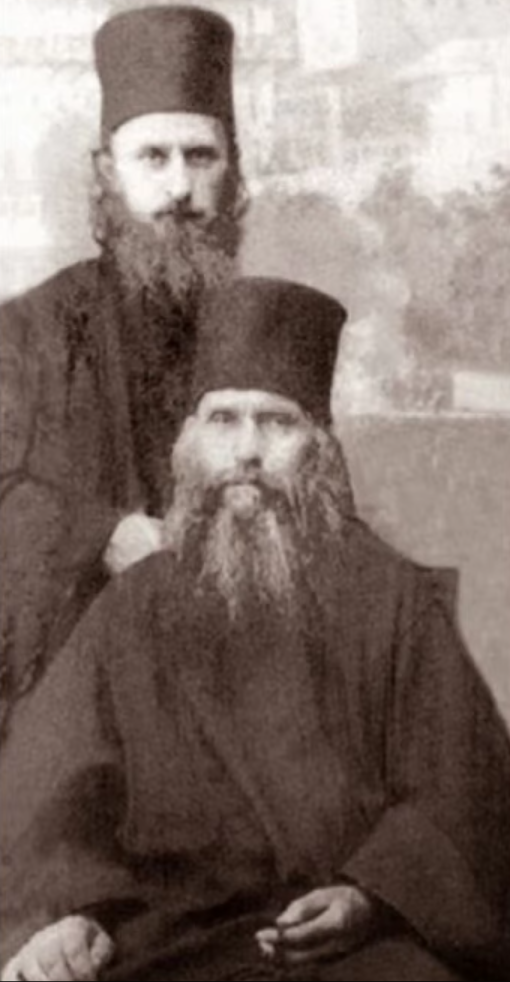
St. Sophrony became St. Silouan’s spiritual son and, after the older monk’s death in 1938, became his biographer, compiling St. Silouan’s scattered writings into a book that would carry his teacher’s name and voice to the rest of the world. This work followed almost eight years of direct discipleship at the older monk’s side and took additional years to complete properly. The saying did not remain locked inside that one book. It became something St. Sophrony himself lived and transmitted, and one story about how he transmitted it has become almost as well known among those who study his life as the saying itself.
Not long after his ordination, a hermit named Fr. Vladimir descended from his solitary cell to visit St. Sophrony at the monastery. During their conversation, he suddenly asked for a word to help save his soul. St. Sophrony, who happened to be preparing tea, told him to stand at the brink of the abyss of despair, and when the weight became unbearable, to draw back a little and have a cup of tea. He handed Vladimir the cup as he said this.
The hermit was shaken by the answer and went straight to St. Silouan to ask whether it was safe and authentic teaching. The next day, out of simple reverence for his elder, St. Sophrony tried to avoid running into St. Silouan on the monastery grounds. St. Silouan, walking up from the harbor at the same hour, changed his route as well, and the two men collided in front of the refectory anyway. St. Silouan asked directly whether Vladimir had visited the day before. St. Sophrony, skipping all polite formality, simply asked whether he had been wrong to say what he said. St. Silouan told him no, but that what he had given Vladimir was more than the hermit’s strength could bear at the time, and asked St. Sophrony to come speak with him the next day. In that conversation, St. Silouan finally told St. Sophrony the whole story of his own fifteen-year war and the word Christ had given him to end it. The saying that passed from Christ to St. Silouan, to St. Sophrony, and to a hermit over a cup of tea is still being handed down today at the monastery in Essex, which St. Sophrony founded in 1959 and which, six years later, became a stavropegion answering directly to the Ecumenical Patriarchate, by monks who knew him personally and who are still teaching it to the Orthodox faithful.
Energy, Not Essence
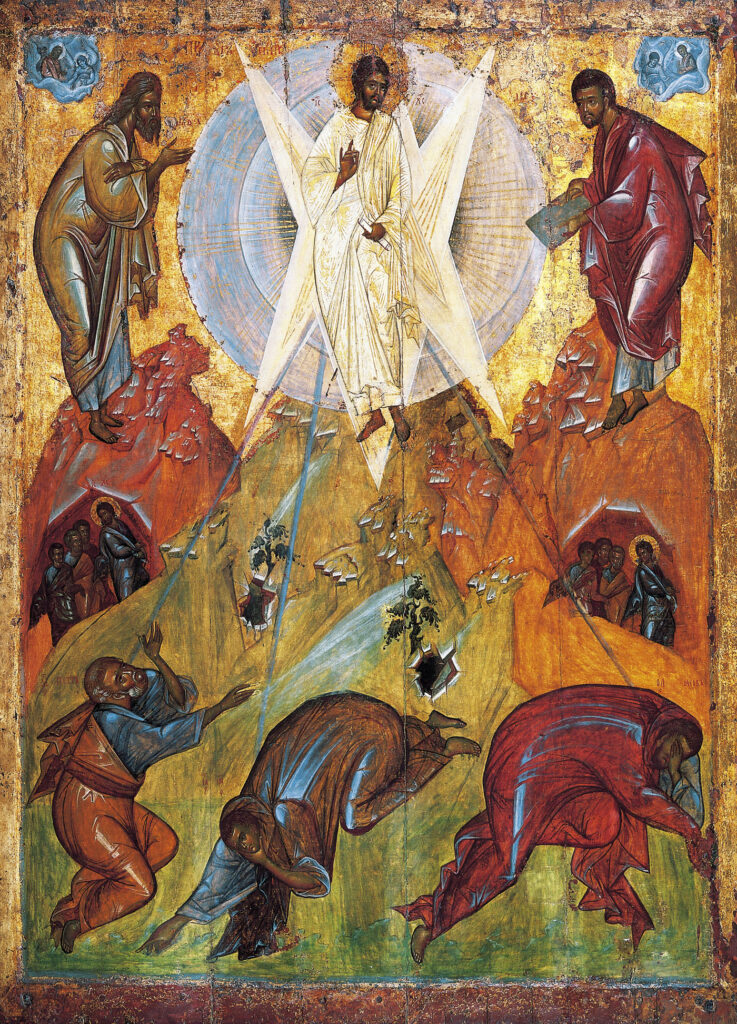
Orthodox tradition distinguishes between God’s Essence, which is utterly beyond creation and can never be shared or merged with by any created being, and God’s Energies, the real but distinct activity of God through which He genuinely communicates Himself to the world. St. Gregory Palamas, who formalized this distinction in his defense of the hesychasts, put it as plainly as possible: union with God occurs through His Energies, never through His Essence, and never in a way that merges human and divine natures into one. Even Christ’s human nature, joined to the divine nature in the closest union creation has ever known, never became identical in Essence with God. This is not a matter of degree. A more advanced practitioner does not get any closer to merging with God’s Essence than a beginner. The line between Creator and creature does not move, no matter how far up the ladder of prayer a person climbs. St. Sophrony’s later writing on the subject says so without softening it. Even in the age to come, he wrote, union with God will be complete in every respect but one. Identity of Essence will remain forever inconceivable for every created being, angels included.
This is the precise point where Orthodox theosis parts ways with the non-dual promise that drove St. Sophrony into his early crisis and that drives much of contemporary spirituality today. The promise of dissolving into an undifferentiated Absolute, of discovering that you were never really separate from ultimate reality, rests on an account of what a person is that is entirely different from the Christian promise of theosis, a difference in kind rather than in degree. St. Sophrony’s mature vocabulary makes this distinction explicit. A Person, in his sense, is relational, free, and constituted by love, capable of communion without losing itself in what it communes with. An individual is merely a biological unit, definable, countable, and replaceable. Confusing the two, treating personhood as something to be transcended rather than perfected, is, in his own words, a common delusion. Where there is no liberty, there is no Person, he insisted, and without Person, there is no liberty. The entire architecture of non-dual absorption depends on erasing exactly what Orthodox theology insists is the whole point.
A Person, Not a Technique
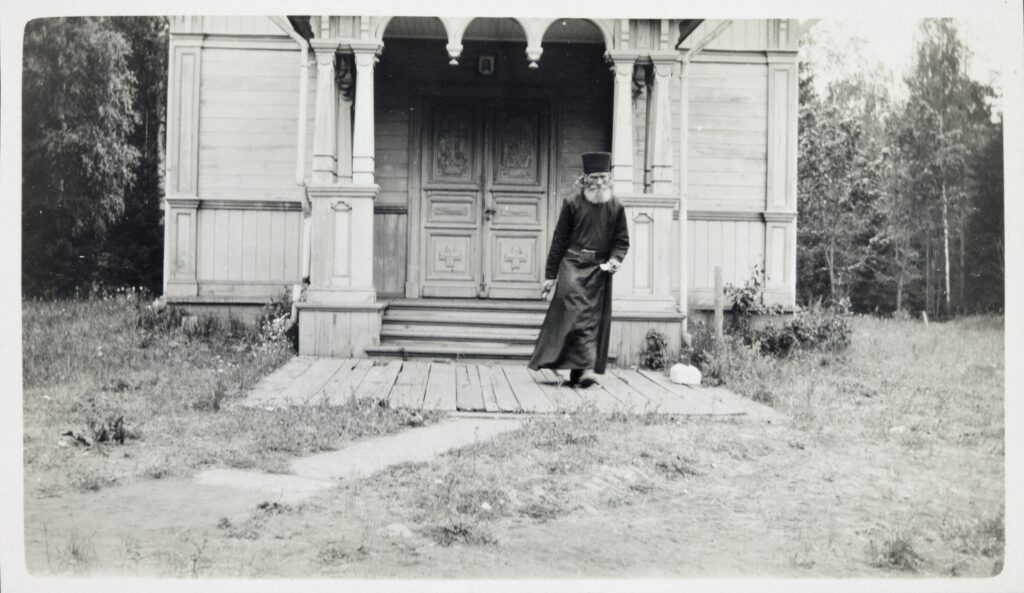
Keeping your mind in hell is neither despair nor a technique. A technique works by your own effort, applied correctly, producing a predictable inner state. St. Silouan’s word works by something closer to the opposite. You stay honestly within the truth about your own poverty and sin, refusing to flee it through either denial or a borrowed sense of cosmic significance, and you stay there specifically because the God you are addressing has already descended further into the depths than your own sin can take you and is waiting for you there as a Person rather than as an abstraction to merge into. One of St. Sophrony’s own theological heirs puts the connection plainly. To descend honestly into the hell of one’s own sin is, in the same movement, to draw nearer to the Light, in exactly the way Christ’s own descent into hell was, at the same time, His Resurrection. The monks who carry on St. Sophrony’s community today have started saying the word slightly differently to make this explicit. Keep thy mind in hell and in Me. The self-condemnation only holds together, only avoids collapsing into despair or self-hatred, because it is addressed to Somebody who has already gone down to meet you and whose love does not depend on finding you presentable when He gets there.
The Three Crucifixions
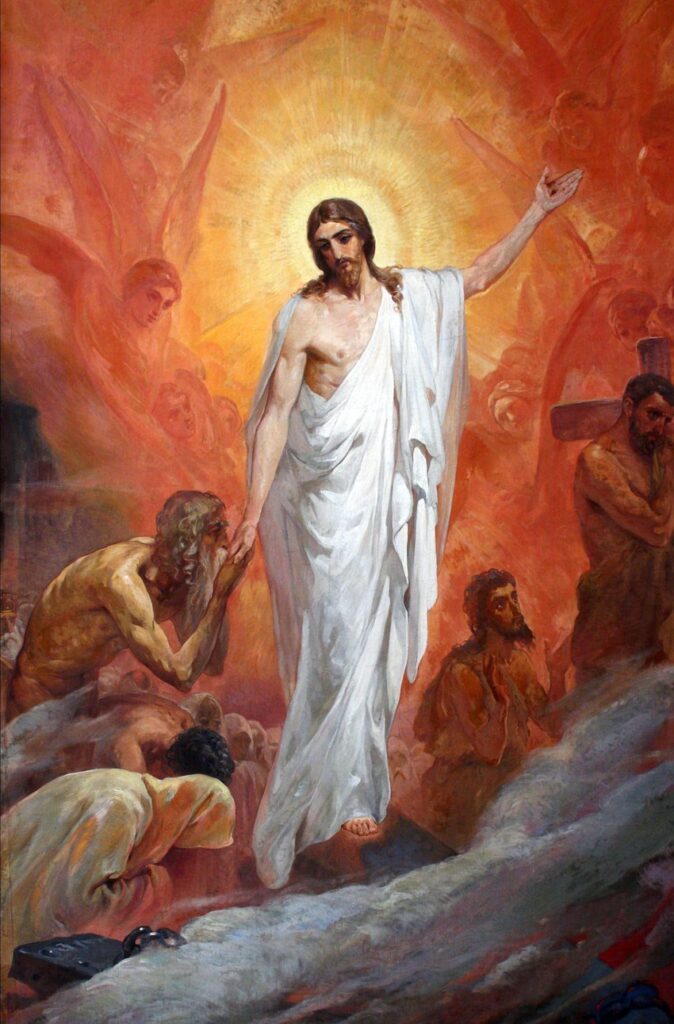
There is a structure beneath this teaching that St. Sophrony’s own theological heirs describe in detail, drawing on his writings on prayer. The spiritual life, on this account, unfolds in three stages rather than a single ascent. A first visitation of grace arrives early, often at the very start of a person’s serious turn toward God, intense enough that some people leave behind entire careers and ways of life because of it. St. Sophrony has a hard phrase for what happens next that I find more honest than anything I have read elsewhere about the so-called dark night of the soul. The first stage is the crucifixion of the world, walking away from what used to hold you. What comes after is the crucifixion of the person for the world, a far longer and harder process in which grace seems to withdraw and a person has to prove, through actual struggle rather than the warm feelings of the beginning, that the conversion was real. Only afterward, sometimes only at the very end of a life, does the third stage arrive, the permanent restoration of that grace, no longer as a visitation that can be lost but as an inheritance.
I recognized that structure the moment I read it because it described my own conversion more accurately than I had ever managed to describe it. The early excitement of turning toward God is real and a gift, but it is not the whole of the path. Anyone promised that it is the whole of the path, by a guru, a retreat leader, or a particularly enthusiastic friend, is being sold something incomplete. The actual path runs through a long middle period that feels much more like loss than like arrival. St. Silouan’s fifteen years represent the ordinary shape of that second stage, stretched and intensified to a degree most of us will never have to face, lived by a man whose holiness gives us a magnified view of something most of us experience in a smaller, less dramatic key.
The Door That Was Already Open
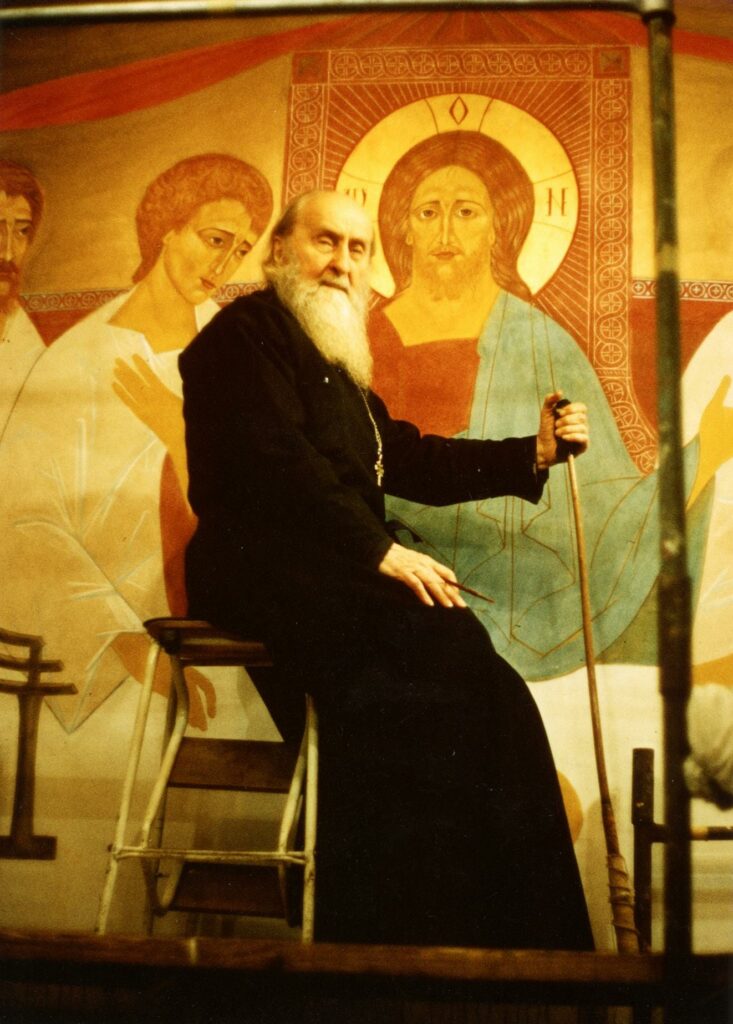
I often think about the man outside the Sufi lodge and about the version of myself who stood near him, both of us circling the same hunger without yet knowing where it leads. I have already prayed for him once in these pages, and I will keep praying for him long after this piece is finished, because St. Sophrony’s life proves, more convincingly than any argument I could construct on my own, that the hunger itself was never the problem. The problem was always the object. An impersonal absolute cannot love you back, cannot meet you in your collapse, cannot descend into the specific hell you have made for yourself and wait for you there. Only a Person can do that, and only because that Person already did, on a particular afternoon outside a particular city wall, in a way that left an empty tomb rather than a dissolved self.
St. Sophrony realized that the entire premise of technique was wrong, that what he had been seeking was never a state to be achieved by the right method but a Person to be addressed through repentance, and that the same God who had let St. Silouan stand at the very edge of despair for fifteen years was the One who had held the door open the whole time. I could not tell the man outside the lodge this in person. I can only write it down, as honestly as I know how, and keep him in my prayers, hoping that someone closer to that door than I was will read it before they spend as many years as I did mistaking the hunger for the answer, before their own wandering becomes the gymnasium it was always meant to be.