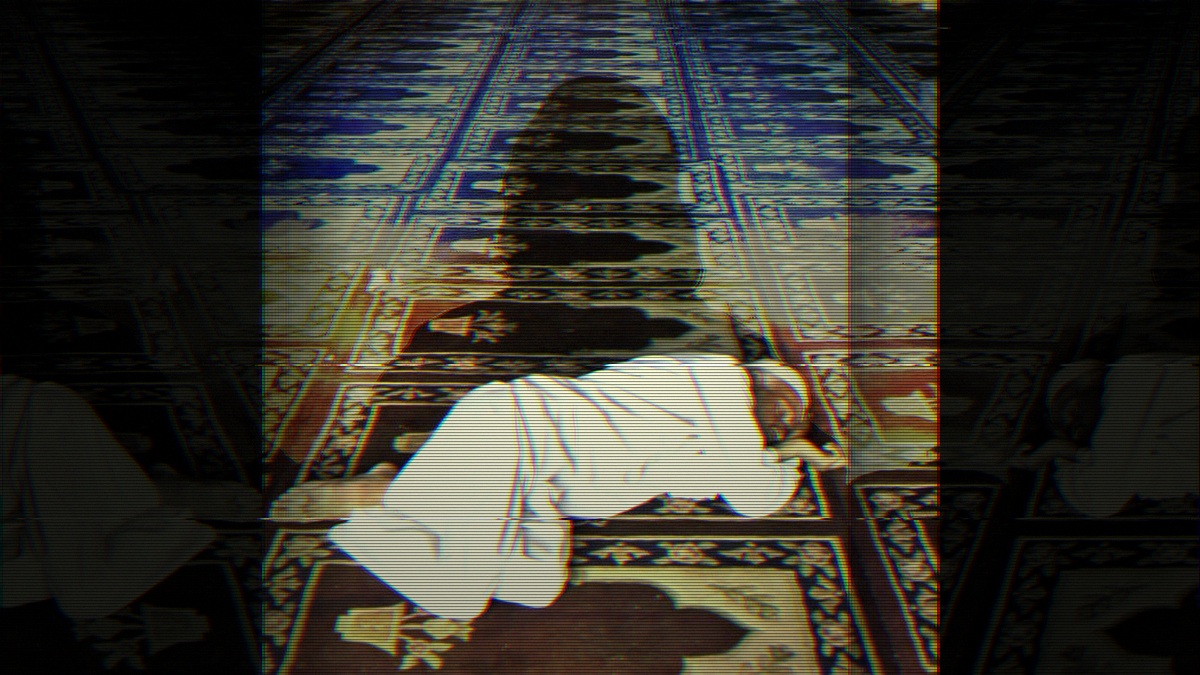
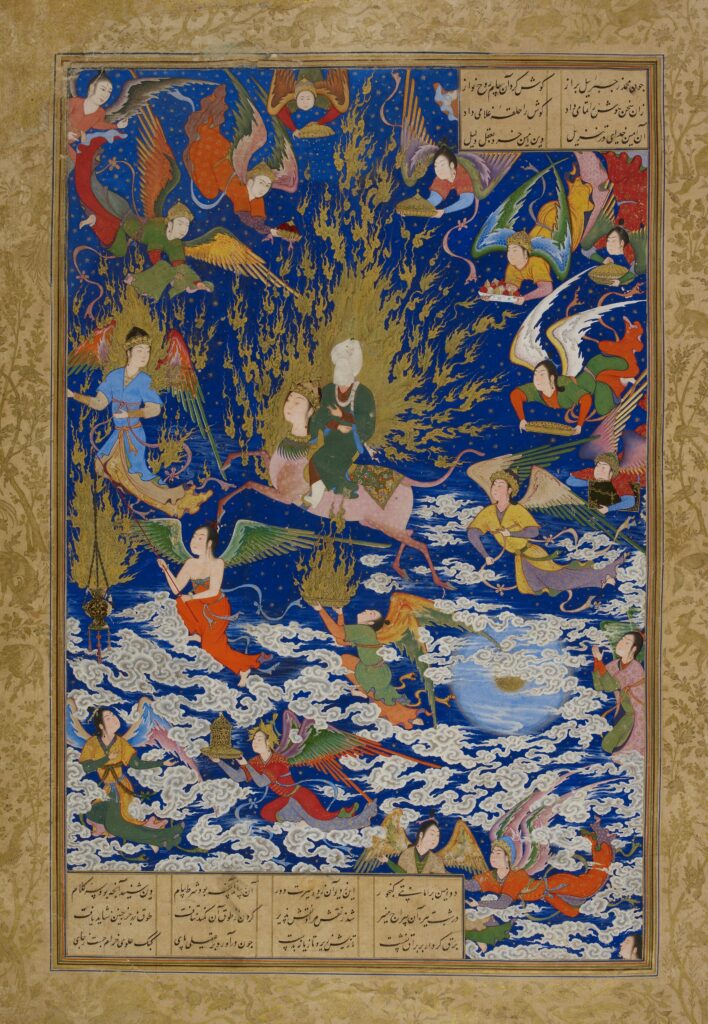
Something is happening in the Muslim world that many do not know how to discuss properly. Hundreds of thousands of Muslims, maybe more, are converting to Christianity after dreaming of Jesus. Not because they heard a sermon, received a missionary tract, or watched a mean-spirited YouTube apologetic. They went to sleep as Muslims and woke up unable to remain so. A metaphysical encounter with Him, in my humble opinion, is the proper path to conversion.
A 2007 survey of 750 Muslim-background believers across thirty countries, conducted by missiologists Dudley Woodberry, Russell Shubin, and Greg Marks and published in Christianity Today, found that more than a quarter had dreams or visions of Jesus before their conversion even began. Forty percent experienced them at the moment of conversion, and forty-five percent afterward. Mission Frontiers magazine reported a separate figure from a different pool of 600 Muslim converts, placing the number at twenty-five percent. The Woodberry study is now nearly two decades old, but no larger quantitative survey has superseded it. What has followed is a closer analysis of the content of these dreams.
A 2018 study in the Southeastern Theological Review examined forty-four published conversion testimonies that included pre-conversion dreams and found that, in the overwhelming majority of cases, the dream did not arrive in a vacuum: the dreamer had already encountered Christian believers, Scripture, or both before the dream occurred. In only two of forty-four cases was there no prior contact at all. The dreams, in other words, almost always arrive after the door has already been nudged open. The pattern is consistent. A luminous figure, white garments, a sense of peace unlike anything previously experienced, and a call. Sometimes the figure speaks. Sometimes He simply appears. In every case, the person who sees Him knows who He is.
Yes, I know, Jesus is not a foreign figure in Islam. Muslims call him Isa, and in the Quran, he appears as a prophet, born of a virgin, a worker of miracles, and one of the most honored messengers of God. They venerate him without believing He is the Son of God, placing him within a framework that diminishes and denies His Divinity. When He appears to them in dreams, calling them toward something their tradition cannot contain, He is not arriving as a stranger. He is arriving as someone they thought they already knew.
A young man posted on an Orthodox Christianity forum, Reddit of all places, the morning after a dream he said was unlike anything he had ever experienced. He was Muslim by birth but had been circling Orthodox Christianity for months without committing. He had never dreamed of anything religious. The night before he wrote his post, he found himself in a painfully white space, everything the same blinding shade, until a door outline appeared, opened, and a figure stepped through. Jesus was the only thing in color. The young man dropped to his knees immediately. He could not explain it, he wrote. He just knew. They sat together on white steps that formed beside them, and he wept and apologized and asked questions he could not fully remember when he woke up. Before Jesus left, he said, in words the young man recognized from somewhere he could not place, “Peace I leave with you; my peace I give to you. Do not let your hearts be troubled, and do not be afraid.” Then, in a commanding voice: “Awaken now, my child.” He woke up.
This is real. I am not dismissing it. The question is what it means, and more specifically, what kind of framework the person receiving it needs to navigate it safely. The same tradition that produced these Jesus dreams also produced something else, a doctrine that renders every Muhammad dream impossible to refute within the tradition. And the same opening that lets Jesus in does not, by itself, keep anyone else out.
Before my conversion, I was immersed in Jungian dream interpretation, synchronicities, archetypal pattern-matching, the whole new-age-adjacent apparatus. I could point to things I could not explain that seemed to be pointing me toward Christ, albeit I did not see it at the time, and looking back, I cannot say with certainty whether those were God using the framework I was caught in to lead me out, or something more ambiguous. What I can say is that they led me to repentance and to the Church, and the fruits over time have been what the Fathers describe. A friend’s wife became a Christian after a dream, with no cultural background involving Christ whatsoever. When she first told me, my gut reaction was to roll my eyes. Then I spent time around her. The fruits speak. I am a much worse Christian than she is, and I have had all the cultural scaffolding that comes with being born Catholic.
Perhaps God uses the framework you are ensnared in to lead you toward the way out? This I can only surmise. I will not pretend to know the inner workings of God. But Muslims are taught that dreams carry prophetic weight, and that He appears to them in dreams, leading to their conversion. That is worth sitting with and at least pondering
The Doctrine
There is a hadith, a recorded saying attributed to Muhammad, agreed upon by both of the two most authoritative collections in Sunni Islam, that says, “Whoever sees me in a dream has truly seen me, for Satan cannot imitate me.”
This is very different from Satan himself transforming into an angel of light (2 Corinthians 11:14) and from a non-denominational Protestant I know personally who ingested Ayahuasca, was consumed by a snake in his vision, and swears he saw Christ afterward. I do not have the heart to tell him he was deceived by a demon, but that is a story for another day and another article.
The hadith is attributed to Abu Huraira, one of Muhammad’s closest companions and the most prolific transmitter of prophetic sayings in the Islamic tradition. Its authentication grade is muttafaqun alayhi, a technical term meaning “agreed upon,” indicating that both Bukhari and Muslim, whose collections are considered the most rigorously verified in Sunni Islam, independently accepted the chain of transmission as sound. Later scholars, including the medieval jurist and hadith authority al-Nawawi, specified that the figure in the dream must match Muhammad’s physical description as recorded by his companions. But this is a content-based check, not a structural one. It assumes the dreamer can make accurate identifications and provides no mechanism to detect a counterfeit that matches the description.
We have all heard of the wife who dreams her husband is cheating and wakes up convinced of it. Dreams feel authoritative. That is their nature. The question is not whether they feel authoritative but whether they are.
In practice, this hadith integrated the dream experience into the same epistemological framework as the prophetic tradition itself. The academic scholar Leah Kinberg, in a 1993 study in the journal Der Islam, traced how this worked across fourteen centuries of Islamic history. Dreams served the same legitimating functions as reported sayings of Muhammad. They were used to validate legal positions, choose among competing schools of jurisprudence, authenticate caliphal succession, correct theological innovation, and guide personal behavior. Kinberg’s summary is stark. Since there is no major difference between Muhammad’s physical presence and his visionary presence, words delivered by either means may carry the same authority.
She also documents what this made possible. The legitimation of dreams in classical Islam created a situation in which various groups could use dreams to justify almost any position. The tradition issued extensive warnings against fabricated dreams. The anti-fabrication hadiths are severe. But warnings alone cannot close a structural opening, and this one is fundamental. A dream of Muhammad is self-authenticating and carries its own proof.
The scholar Nile Green, writing in the Journal of the Royal Asiatic Society in 2003, used the phrase that best captures what Kinberg documented. Dreams in classical Islam, he wrote, became legally waterproof.
Now, if you are a Muslim who has just dreamed of Jesus, this is the epistemological framework you have been formed within. The dream feels authoritative because you have been taught that prophetic dreams are authoritative. The figure appears luminous and peaceful, calling you toward something better than you have known. Nothing in your tradition has given you tools to ask whether the experience itself might require external testing. The tradition has given you tools to evaluate the content and description, but not to question the mechanism. What matters is what you do with it afterward.
The evangelical missionaries who work among Muslims know this, and some of them use it deliberately. In Nabeel Qureshi’s memoir Seeking Allah, Finding Jesus, his Christian friend David Wood told him, “Your parents see dreams, and God has directed you with supernatural signs in the sky. You know full well that if you ask Him to reveal the truth to you, He will.” Wood invited Qureshi to use his own tradition’s epistemology as a doorway to Christianity. It worked. But the same door does not close behind you when you walk through it.
What Happened to Nabeel
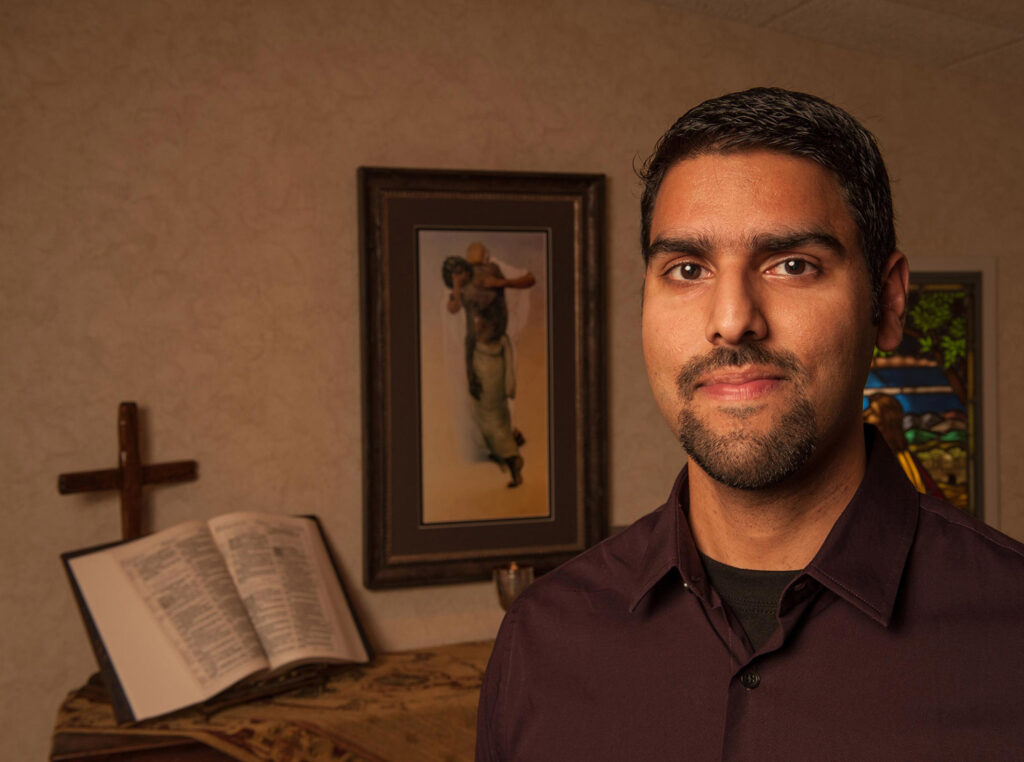
Qureshi’s story is among the most intellectually honest conversion accounts we have. He spent three years before the dreams in systematic theological investigation with Wood. By the time the dreams arrived, he had already found Islam’s historical and theological foundations seriously damaged. He knew the cost of conversion would be catastrophic for his family. This is no small thing in the Muslim world, where the mother occupies a position that is difficult to overstate. The family structure bends around her emotional gravity in ways that have no real Western equivalent. To convert is not just to change religion. It is to tear the center of the household apart. He was not a passive recipient of an undiscerned experience but an active skeptic who lacked only one thing.
On December 19, 2004, in an Orlando hotel room, he knelt at the edge of his bed and begged God to reveal the truth to him in a dream. The vision came immediately, a field of hundreds of glowing crosses in the darkness. He dismissed it. “That doesn’t count,” he told God. He asked for a dream instead.
The first dream was symbolic and required interpretation. He wrote it down, called his Christian friend and his mother, and consulted Ibn Sirin’s classical Islamic dream-interpretation manual. His mother applied the Islamic interpretive methodology and, based on the symbols, concluded that the dream was from Allah and pointed toward Christianity. She had no idea what she was saying. The Islamic tradition of dream interpretation, faithfully applied by a devout Muslim mother, directed her son toward Christ.
Nabeel then sat on it for two months.
The second dream was clear. He stood before a narrow door. David Wood was inside, at a feast, and told him, “You never responded.” Wood told him to read Luke 13:22. The section heading in the NIV Study Bible read: “The Narrow Door.” The passage described the dream exactly. I will not digress into the NIV. Readers who know, know. Beware the NIV.
A third dream showed him on stairs leading out of a mosque, with an unseen force keeping him from returning to his place behind the imam, the prayer leader he had stood behind as a faithful Muslim his whole life.
Three dreams. He still had not converted. He spent the next several months traveling to mosques in the United States and Europe, seeking a way out. He begged God for more dreams, but none came. He had what he needed and was stalling. God gives you just enough. I can attest to this myself and to my own journey.
Nabeel’s conversion came on August 24, 2005, at three in the morning, through reading Matthew 5, not through a dream, but through the Beatitudes. He put his forehead on the foot of his bed and submitted.
Two weeks later, his father said, “Today I feel as if my backbone has been ripped out from inside me.” His mother was hospitalized. The family rupture he had feared was exactly as bad as he had known it would be.
The dreams opened a door. The Word of God led him through it. The cost was paid in full, as any convert can attest.
It is also worth noting, with charity, that Qureshi ended up in the Protestant evangelical tradition, which lacks a full discernment framework. He died in 2017, having done enormous good and having borne real suffering for his faith. David Wood, who was the instrument of his conversion, continues to wield significant influence in evangelical circles engaged with Islam. He has recently been asking the right questions about Orthodoxy, or at least is open to exploring them, and that counts for something. What seems to be holding him back is a fierce hatred of Islam that has calcified into a political allegiance to a certain ethnostate, which clouds the picture. We can pray that he finds his way home to the Church established by the Apostles at Pentecost, because the influence he carries could move many others with him.
The Reverse Direction
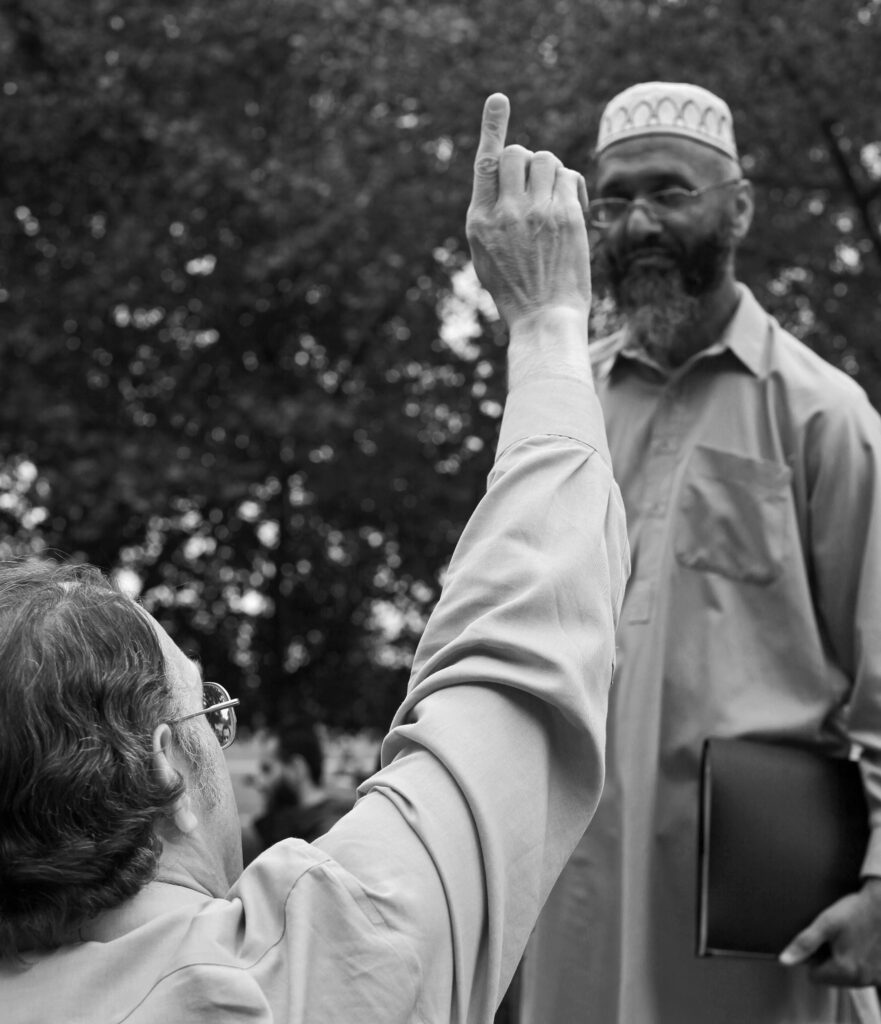
There is a YouTube video, widely circulated in Muslim dawah communities, in which a man named Anthony, now called Abdullah, describes converting from Protestantism to Islam after dreaming of both Jesus and Muhammad. I will link it below. He had been a Protestant who already doubted the Trinity, already believed Jesus was a prophet rather than God, and already held a Unitarian theology in all but name. He had heard almost nothing about Islam. This is the fruit of Protestant theological drift, a tradition so led by feeling, so hollowed of doctrinal substance, that it cannot hold a man who starts asking honest questions. When the feelings run out, there is nothing underneath.
He first dreamed of Jesus. White tunic, brown shoulder-length hair, handsome, shown from above as if from heaven. No words. No interaction. Something was presented to him like a vision of the past. Six months later, he dreamed of Muhammad, elevated above him, placing his hands on two white tablets, a reddish-white face lit with light, black hair, beautiful. No words, no interaction. Same mode as the Jesus dream. The same sensation of something special, something from outside.
Anthony felt uplifted. He felt hope. He felt that Muhammad “had something greater” than Jesus, “something more weighty.” He was not told this in the dream. The dream gave him two silent figures. He supplied the interpretation himself, using the theological framework he already held.
He went to Speaker’s Corner, the open-air forum in London’s Hyde Park, where religious debaters, street preachers, and curious onlookers have gathered for more than a century. A Muslim preacher asked him, “Do you believe Muhammad is a prophet?” He said yes because he had seen the dream. The preacher replied, “This is what Muslims believe, so why haven’t you converted?” Something hit home. He raised his hand.
“I said yes because I’ve seen this dream.” That sentence is the whole problem.
Now ask yourself what is different between Qureshi’s experience and Anthony’s. The phenomenology is nearly identical. A luminous figure, a sense of presence, an interior conviction of identification, emotional warmth, a feeling of being called toward something. Qureshi felt Jesus was drawing him toward Christianity. Anthony felt Muhammad had something Jesus did not. Both treated their interior conviction as their primary proof. Both operated within the Islamic dream epistemology, which treats that conviction as sufficient.
The difference lies in the fruit. Years of it. Qureshi underwent intellectual inquiry, active resistance, repeated testing, and conversion at a devastating personal cost. He did not drift into Christianity on a warm feeling. He was broken open by the Beatitudes and then destroyed by his father’s grief. Anthony raised his hand at Speaker’s Corner after a brief conversation.
For the sake of peace, I am not saying Anthony’s experience was demonic. I am saying the framework he used cannot distinguish. Neither can the evangelical framework. Pretense and delusion run rampant in a tradition led by feelings and effete music. If there is no confessor, no sacramental formation, and no external testing apparatus, the interior conviction is all you have. And the interior conviction does not discriminate.
It Happens Inside the Church Too
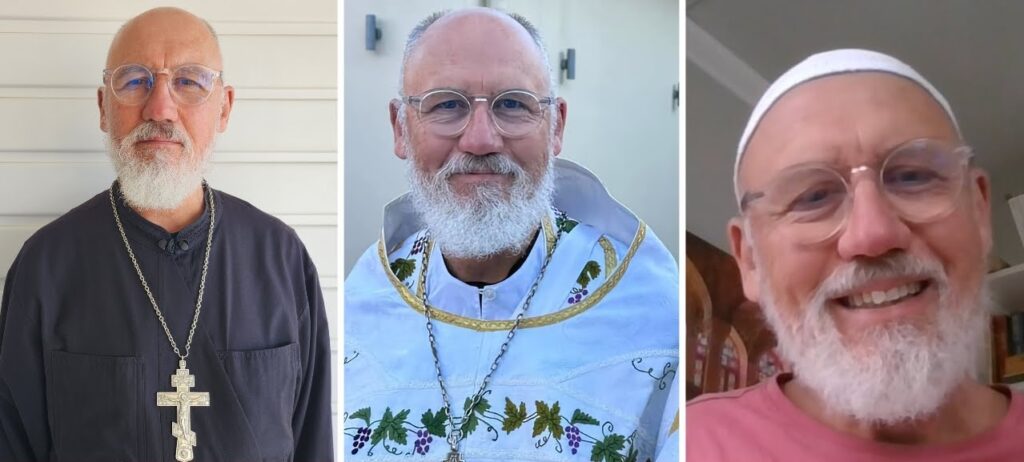
The same opening that exists in the Islamic dream tradition and in evangelical Christianity’s lack of discernment appears wherever the normal safeguards are absent, even within Orthodoxy, when those safeguards are not functioning properly.
In 2024, a Tasmanian Orthodox priest named David Gould, who had been a layman in his parish for forty-five years and a priest for only two, converted to Islam and took the name Abdul Rahman. His story is instructive. He described his community as “without leadership” for two decades during his formation. He said he was “always struggling with Christianity” and that his “search for God wasn’t really complete in Orthodoxy.” He visited a mosque during a family funeral in Perth, prostrated himself before God, asked to be shown the truth, read from a Quran given to him by the imam, and was convinced. He wrote to his bishop and resigned.
Fr. Lawrence Farley of St. John of Shanghai Orthodox Church wrote about the case with precision: “Despite chanting for many years the words in the Orthodox Liturgy that ‘We have found the true faith!’, it is clear that he had done nothing of the sort. That is, despite his years in his Orthodox parish, he never had a saving encounter with the living Christ or found the true faith. Though sad, this is hardly surprising given that his community was without a pastor for two decades.”
The Gould case does not refute Orthodoxy. It shows what happens when someone occupies the external structure of Orthodox life without the interior formation it is meant to produce. The mechanism of self-authenticating experience can capture an Orthodox priest just as readily as a Protestant, if the confessor is absent, the formation is thin, and the person has never been genuinely broken open. The tradition is not magic.
The Test That Does Not Test
Tom Doyle is an evangelical missionary who has worked extensively in the Middle East and has written about Jesus dreams among Muslims. His book Dreams and Visions documents dozens of accounts, some of which are remarkable. His appendix, titled “Real or Fake? A Biblical Test,” offers five criteria for evaluating whether a dream is from God.
Does the dream point to Christ? Does it produce peace? Does it spark a desire to know more about Jesus? Is the content consistent with the Bible? Does the dreamer feel drawn to follow through?
These are not bad questions. The problem is that a skilled counterfeiter can answer all of them. The patristic literature is full of accounts of demonic visions that produced exactly these effects, pointing toward Christ while subtly distorting who Christ is, producing peace of the wrong kind, and creating zeal for religious activity that inflated rather than humbled. St. Nicetas of Novgorod had a demon stand beside him as an angel for years, giving him genuine prophetic gifts, counseling him to stop praying and study books instead, and steering him so subtly that the fathers of his monastery detected the deception only when they noticed he could not bear to open the New Testament and was solely focused on the Old Testament. His prophecies and gifts were accurate and real, but they came from a demonic source.
Doyle knows that Satan disguises himself as an angel of light. He says so explicitly. His test cannot detect it, though, because he is led by feelings that can be manipulated by an ancient evil far more cunning than humans. The reason is that his test measures the experience from within the experience. The patristic tradition insists that you cannot do that.
What the Fathers Actually Say
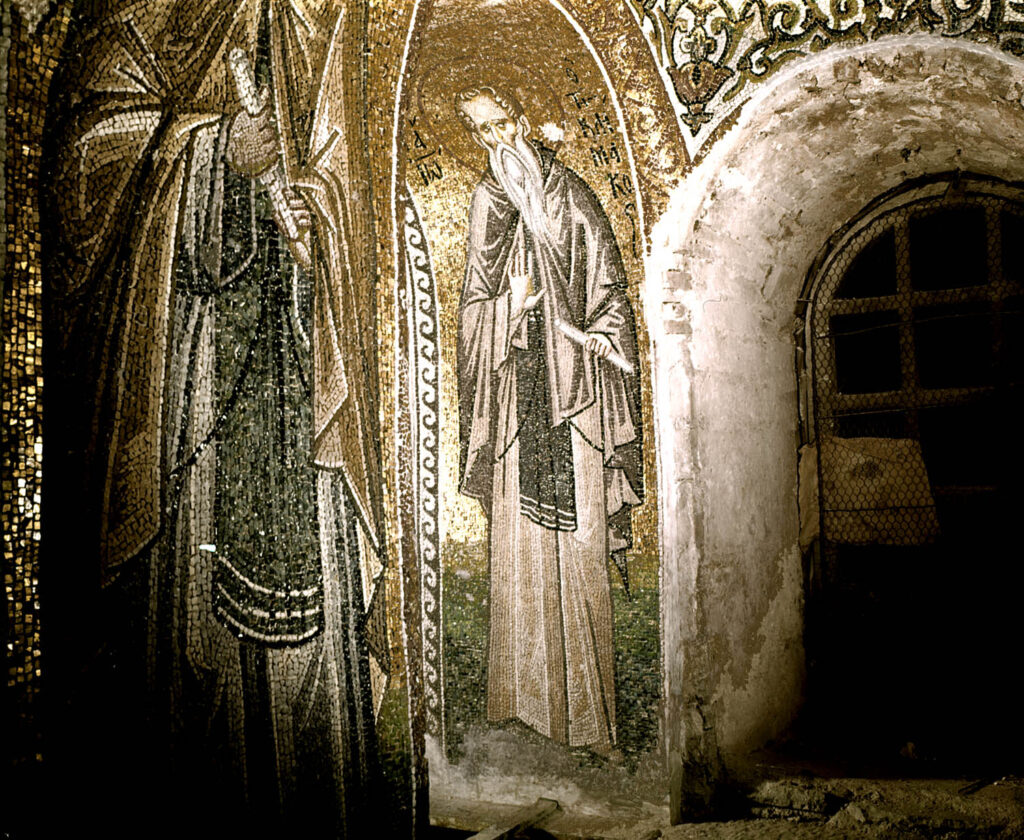
St. John Climacus, writing in the seventh century, described what demonic counterfeits of divine encounter look like. They produce what he called unholy joy and conceit. The demon “transforms as an angel of light,” appears to waking and sleeping souls alike, and plunges them into unholy joy and conceit. Genuine encounters with divine realities leave the soul trembling and sad. The soul that has truly seen something of God does not feel special. It feels small and feeble.
Bishop Ignatius Brianchaninov, writing in the nineteenth century, synthesized the patristic tradition on this to a tee. In fallen human nature, unrenewed by grace, dreams arise from three sources: the soul itself, the demonic realm, and, rarely, God. The third source is the rarest precisely because God knows that extraordinary experiences lead to spiritual inflation, which is more dangerous than spiritual dryness. The Fathers therefore counsel deep suspicion of notable experiences, not enthusiasm for them.
Brianchaninov documents these cases. St. Isaac of the Kyiv Caves saw a great light, and “Christ” appeared to him with angels. He bowed without making the sign of the Cross. The demons gained power over him, danced wildly around him, and left him near death. He recovered and eventually attained genuine sanctity, but only after years of struggle and the intervention of his brothers. St. Nikita, who would become Bishop of Novgorod, received a demon posing as the Holy Spirit, who told him to stop praying and study books. He forgot how to read the New Testament but could recite the Old Testament by heart. The diagnostic sign was his aversion to the Gospel.
These are not cautionary tales about wicked people. These are holy men who lacked the one thing that makes discernment possible, a guide who stands outside the experience and tests it.
Brianchaninov’s diagnostic is not about the quality of the experience. It is about the trajectory it produces. Does it lead toward genuine humility and repentance? Does it increase dependence on God or on the experience itself? Does it move the person toward the Church and sacramental formation, or does it foster the belief that the experience is sufficient? “He who believes in dreams is completely inexperienced. But he who distrusts all dreams is a wise man.”
St. Theophan the Recluse makes the same point from the positive side. He describes what genuine, grace-filled awakening produces, a return to the feeling of dependence on God, a clear sight of one’s own ugliness, a sweetness in godly life understood as a gift rather than an attainment, and freedom to choose. He then describes what natural states that merely resemble awakening produce, boredom without an object, ordinary disappointment that grieves before people rather than God, and what he calls bursts of exalted yearnings, which push the person toward something great and extraordinary but cannot name it. These produce an experience rather than a relationship with a Person.
The Muslim who dreams of Jesus and feels loved, chosen, and called to something better than Islam is having a real experience. The question is which category it belongs to. The answer is not found within the experience. It never is.
The Problem with the Opening
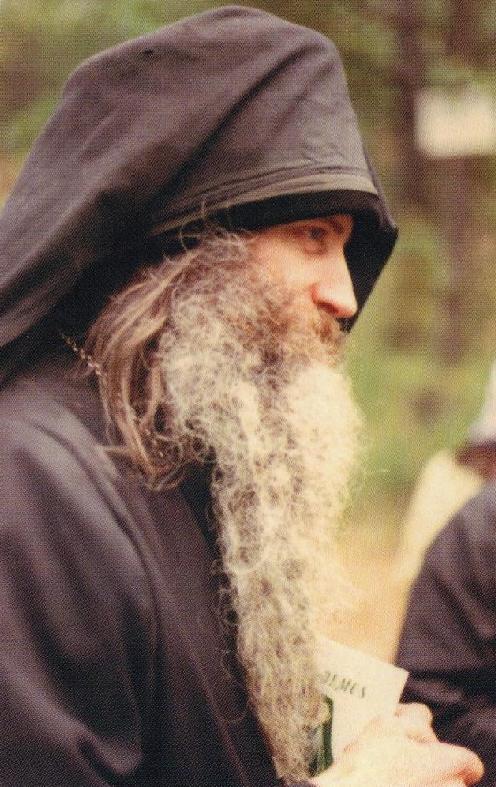
St. Seraphim Rose spent the better part of a decade examining what he saw as a unified spiritual phenomenon underlying disparate contemporary religious movements, Hindu meditation, charismatic tongues, UFO contact experiences, and Eastern cults. His analysis was that they shared a single mechanism. When experience is elevated above doctrine, the normal Christian safeguards against the attacks of fallen spirits are removed or neutralized, and the practitioner’s passivity and openness literally open them to demonic use.
He was not talking about Islam, but the analysis applies.
The Islamic dream tradition integrates the dream experience into hadith epistemology, thereby rendering it self-authenticating. As Kinberg documented, the result is that the mechanism cannot be interrogated from within the tradition. The internal Islamic qualifications are content-based; does the figure match Muhammad’s description, does the content accord with established practice, is the dreamer pious? None of these asks whether the mechanism itself might be compromised. None of these leads to the external testing required by the patristic tradition.
This is not a criticism of Islam in particular. The same problem exists in evangelical Christianity, as Doyle’s appendix shows. The charismatic movement has the same problem in a different form. The missing piece across all of these is not moral seriousness or theological content. It is the structure the Orthodox tradition calls nepsis, sobriety, a disposition of active mistrust toward one’s own spiritual experiences, paired with the practice of revealing all interior movements to a confessor who stands outside them.
David Wood invited Qureshi to use his Islamic dream-receptivity as a door toward Christ. He was right to do so, and it worked. But after the dreams, what Qureshi needed was not more validation of the experience. He needed what he eventually found in the Beatitudes, and beyond that, what would have protected him against what happened to Anthony was the full tradition. Not the experience confirmed, but the experience tested, and then the person formed.
The Man Who Found Orthodoxy
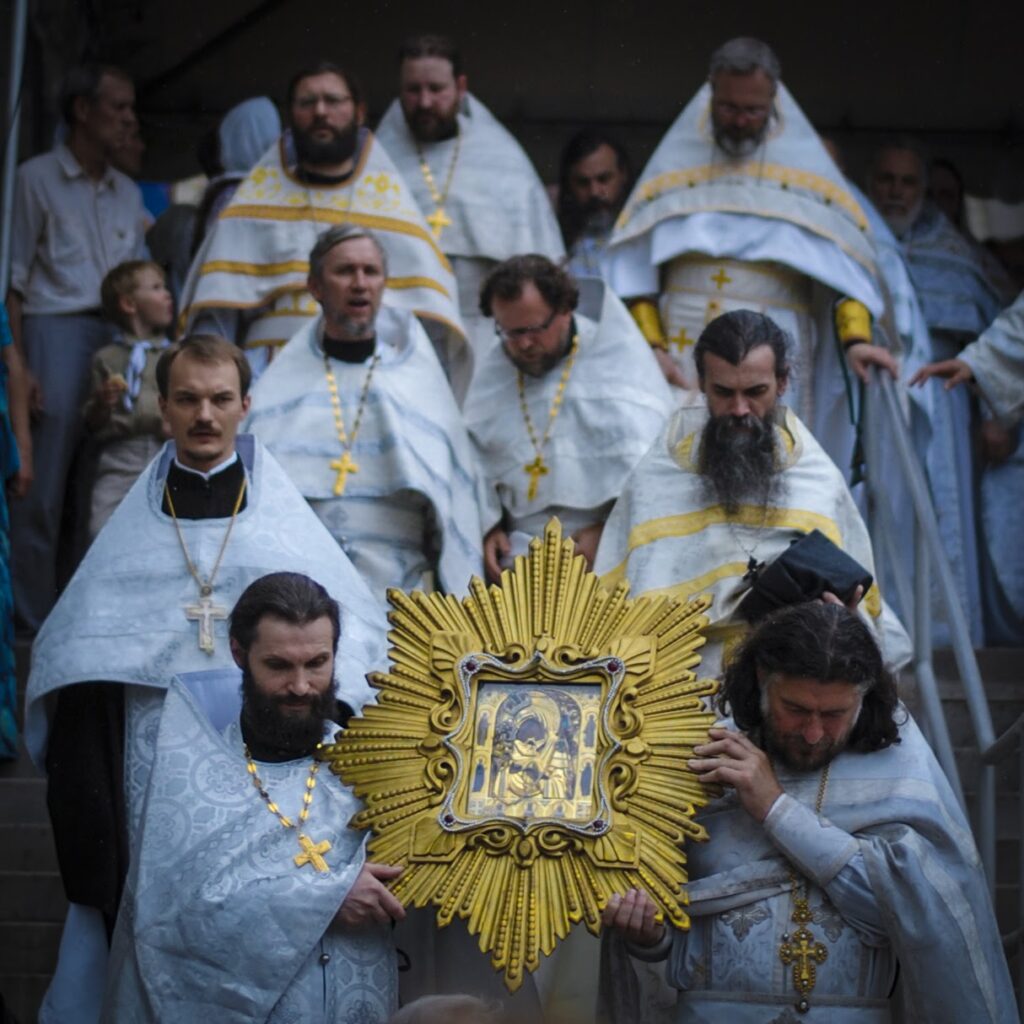
There is a man I will call George, because that is what he called himself in an interview published on OrthoChristian.com, linked below. He became a Sunni Muslim at fourteen, studied at a madrasa, a college for Islamic instruction, toward becoming an imam, spent twenty years in the tradition, left after his mother’s death, and after a decade of spiritual exhaustion eventually became Orthodox. As noted earlier, the mother often keeps people tethered to the Islamic faith. The cost of leaving is not abstract.
His path to Orthodoxy did not begin with a dramatic vision. He had one dream. He felt the presence of Christ, did not see him, and heard weeping, which he dismissed. Some time later, he spontaneously recited the Lord’s Prayer in full, despite never having memorized it. One day, an overwhelming physical weight came over him, and he fell to his knees at the edge of his bed. The only words that came were, “Jesus Christ, if you are there, please help me.”
Later, he dreamed of St. Paul on the Damascus road. He saw Paul fall to the ground, looked at his face, and saw his own face.
He did not convert after the dream. He went in search of the apostolic Church, rejected evangelical Christianity at a tent meeting because the Sinner’s Prayer “just didn’t feel right,” searched the internet for “ancient Christian Church,” found Orthodoxy, spent a year as a catechumen, and was baptized.
His description of what Orthodoxy gave him that Islam could not, “Being baptized into Christ has been like having a mirror placed before me. It has forced me to look at myself honestly, with all of my sins and shortcomings.” He described the Divine Liturgy as mutual participation, not attendance. He found himself inside something living rather than submitting to something external.
This is the criterion for fruit. Not the warmth of the dream. Not the sense of being chosen. The mirror. The ongoing dying to self, which he called both wonderful and terrifying, and the willingness to stay in the process.
There is also a woman in Japan, now Orthodox, who shared her story after being baptized. She had been a single mother with no religious background, unable to trust people, living entirely by her own will. Her husband, from a Protestant family, was quietly explaining Christianity to her in ways she did not even recognize as Christianity. She dismissed it. Then one night she had a dream. She stood before the tomb of Christ. Between the tombstones came a dazzling orange light. She woke up not understanding what had happened, but knowing, that was Christ’s tomb. She did not convert that morning, but something had changed. She eventually found Orthodoxy and was baptized alongside her husband. She wrote afterward that she hoped her story might inspire someone somewhere who comes from a place completely unrelated to the Orthodox Church.
What she describes is the same structure that George and Qureshi describe. The dream is not the destination but the beginning of a search that the Church receives and completes.
Qureshi’s conversion produced the same fruit. His father’s backbone ripped out, his mother hospitalized, himself on the floor asking God why he hadn’t been killed before any of this could happen, and receiving the answer, because this is not about you. That answer broke him open further. He did not float on a spiritual experience but was broken upon the cross of it.
This is what genuine conversion looks like in the patristic testimony. The difference is not the initial fruit. It is what happens next. What protects the person from what happened to Anthony is not better initial discernment at the moment of the dream. It is formation within a tradition that prevents the experience from remaining self-validating. That requires a confessor. It requires the sacraments. It requires the specific structure of Christian life that the Orthodox tradition has been refining for two thousand years, precisely because this problem is not new and will not go away.
The Question Under All of This
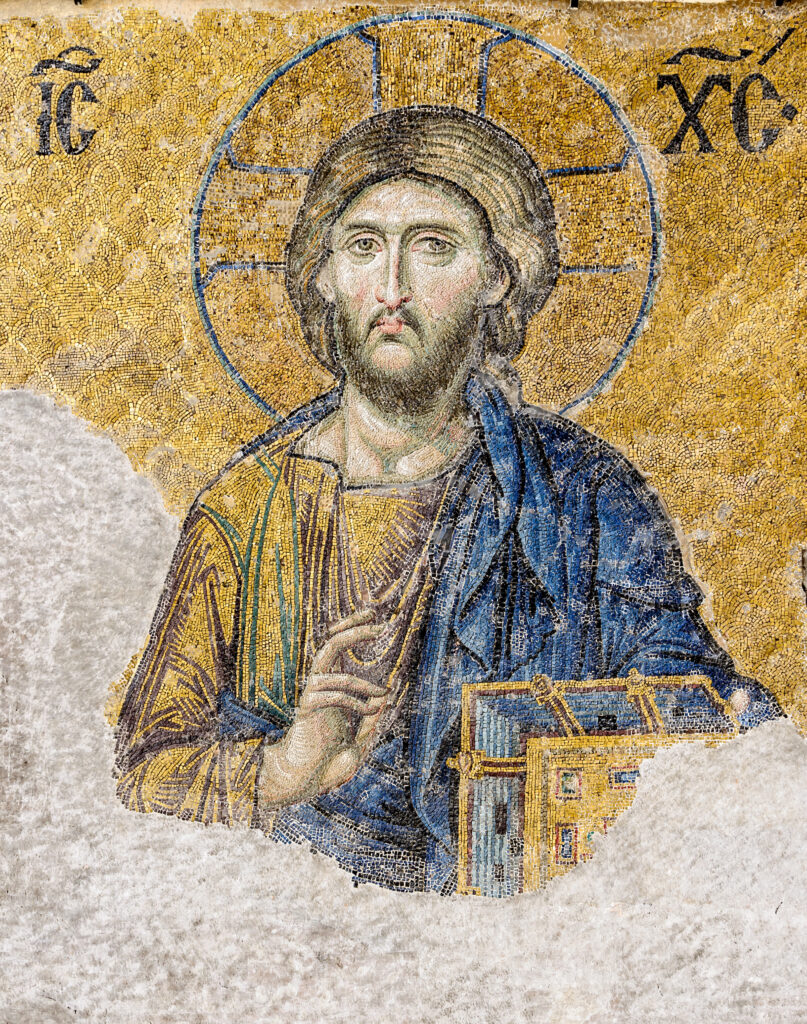
If a Muslim dreams of Jesus and then converts, is the dream from God?
I do not know. The patristic tradition does not tell me. What it tells me is that I cannot determine the answer from the content and quality of the experience, and neither can the person who had it. What it tells me is that the fruit, tested over time, is the only available criterion. What it tells me is that the mechanism through which the dream arrived, the self-authenticating Islamic dream doctrine, is the same mechanism that makes it impossible to say with confidence whether the Jesus dreams are from a different source than the Muhammad dreams. The mechanism does not discriminate. Anthony’s interior conviction that Muhammad had something greater was produced by exactly the same epistemological process as Qureshi’s conviction that the narrow door was for him.
The Orthodox tradition does not say, distrust the experience because it came through a broken mechanism. It says the experience is not your authority. The fruit is your authority. The Church is your protection. The confessor is your safeguard. Come in, be formed, be further broken open, and over years find out what it produced. I myself am still discovering this.
The Muslim convert who dreamed of Jesus deserves that answer. Not just confirmation that the dream was real, which they already know. Not just validation that Jesus appeared to them, which they already believe. They deserve the full tradition. They deserve to be told that the experience, real as it is, is the beginning, not the destination. They deserve a mirror, not applause or broken theology.
What Doyle, Garrison, and the evangelical missionary community give these converts is enormous. They give them community, Scripture, theological content, and the basic framework of Christian life. That is not nothing. But it is not full protection, as evidenced by the fact that the same opening through which Christ enters these dreams is the opening through which, in Anthony’s case, something else walked in and pointed the other way.
The only epistemology that can handle both cases is the one that refuses to treat any experience as self-validating. That epistemology is what the Fathers built. It requires a confessor, sobriety, time, and the willingness to be told that a feeling is not the thing.
That is the Orthodox answer to the dream. Not suspicion. Not dismissal. Sobriety.