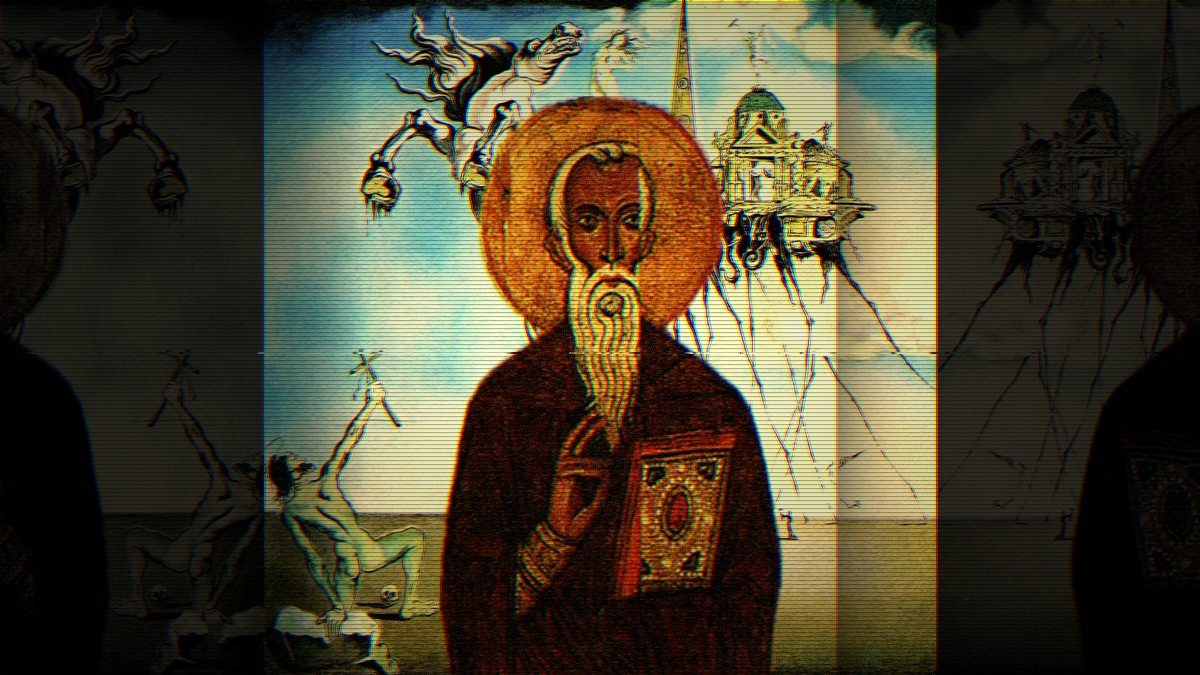
“Be sober, be vigilant; because your adversary the devil, as a roaring lion, walketh about, seeking whom he may devour.” — 1 Peter 5:8
Part One: What Came Before I Asked
The Ankles
The earliest nightmare I can still pinpoint with any precision came shortly after my parents divorced, my father newly gone, my mother sleeping alone across the hall for the first time, and my brother a newborn in another room. I would have been about five.
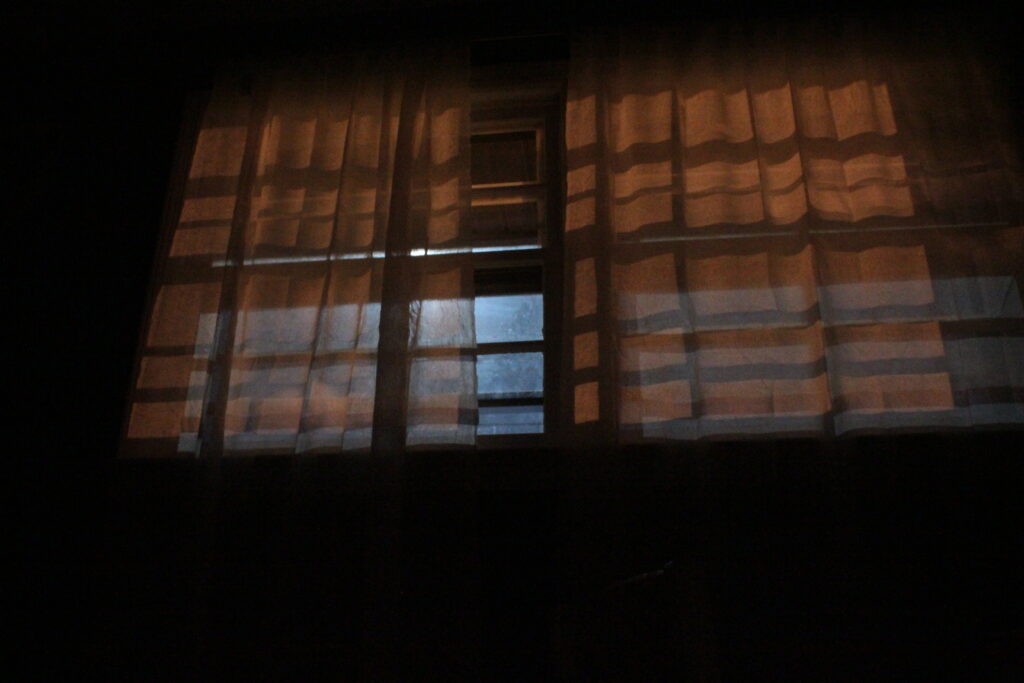
Moonlight filtered through the blinds. My bed faced the window, feet pointed toward it. The backyard lay out there in the dark, the swing set, the statue, the wood fence that blocked off the neighbors, and the factory beyond. I remember the room had that faint, cold luminosity that only comes through blinds at night: enough to see by, not enough to feel safe.
Something was wrong. Not a sound, not a movement, just the knowledge, the way a child knows before he has words for it. I gripped my Bugs Bunny and shut my eyes.
Black hands shot up from the foot of the bed and grabbed my ankles. Ice-cold. I felt them, and I want to be precise about this, because it matters: you cannot feel in dreams. The texture, the temperature, the grip, I remember them as I remember physical things, because they were. They had an aura, something that went beyond cold into wrong.
I couldn’t move. Then I screamed, by grace, as I now understand it. The hands released. I shot up, Bugs Bunny still in hand, and ran on small feet down the hallway to my mother’s room. There was no dissolve, no fade from dream to waking. The hands gripped, then released when I screamed, and I ran. One continuous experience.
My mother told me it was a nightmare. I did my best to explain that it wasn’t, but I was five, and she was the adult, so that was the end of it. I still remember the sensation to this day, the cold, the release, and the grace of whatever let me scream.
The Statue
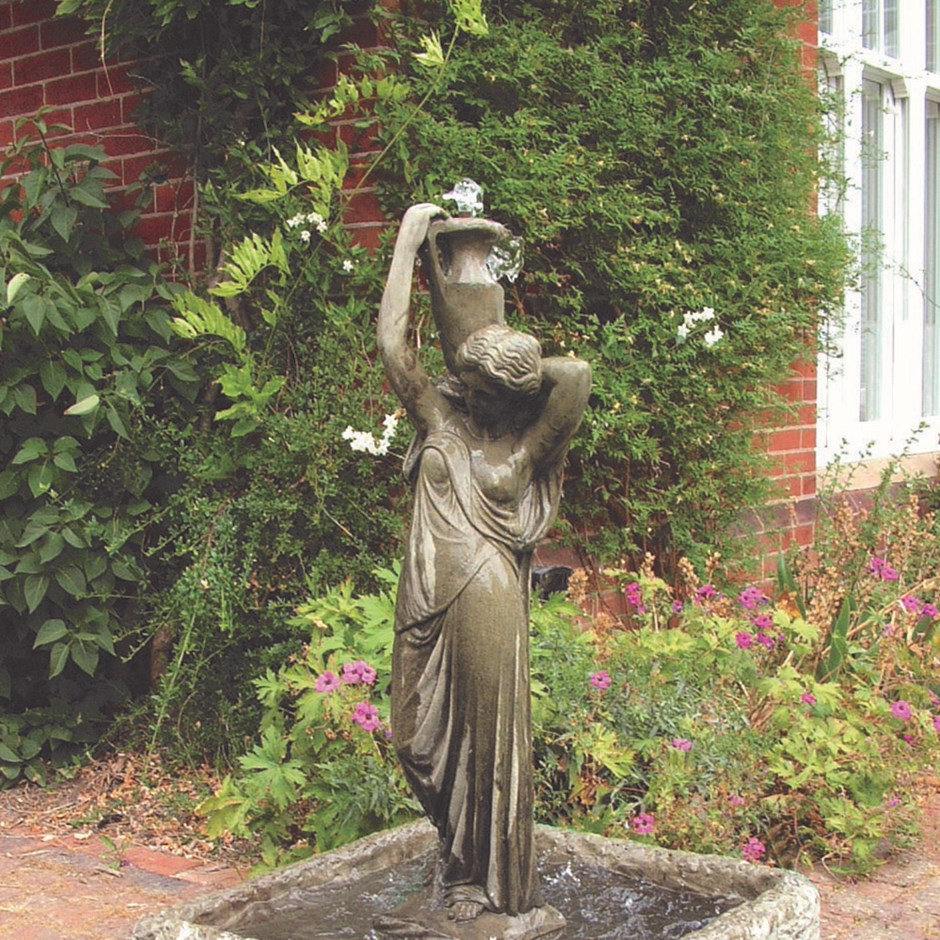
There was a recurring dream from around the same time. The house we’d moved into just before the divorce had a fountain statue in the backyard, a Greco-Roman-style woman with arms raised, holding a water basin. As it turned out, my mother didn’t particularly like it either.
In the dream, the statue came alive. Not the stone woman, something that lived inside the stone, wearing her form. It took the form of a woman with feline traits, a yellow aura around her, and appeared on the swing set in the same spot where the statue stood, beckoning me. Come sit on my lap. Come join me. I never did. But it kept asking, kept coming close, and the backyard stopped being somewhere I wanted to be alone.
I reached a breaking point, the way children do, suddenly and completely. I walked into the backyard, approached the statue, and shoved it over. The face split in two. I gathered the pieces and hid them behind the rusted tin shed at the back of the property, behind the light-blue patio room that led to the garage.
Then I walked into the kitchen, brushed my hands together, and said, That takes care of that.
My mother followed the trail of rubble through the sun-dried grass and found what was left behind the shed. She wasn’t angry. When I explained the dreams, she didn’t need much explanation. She’d wanted to be rid of the thing herself. She just hadn’t known why until I told her.
I was not yet afraid of the consequences. I acted on what I knew.
What Arrives and What Is Summoned
I want to establish something before going further, because it matters for what follows.
I was not seeking any of this. I was five years old, in a broken home, with no religious framework and no language for what I was experiencing, or rather, no framework that functioned as one. I was born into cultural Catholicism, the East Coast Irish variety: ashes on Ash Wednesday, no meat on Christmas Eve, grandmothers who kept the image of Christ alive even when their own church attendance wavered. We never went to Mass. The faith was ambient, inherited, decorative. It was not armor. Nobody had told me about sleep paralysis, shadow entities, the hat man, or any of it. What came to my bedside did so on its own terms, uninvited. This distinction, between what arrives and what is summoned, is the axis on which everything in this article turns. The Church Fathers articulated it, and the diagnostics follow from it. But I didn’t know any of that yet. What I knew was that something had grabbed my ankles in the dark, that a woman with yellow eyes wanted me to sit on her lap, and that neither of these things felt like imagination.
The New Atheist Settlement
I became a full-blown atheist in high school, deliberately, as teenagers do, which is to say with maximum commitment and minimal self-awareness. The scaffolding for it was everywhere: Penn and Teller’s aggressive showmanship dressed as skepticism, Christopher Hitchens performing intellectual contempt like a contact sport, and the whole New Atheist movement presenting itself as the rational default for anyone who’d seen through the fairy tale.
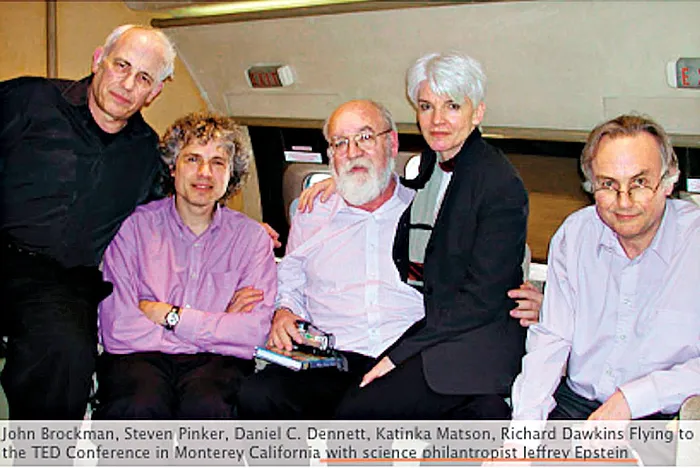
What nobody told me then was that Jeffrey Epstein flew Richard Dawkins to the 2002 TED conference, reportedly on his private jet, according to accounts that emerged in the Epstein civil litigation record. That talk, Militant Atheism, is widely regarded as the seminal moment for the New Atheist movement, two years before Sam Harris published his first book, four years before The God Delusion. Epstein was in the room at the origin. What his interest in the movement was and what was exchanged remain open questions. But the front door and the back door are rarely the same door.
I don’t want to be too hard on my teenage self. The push had a real cause. Pedophilia scandals in the Catholic Church, one close enough to home to feel personal, a hometown thing, had done their work. That’s how the mechanism operates: one end pushes you away from Christ, and the enclosure is already set for where you’ll land. Without a spiritual center, a young man from a broken home, with an absent father and the God-shaped hole every man carries, whether he names it or not, will find something to fill it. He always does. The only question is what gets there first.
For a while, it was video games. Then marijuana in eighth grade. Then mushrooms, then other psychedelics, which, I’ll say this much for them, pointed beyond the materialist settlement. They didn’t tell me what was there, but they made the official story feel clearly insufficient. Everything happens for a reason, and God will use whatever He has to use, good or bad, to point you toward Himself. I believe that now without reservation. The past is not something to feel bad about. It gets you where you are.
What led me to the next place was a movie.
Waking Life and the Open Door
Waking Life, Richard Linklater, 2001, rotoscoped animation over real footage, the whole thing shot through with a quality of controlled dreaming that hit differently when you were already halfway out the door of consensus reality. I saw it in high school, and it opened several rooms at once: Philip K. Dick, existentialist philosophy, Alex Jones, and lucid dreaming. That last one took hold in a particular way.
Lucid dreaming is the practice of becoming consciously aware that you are dreaming while the dream is in progress, and, from that awareness, exercising deliberate control over the dream environment. You can fly. You can build architecture. You can summon people. The dreamer wakes up inside the dream without waking up from it. It sounded impossible. It sounded like exactly the kind of thing I wanted to prove real.
The science of it, or what passed for science in my atheist framework, the only one I had, was respectable enough to take seriously. Stephen LaBerge at Stanford had built an entire methodology around it, verified lucid dreaming in sleep lab conditions using prearranged eye-movement signals, and published the research. I devoured everything I could find. My actual schoolwork suffered in inverse proportion. The Prussian factory model of education, it turned out, had no hold on me once something genuinely interesting appeared.
The first time it worked, I was in my bedroom, the dream version, which looked exactly right except for the digital clock on the nightstand, which displayed something like hieroglyphics instead of numbers. That was the tell. Recognition hit like a current: I’m dreaming. I’m dreaming right now. Excitement took hold, and I woke up, but I lay there, amazed. It was real. The dreamer could know he was dreaming.
I tried to explain it at the lunch table the next day. My friends looked at me like I had two heads. I don’t blame them. It still sounds unbelievable, even to me, even after everything. But the inability to explain it to them became its own motivation, which, looking back, I should have examined more carefully. Pride as fuel. I still struggle with it. The difference now is what I’m trying to prove and to whom.
The Hangar
Flight came after weeks of failed attempts, the excitement of achieving the state kept breaking it, like trying to catch water in open hands. The method was control. Calm down. Stay inside it.
When I finally held it, I flew above my hometown, climbing toward the clouds, toward what I now believe was the firmament, until fear took over and I tumbled, waking up. Progress. More weeks. Eventually, I mastered it, or at least enough of it that the next obvious frontier appeared: the things you could do that you couldn’t in waking life. I was a teenage boy. The things I did in those dreams, I’ll leave at that. The point is that sleep became more interesting than waking, and I began looking forward to it in a way that should have been a warning.
One experience in particular remains with me.
I fell asleep with my iPod on, I needed music to sleep, and Aphex Twin’s Selected Ambient Works Volume II was playing, that album of unnamed tracks and gray tones designed to sit at the threshold between waking and sleep. I found myself in my middle school hallway, empty and still, aware I was dreaming. I was hovering, not flying exactly, but drifting a foot or two above the linoleum. I could hear the music. Not a memory of it. The actual music, playing from the actual iPod in the room where my body was lying.
I drifted into the school bathroom. There was a mirror. I’d read online that mirrors in lucid dreams behaved strangely. No one explained exactly how, just that you should try it, that your brain couldn’t construct the expected sensation of passing through solid glass and would do something else instead. With some fear, I faced the mirror and dove in headfirst.
The glass warped around me like liquid plasma, viscous and resistant, trying to push me back out. I pushed through. On the other side was an airplane hangar, vast, cold, nothing like anything in my hometown. A completely new environment. The music was louder. I recognized the track and knew it matched the album. This wasn’t my imagination. The physical iPod in the room where my body lay was still running. My left eye opened, and I could see my bedroom. My right eye was still in the hangar. Both streams, simultaneously.
I closed both eyes and stepped deeper into the hangar.
Something was walking toward me. It looked like a mass of flesh and suppuration, once a body, now a host to something else. The music intensified. The thing drew closer. Fear took hold, and I woke up.
My room. The album was over. Quiet.
My body was locked to the bed.
I was awake. I knew my room, I knew my bed, I was not dreaming. But I couldn’t move. I glanced at the clock. The numbers were normal. Around three in the morning. My bed ran parallel to the staircase. To my left, on the stairs, a goblin was watching me. Small, crouched, eyes fixed. I wanted to scream, but I couldn’t. I wanted to move, but I couldn’t. The heaviness was already on my chest before the goblin crossed the distance and landed on it, pressing down with a weight that had no business belonging to something that size.
And then, at the foot of my bed, standing over me, looking down, a black silhouette in a wide-brimmed hat. No face I could see. Just presence. Just the specific quality of evil you know before you know anything else, the way a child knows it, the way I had known it at five years old when something cold grabbed my ankles in the dark.
I wanted to call out someone. But I had no name. I was an atheist. I had nothing to call on.
The seconds felt geological. Then it released, and I was back. Body mine again, the room empty.
The Wikipedia Answer
The next day, I sat at my computer and searched for what had happened to me. Sleep paralysis, the Wikipedia article said. A neurological event. Hypnagogic hallucination. The Fuseli painting came up, The Nightmare, 1781, the woman draped across the bed, the incubus crouched on her chest, the wild-eyed horse emerging from the curtain behind. The painting depicted, with the precision of reportage, exactly what I had experienced. Not approximately. Not symbolically. Exactly.
How could this be? How could a Swiss painter in the eighteenth century and a teenager in a suburban basement in the twenty-first century hallucinate the same thing?
The Wikipedia article had an answer ready: consistent hallucinations arise from consistent neural architecture. The same brain produces the same images. This is the framework. It accounts for all the data without ever asking the one question the data actually demands: what if the consistency means something is really there?
I put lucid dreaming on hold. I wasn’t finished with it, but something had changed.
Part Two: The Painting, the Hag, and the Tradition
The Old Hag
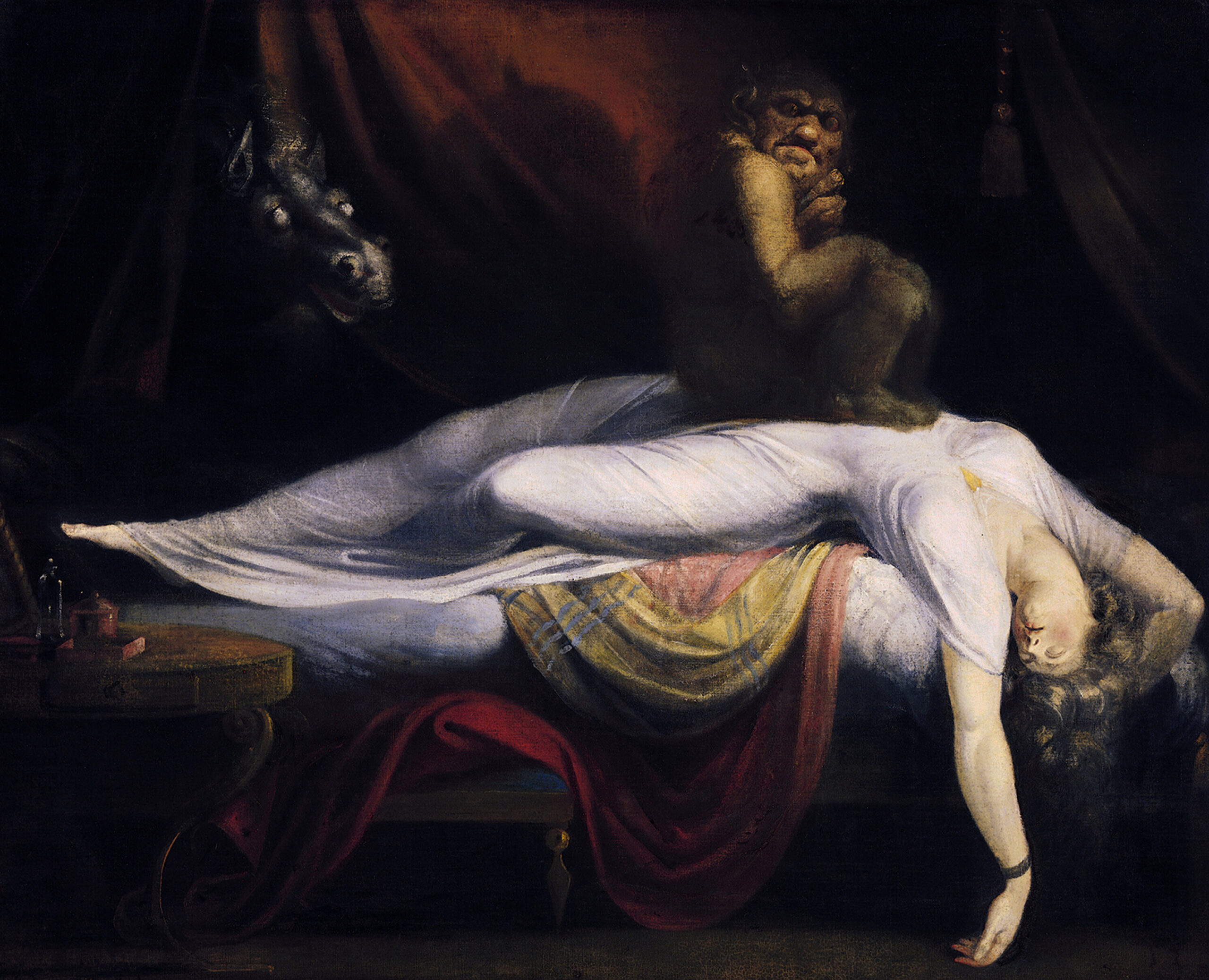
Before addressing the figure at the foot of the bed, let’s address the painting itself, which shook me to my core when I looked at it. It was a dead-on depiction of my first of many sleep paralysis experiences. Johann Heinrich Fuseli’s The Nightmare, 1781, a woman draped unconscious across a bed, with a squat, grinning thing crouched on her chest: entirely at home, weight forward. Fuseli claimed the image was based on his own experience. It became one of the most reproduced paintings in Western history, and the reason isn’t compositional genius. It’s recognition. People saw it and knew.
The oppressive feeling on the chest, this demonic entity, is known as the Old Hag. A hag has been a figure in folklore for as long as folklore has existed, often depicted as an old crone, famously the witch in Snow White, a similar archetype reaching the same place from a different direction. It appears throughout many cultures under different names: the mare of Germanic tradition, the root word that survives in nightmare; the kanashibari of Japan, literally meaning bound in metal; the Phi Am of Thailand; the Old Hag of Newfoundland. But the feeling is the same across all of them, which leads me to believe this is not one collective hallucination. Similar to how people who do DMT report seeing the same entities across cultures with no contact between them, these are not individual manifestations of one’s psyche when the consistency is that precise and that global. Cultures with no connection to each other all have reports of dragons too, but that’s a story for another day.
The anthropologist David Hufford documented exactly this in The Terror That Comes in the Night, the first serious scholarly work to treat entity consistency as a research problem rather than something to be explained away. His conclusion, reached reluctantly and with careful academic precision, was that the consistency of the experience exceeded what cultural transmission alone could account for. He stopped short of the ontological conclusion the data demanded. I’m not stopping short.
The night hag is also known as the incubus or succubus, demonic entities that haunt one in the night in a sexual manner. They have been documented for centuries, discussed by Aquinas in the Summa Theologica, citing St. Augustine’s De Civitate Dei, and rooted in the older tradition of the Lilin, the night-demons of Jewish demonology associated with Lilith. As anyone who has practiced celibacy and abstained from self-abuse can attest, these presences do appear, more frequently than one might expect, and in an obvious fashion. But they all shudder and disappear at the utterance of Christ’s name. More on that shortly.
The Week Before the Wedding
The incubus and succubus tradition is not ancient history. I can attest to this firsthand, and the most vivid instance occurred more than a decade after my original experiences, the week before my wedding.
Every night that week, a dream would turn overtly sexual, almost cartoonish, which would have been funny if it weren’t so obviously purposeful. Women from my past appeared. Then, when I held the line against them, they escalated, pulling out people I hadn’t thought about in years, including a passing crush from tenth-grade gym class I hadn’t seen or thought of since. It was almost comical, the desperation of it, as if the enemy, running out of ammunition, were reaching into the back of the supply closet. I took it as confirmation rather than temptation, the grand final assault before the door closed permanently. God permitted it, as He permitted Job’s trials, to strengthen what was being built and to make the spiritual reality of the warfare undeniable to the man entering the sacrament. It worked. I went to my wedding with no doubt remaining about what these presences are or what they want.
Part Three: Shadow People
The Dining Room Table

Around the same period as the hat man experience, I began encountering what are known as shadow people.
Shadow people are distinct from the hat man, though they belong to the same category of nocturnal presence. Where the hat man is singular, still, and watchful, a specific figure with a specific silhouette, shadow people appear as dark humanoid forms, often peripheral and multiple. You sense them before you see them. You see them, and then they’re gone. The earliest recorded accounts come from indigenous traditions dating back millennia, and today reports come from every continent, described in consistent terms across cultures with no shared mythology.
I remember napping on the couch in my living room, which opened into the dining room. Half-asleep, I felt the familiar lock take hold, that recognition, here we go again, and when I became aware of my surroundings, shadow figures were standing around the dining room table, watching me. One hovered directly above me. The fear was worse than I’d experienced since the original hat man appearance.
I first heard the term on Coast to Coast AM during an interview with a man named Harley Reagan, who, according to his own Wikipedia entry, is a self-described spiritual leader of questionable provenance. I want to be honest about that. The source was not trustworthy. But what he described was exactly what I had experienced, and the fact that an unreliable man named a real thing does not make the thing any less real. It makes the territory more dangerous because it means unreliable guides outnumber reliable ones, and a person without a framework will follow whoever speaks first.
The link to alien abduction experiences is worth stating plainly. Many researchers studying abduction testimony have noted the overlap in reported phenomenology, the paralysis, the entities, the sense of being watched and assessed, with sleep paralysis entity encounters. This is not a coincidence. The entities that appear in the sleep state are not extraterrestrial. They are the same entities documented in every demonological tradition throughout human history, wearing the costumes provided by their cultures. In an era of staged disclosure, that distinction matters enormously. The name of Christ disperses them. Whatever is coming through the door does not want you to know that.
Part Four: The Hat Man
Walking Sam
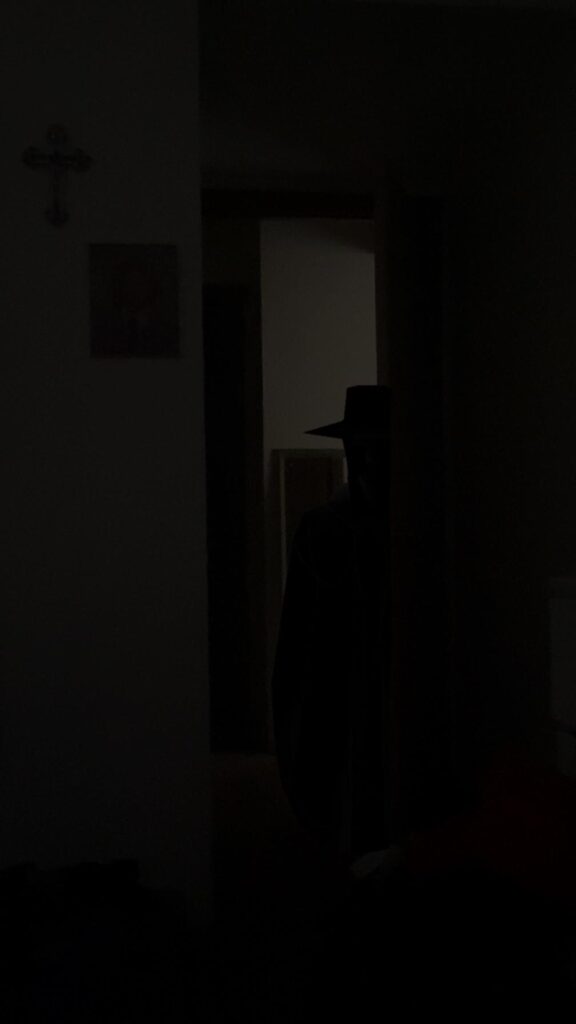
The hat man is not a local phenomenon, not a cultural artifact, not the product of one man’s suburban basement. He is one of the most consistently reported entities in the sleep paralysis literature, same height, same silhouette, same wide-brimmed hat, same absence of a face, same watching posture, across Sweden, Brazil, Japan, rural Appalachia, urban Britain, and indigenous reservations in North America. The accounts predate the internet by centuries. Indigenous traditions predate written records. The internet confirmed the consistency: strangers comparing notes for the first time and, with visible shock, finding they were describing the same figure.
He has become so normalized online that TikTok users reference him as a joke about Melania Trump’s inauguration look, the wide-brimmed hat, the V for Vendetta silhouette. That’s how the most consistently documented demonic entity in the sleep paralysis literature gets defanged. You make him a punchline, a hat joke. And the people who have seen him standing at the foot of their bed at three in the morning know exactly what that defanging is for.
From the testimony of those who have encountered him directly, the consistency is not just visual. It is behavioral. He watches. He does not approach immediately. He stands at the threshold, the foot of the bed, the doorway, the boundary of the sleeping space, and observes. The posture is reconnaissance. Several accounts note that he appeared multiple nights in a row before anything escalated. One account reported three appearances in a single night, each requiring a rebuke in the name of Jesus before he withdrew. The person who reported this noted, with the clarity of someone who has tested the proposition empirically: that’s the only thing that makes them stop. That tells you what they are.
The accounts that try to frame him as benign or even protective are worth examining for what they reveal about the mechanism. Some people report him arriving amid chaos, broken homes, violent households, times of crisis, and feeling a strange comfort in his watching presence. This is the seduction arc in its earliest stage. A presence that watches during your suffering, that seems to know you, that returns: this is not guardianship. This is assessment. The entity that introduces itself as protective is doing exactly what the tradition documents. The terror phase gives way to the familiarity phase, and the familiarity phase is where the door opens wider. The ones who report long-term comfort from the hat man, who treat him as a familiar, who say things like, as long as I’m not an asshole to him, he’s not an asshole to me, these people have been inside the seduction arc long enough that they can no longer see it from the outside.
The indigenous accounts are among the most specific and the hardest to dismiss. In some Lakota traditions, he is known as Walking Sam. During the winter of 2014 into 2015, the Pine Ridge Reservation in South Dakota recorded dozens of suicide attempts in a matter of months, with multiple deaths including children. Tribal members described Walking Sam as a seven-foot figure with no mouth, wandering the land at night, whispering to the young that they were unworthy of life. A Cheyenne River Sioux elder stood at a tribal council meeting and begged for help. She said Walking Sam could be seen and picked up on police scanners, but could not be caught or stopped. Groups of teenagers were found with nooses already tied. A pastor named John Two Bulls reached one group in time. Not everyone was reached in time.
This is what the hat man looks like when the door has been open long enough.
The wide-brimmed hat is not incidental. In the old traditions, it marks a specific category of figure: one who moves between worlds under cover. Hermes travels between the divine and human realms wearing the petasos. Odin moves through the world of men with his hat pulled low over the missing eye. The hat marks the liminal traveler, the figure that belongs to the crossing-point rather than to either side. When the hat man stands at the foot of your bed, he stands at the threshold of the most vulnerable state you enter every night, not quite sleep, not quite waking, the passage where the doors are thinnest.
The facelessness is not random either. The face comes later. The beautiful guide, the trusted form, the entity that eventually looks like someone you’d follow, that arrives after the territory has been surveyed, after access has been established, after the door is wider. What appears first is the assessor, the advance scout, the one checking whether the ground is worth taking. Aquinas, treating demonic operations in assumed forms, notes that they are not constrained by place the way bodies are, that an incorporeal substance contains the place it occupies rather than being contained by it. The hat man at the threshold is not bound by the room. He is assessing it.
I saw him before I had any of this framework. I had no name to call out. I was an atheist with nothing to call on.
I know what he was now.
Part Five: The Same Door, a Different Man
The Buddhist Household
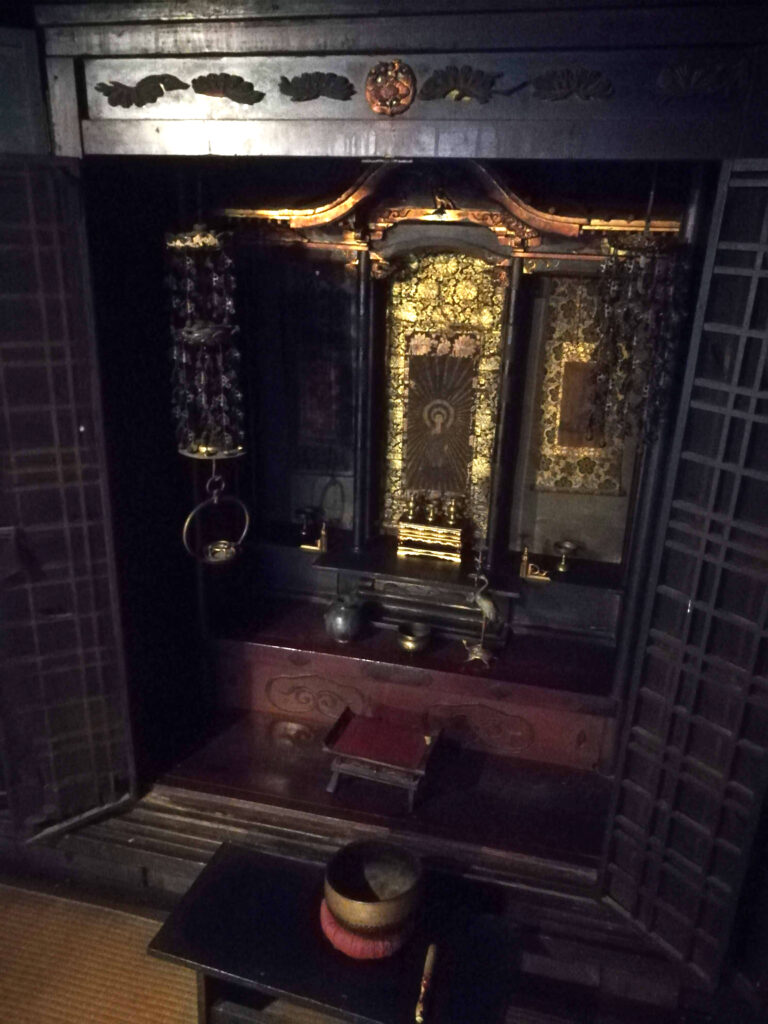
A more recent experience, now that I am years into the faith and living abroad.
I attended a Buddhist funeral out of respect for a family I care about. I held my prayer rope throughout the service and recited the Jesus Prayer. That night, I slept at the family’s residence, where a shrine with idols occupied a central place in the home.
I woke in the night with that old familiar feeling, the lock, the weight, the recognition I hadn’t felt in years. But the experience was entirely different now. A shadow figure was watching me from the side of the bed. I felt no fear. I said: Lord Jesus Christ, have mercy on me. It dispersed. I went back to sleep.
The same territory. A different outcome. The difference was not willpower, psychological preparation, or accumulated experience with the phenomenon. The difference was the name. In my atheist years, with nothing to call on, the paralysis had held for what felt like geological time before it released on its own, by grace, not by anything I did. Now I called the name, knowing who I was calling on, and it dispersed before the fear had time to settle.
Part Six: What the Church Knew
Three Sources

The Church does not tell you that these things are imaginary. It never has.
The tradition distinguishes three sources of dream experience: God, demons, and the soul itself. Not everything in sleep is spiritually significant. The Church Fathers are clear on this. Natural dreams, the wanderings of an anxious or overfed body, and the images drawn up from whatever the waking mind has been feeding on, these are not encounters. The framework you absorb during waking hours shapes the imagery produced in sleep. The person saturated in Jungian psychology dreams in archetypes. This is not a revelation. It is an echo.
But there is a third category, distinct from both the natural and the divine, and the tradition is unanimous about what it looks like and what it produces. St. John Climacus, in the seventh century, is specific: demons transform themselves into angels of light, assume the form of martyrs, and make it seem, during sleep, that you are in communication with them. The diagnostic sign is what follows upon waking. A genuine divine encounter leaves you trembling and sorrowful in a way that produces repentance. A demonic counterfeit leaves you with what Climacus calls unholy joy and conceit, the particular inflation of someone who has been made to feel specially visited.
He who believes in dreams is completely inexperienced, Climacus writes. He who distrusts all dreams is a wise man.
This is not an argument against the reality of what is encountered. It is an argument for the danger of engaging in it without armor, and for the specific hazard faced by the person who seeks the experience rather than receiving it.
St. Ignatius Brianchaninov, writing about what the Orthodox tradition calls prelest, spiritual delusion, identifies the central hazard precisely. Prelest is invisible from the inside. The person inside it cannot receive correction because the delusion has become their identity. The lucid dreamer who has spent years cultivating interior experiences as evidence of his expanded consciousness and has built a self-understanding on what he encountered in those states is not going to hear the Church’s warning as a warning. He is going to hear it as a threat to who he is.
The inability to receive correction is the diagnostic sign. I know this firsthand.
The general counsel of the Church Fathers on dreams is to ignore them, not because nothing is there, but because a person without years of ascetic formation and the guidance of a spiritual father is not equipped to distinguish among the frequencies. As one Orthodox priest summarizes the patristic teaching: when we attempt to dissect our dreams and interpret them for ourselves, we open our hearts and minds to innumerable evils. Even dreams that seem to teach a positive lesson can train a person to rely on nocturnal fantasies rather than on Scripture and the Church, feeding the sense that God speaks directly to them and that they therefore have no need of anyone else’s counsel. Even seemingly good dreams can stroke the ego of otherwise good people.
The Armor Is Specific
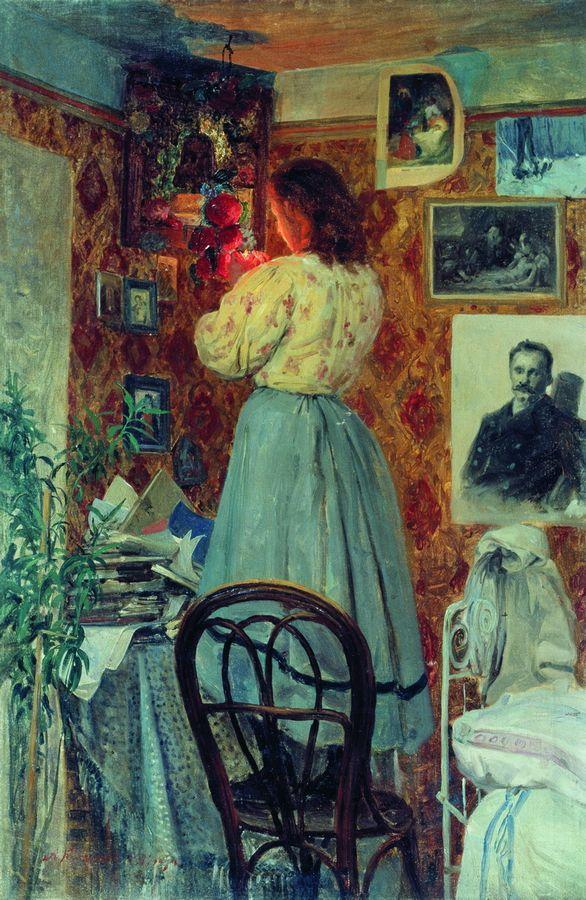
The evening prayer rule, actual prayers, prayed before sleep, not good intentions. The prayers ask specifically for protection during the vulnerable hours, not vague appeals, but named intercessions for named persons. The icon in the bedroom is a standing invitation for mercy in the space where you are most exposed. The presence of the saints is not decorative; it is the presence of those who have already passed through what you are about to enter every night. The sign of the Cross, made in that room, physically, at that threshold, the specific instrument of the enemy’s defeat, enacted in the specific place where the battle occurs.
Unconfessed serious sin is an open door. The tradition is explicit: the enemy has legitimate access to what remains unconfessed. Confession does not merely produce a feeling of forgiveness. It closes what sin opens. The person who carries unconfessed serious sin into sleep enters the most vulnerable state the body reaches, with a door left ajar. This is not a metaphor.
The Jesus Prayer, for those who go further: the hesychast tradition teaches that the prayer can continue in sleep, that the heart prays when the mind has withdrawn. This is the armor that does not come off. At the Buddhist household, the name dispersed what nothing else could, one breath, one rebuke, and it was gone. In my teenage years, there was no name called, no armor worn, and the release came only by grace I hadn’t earned and didn’t understand. The contrast is the point. There is nothing in the psyche or in secular practice that reliably and universally produces this result across cultures, centuries, and states of consciousness. The tradition explains why: because the name operates in the domain where the encounter actually occurs.
St. Silouan of Athos received a vision of the living Christ early in his monastic life, and then that vision was withdrawn for decades of what he described as darkness and spiritual warfare. This is the complete inversion of the seduction arc’s promise of increasing access and escalating revelation. The genuine divine gift arrives and then withdraws, leaving the soul to seek God through ordinary means, Scripture, the Eucharist, the confessor, the prayer rule, in humility rather than in the sensation of a special visitation. The enemy’s offer always runs the other direction: more, deeper, further, higher, and always predicated on what you are becoming rather than on what God has already done.
The Room Has Three Occupants

The Church does not tell you that the room is empty.
It tells you the room has three occupants, God, the enemy, and yourself, and that in the dark you cannot tell them apart without help you do not yet have.
He was at the foot of my bed when I was five. Uninvited. He was there again at fifteen, same hat, same silence, same posture, because by then I had learned to look for him. That is the difference between what arrives and what is summoned. It is the axis on which everything in this article turns.
The question is not whether he comes back. He does. The question is whether you walk through that door carrying the name or carrying nothing.