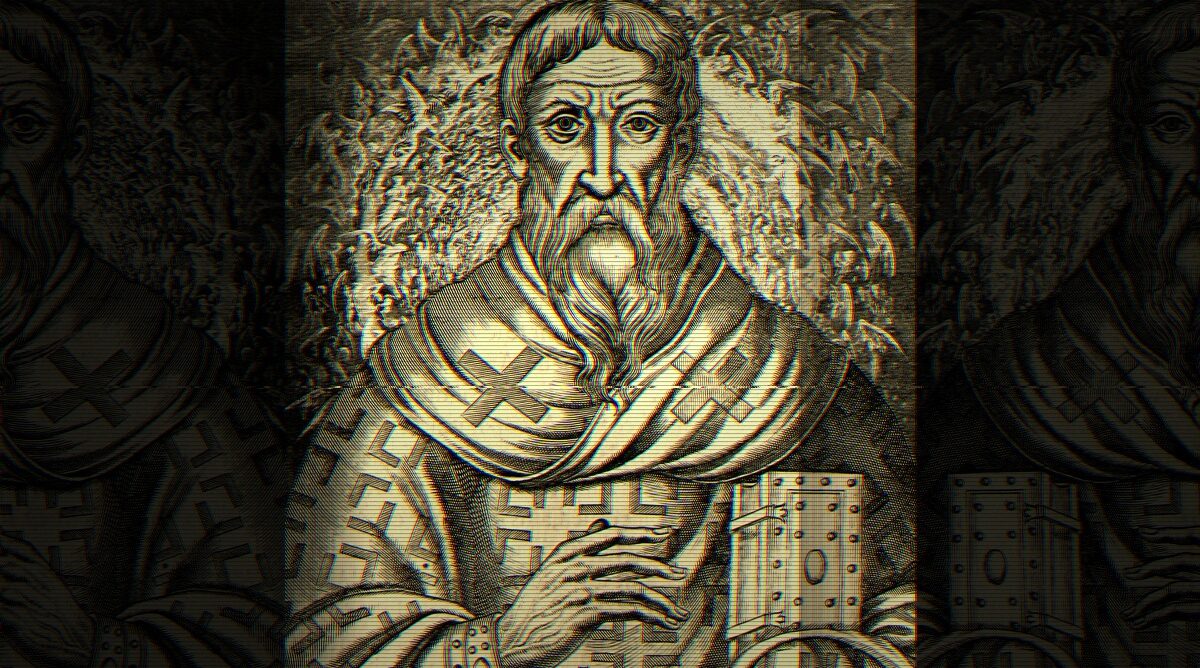
Every genuine angelic appearance in Scripture begins the same way. The angel arrives. The human being collapses. And the angel says: Be not afraid.
This is not reassurance in the therapeutic sense. It is a command to overcome a genuine and overwhelming response to the presence of a created being who stands closer to God than anything else in existence. Isaiah sees the Seraphim and cries out that he is undone, a man of unclean lips, finished, annihilated by proximity to holiness. Daniel sees the angel and falls on his face as though struck down. The shepherds at the Nativity are sore afraid. St. John on Patmos falls at the feet of the glorified Christ as a man already buried. Every time. Without exception. Be not afraid is not comfort. It is a command issued because what stands before you requires it.
The New Age angel, the warm soft therapeutic presence on greeting cards and airport bookstore covers, the spirit guide who validates your choices and confirms your journey, does not elicit this response in anyone because it is not what Scripture describes. It is a counterfeit assembled from the vocabulary of genuine tradition and emptied of everything that makes that tradition true. The real angels are terrifying because the real God is holy. The Orthodox tradition does not apologize for this.
The counterfeit is not a modern invention. Paul warns in 2 Corinthians 11:14 that Satan himself transforms into an angel of light, and his ministers transform themselves into ministers of righteousness. The enemy does not typically announce itself as the enemy. It arrives in light, in warmth, in apparent revelation, with messages that sound almost right. The almost is where the destruction lives. The diagnostic question the Church Fathers give us is not how the experience felt, but what it produced and whether it aligns with Scripture and Holy Tradition. By that standard, several celebrated visitations in recent history fail badly.
David Wilcock, one of the more prominent New Age figures of the past two decades, publicly described receiving instructions from what he believed to be the Archangel Michael, including guidance to bathe in his own urine as a spiritual practice. Whatever that entity was, it was not Michael. The genuine Archangel, whose name means who is like God, stands before the divine throne, commands the heavenly hosts, and delivers the binding of the devil in the Book of Revelation. He does not instruct human beings in urine therapy. The instruction itself is the diagnostic. When the spirit’s guidance contradicts human dignity, produces humiliation, and generates no movement toward Christ, the Church Fathers’ counsel is uniform: do not engage. Flee.
Joseph Smith presents a more consequential case. Smith, a Freemason initiated into the fraternity seven weeks before introducing the LDS temple endowment ceremony, claimed visitations from the Angel Moroni and a restoration of lost scripture. The content of those revelations directly contradicts the established canon, denies the Orthodox understanding of the Trinity, and produces a religious system that one historian accurately described as Celestial Masonry. Whether the entity Smith encountered was a deceiving spirit operating in the spiritual vacuum of his occult involvement or something else entirely, the test remains the same: a genuine angelic messenger does not contradict Scripture, does not restore what the Church has preserved intact since the Apostles, and does not happen to arrive seven weeks after the visionary joins a secret society built on pagan mystery religion.
The case of Muhammad is the oldest and most consequential of the three. The entity that appeared to Muhammad in the cave at Hira and commanded him to recite identified itself as Gabriel. The content of what followed over twenty-three years directly contradicts the Gospel at every essential point, denies the divinity of Christ, denies the crucifixion, and commands violence against those who reject the message. The genuine Archangel Gabriel announced the Incarnation of the Word of God to the Virgin Mary. He did not subsequently appear in a cave to produce a revelation that negates what he announced in Nazareth. The Orthodox Church has no difficulty naming this: a jinn, a deceiving spirit, or a fallen angel operating in the spiritual geography of Arabia appeared to Muhammad and produced a revelation that has been at war with the Gospel ever since. The inversion is consistent. The angel of light does not always look like darkness. Sometimes it looks like monotheism. Sometimes it looks like revelation. The test is whether it leads to Christ or away from Him.
The instruction the Fathers give on all of this is the same instruction given to the monk tempted by spiritual experiences: do not receive visions, do not engage with apparent angelic messengers, do not build theology on private revelation that has not been confirmed by the Church. The guardian angels are real. The Archangels are real. The hierarchy is real. But precisely because it is real, the enemy can imitate it, and has, repeatedly, to devastating effect. The discernment of spirits is not a talent. It is a discipline, acquired through ascetic formation, humility, and submission to a spiritual father and to Holy Tradition. Without that formation, the spirit guide who feels like Gabriel may be something else entirely. It has been before.
Before a single order is named, one further point must be established. The Church has always walked a careful line on this subject. In the days of the Apostles, impious worship of the angels spread throughout many lands, heretics who made a show of humility while elevating the angels to improper veneration, imagining themselves like the angels because of their abstinence. The Council of Laodicea condemned this heresy directly. But while condemning the heresy, it also decreed the lawful, pious, and proper veneration of the Holy Angels as God’s servants and guardians of the race of man, and established the celebration of the feast in their honor, November 8, the Synaxis of the Archangel Michael and All the Bodiless Powers. The Church venerates the angels. It does not worship them. Everything that follows operates within that distinction.
What follows is what the Fathers actually taught, St. John of Damascus, St. Dionysios the Areopagite, St. Gregory the Theologian, St. Cyril of Jerusalem, the scriptural record itself, and the patristic witness carried in the Divine Liturgy, about the nine orders of the angelic hierarchy, what they are, what they do, and why it matters that the Church has been right about this all along.
The Divine Council — Before the Orders, the Throne
Before the nine orders can be understood individually, the reality that contains them must be understood. That reality is the divine council, and it appears in Scripture with a directness that Western Christianity largely lost, while the Orthodox tradition preserved it in its architecture, iconography, and liturgy.
Psalm 82 opens with words that shook the ancient world: God has taken His place in the assembly of gods, in the midst of gods He holds judgment. The Greek Septuagint does not soften it. The word is gods, plural. The God of Israel stands in an assembly of divine beings and judges them. Psalm 89 continues: Who in the skies can be compared to the Lord? Who among the sons of God is like the Lord? A God greatly to be feared in the council of the holy ones, and awesome above all who are around Him.
Sons of God. Council of the holy ones. Beings who surround the throne. The picture is not monotheism in the modern philosophical sense, one God alone in an empty heaven. It is monarchy: one God, incomparable, enthroned, surrounded by the angelic council through whom He administers His creation. The word monotheism was not a category in the ancient world. Everyone assumed their god stood at the head of a council of lesser divine beings. The difference with Israel was not that Yahweh stood alone. It was that none of those lesser beings was anything like Him. Who is like God? The answer is no one. That has always been the point.
Job 1 and 2 depict the council convening, the sons of God presenting themselves before the Lord, with the Adversary among them. First Kings 22 shows the council deliberating on how to bring the wicked king Ahab to judgment, a lying spirit volunteering for the task, and God commissioning him. These are not comfortable texts. They are honest. St. Gregory the Dialogist explains the passage: the right hand of God is the elect part of the angels, the left hand is the fallen part. Not only the good serve God by the help they give, the wicked also serve Him by the trials they inflict. The elect spirits harmonize with divine mercy. The fallen ones, serving their own evil ends, still obey the judgment of God’s stern decrees.
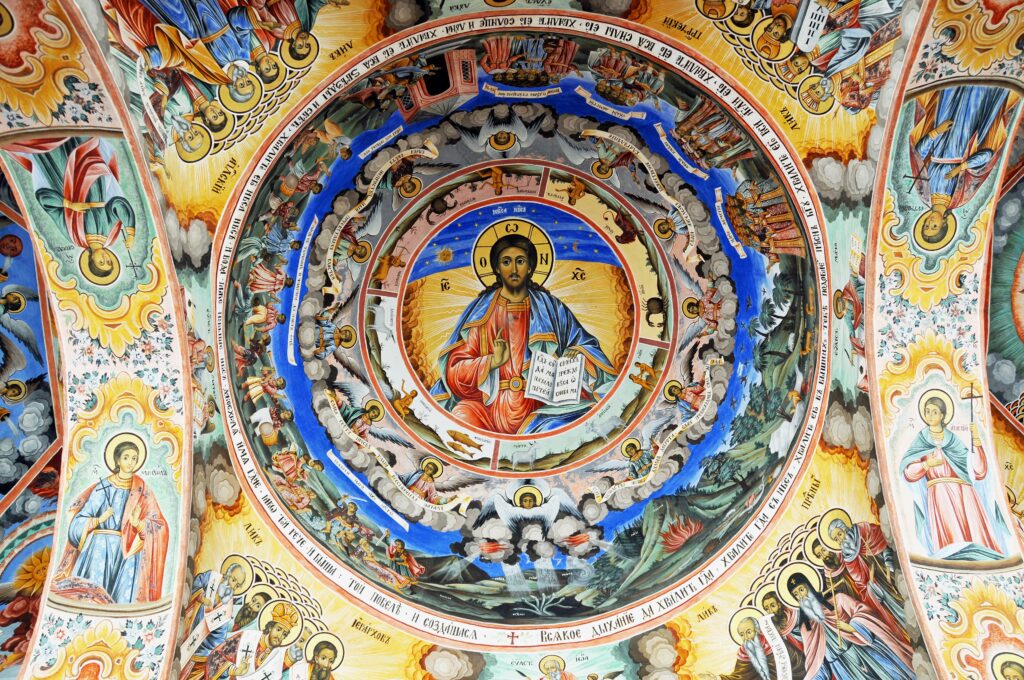
The divine council, then, is simply this: God enthroned, surrounded by the angelic orders through whom He governs creation, administers justice, and communicates with the world He made. It is not a committee. It is a court, royal, hierarchical, and real. And the Orthodox tradition did not leave it as a theological abstraction. It built it in stone and fresco into every church ever consecrated. The synthronon behind the altar, the bishop’s throne flanked by seats for his presbyters, is an architectural statement of the council. The bishop is an icon of Christ enthroned. His presbyters flank him as the angelic council flanks the divine throne. When the bishop celebrates the hierarchical Liturgy and takes his seat in the apse, surrounded by his clergy, he is doing something theological, not ceremonial. The dome above him depicts the Pantocrator, surrounded by the angelic orders. The congregation in the nave is not watching. It is participating. It is standing within the court.
The council is real. The throne is real. The beings surrounding it are real. Their ranks have names.
What an Angel Actually Is
St. John of Damascus in his Exact Exposition of the Orthodox Faith, Book II, Chapter 3, gives the foundational definition:
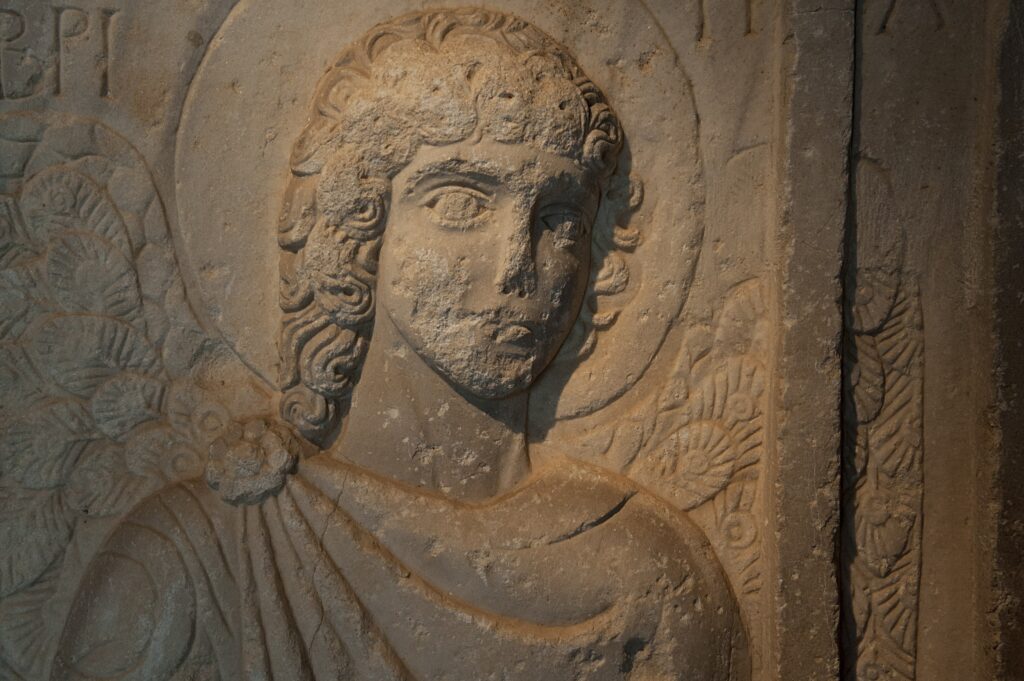
An angel is an intelligent essence, in perpetual motion, with free-will, incorporeal, ministering to God, having obtained by grace an immortal nature: and the Creator alone knows the form and limitation of its essence.
Intelligent essence. The angel is not a force, energy, or vibration. It is a personal being with intellect and will. In perpetual motion, not static, not hovering in pleasant luminosity, but continuously active in God’s service. With free will, and this is the hinge on which the entire history of the fallen angels turns. St. John is explicit: it is created changeable, with the power either to abide or progress in goodness, or to turn toward evil. Some turned. The fall was not inevitable. It was chosen. And immortal by grace, not by nature. The angels regard immortality as a gift from God, not as an inherent property of their being. God alone is without beginning or end by nature. Everything else, including the angelic orders, exists contingently, by gift.
Why did God create them? St. Gregory the Theologian answers: because for the goodness of God, it was not sufficient to be occupied only with the contemplation of Himself, but it was needful that good should extend further and further, so that the number of those who have received grace might be as many as possible, and therefore, God first devised the angelic heavenly powers. The angels exist because divine goodness overflows. They are not mechanisms of cosmic administration. They are the first fruit of a love that could not remain contained within itself. That is what you are learning about when you learn about these orders.
They are secondary, intelligent lights, St. John writes, derived from that first light which is without beginning, each sharing in proportion to his worth and rank in brightness and grace. The hierarchy reflects the degree to which each order participates in the divine light, and that participation is real. The angels of the highest order are literally brighter than those of the lower orders.
One clarification before the orders are described: the different ranks of angels are not different species. They do not reproduce. They are not the cosmic equivalent of dwarves and elves, distinct creatures with different shapes. The word angel, from the Greek angelos, means messenger, and that is one of the jobs. Not all ranks have that job. Calling them all angels is technically inaccurate, in the same way that calling an entire army privates would be inaccurate. The nine orders describe ranks, jobs, offices, functions within a single category of created intelligent beings. A single angelic being can hold more than one rank across its functions. Michael does exactly this, as we will see.
St. John of Damascus offers something directly applicable to the investigative work this publication undertakes: they are the guardians of the divisions of the earth, set over nations and regions, assigned to us by our Creator. The angelic hierarchy does not govern a private spiritual realm. It governs the visible world. Every nation has its angelic guardian. Every significant institution has an angelic watch. When the guardian is displaced or has fallen, the institution reflects the nature of whatever has taken its place. The demonic architecture embedded in the civic institutions this publication has documented, the occult symbolism, the inverted sacred geometry, and the obelisks at the centers of capitals, is what happens when the principality guarding a place has been replaced. You can read a nation’s spiritual state in its public symbols if you know what to look for.
The Scale

A necessary pause before naming the orders. The Church Fathers who developed this framework were explicit that the nine orders represent the names revealed in Scripture, not a complete inventory of the angelic world. There may be orders, choirs, and names that have not been disclosed to us. The nine are a window. They are not the ceiling.
St. Cyril of Jerusalem gives the scale: imagine how numerous the Roman population is; imagine how numerous the other barbarian tribes are today, and how many of them have died over a hundred years; imagine how many have been buried over a thousand years; imagine all the people from Adam to the present day, there is a great multitude of them. But it is still small in comparison with the angels, of which there are many more. The whole earth we inhabit is like a point in the midst of heaven, and yet it contains so great a multitude, what a multitude must the heaven that encircles it contain? And must not the heaven of heavens contain unimaginable numbers?
Daniel saw it: a thousand thousands ministered to Him, and ten thousand times ten thousand stood before Him. At Bethlehem, a multitude of the heavenly host appeared. What was visible to the shepherds was presumably only the fraction of the host the human eye could bear. The nine orders are a taxonomy of the revealed portion of a reality too vast to fully comprehend. Keep that in mind as we name them.
The Three Triads
St. Dionysius, in The Celestial Hierarchy, divides the nine orders into three groups of three, organized by proximity to God and by mode of participation in the divine light. St. John of Damascus confirms this arrangement: the first group consists of those in God’s presence, directly and immediately united with Him, the Seraphim, the many-eyed Cherubim, and those who sit on the holiest Thrones. The second group comprises the Dominions, Powers, and Authorities. The third and last comprises the Principalities, Archangels, and Angels.
The First Triad — Those Who Stand Before the Throne
Seraphim
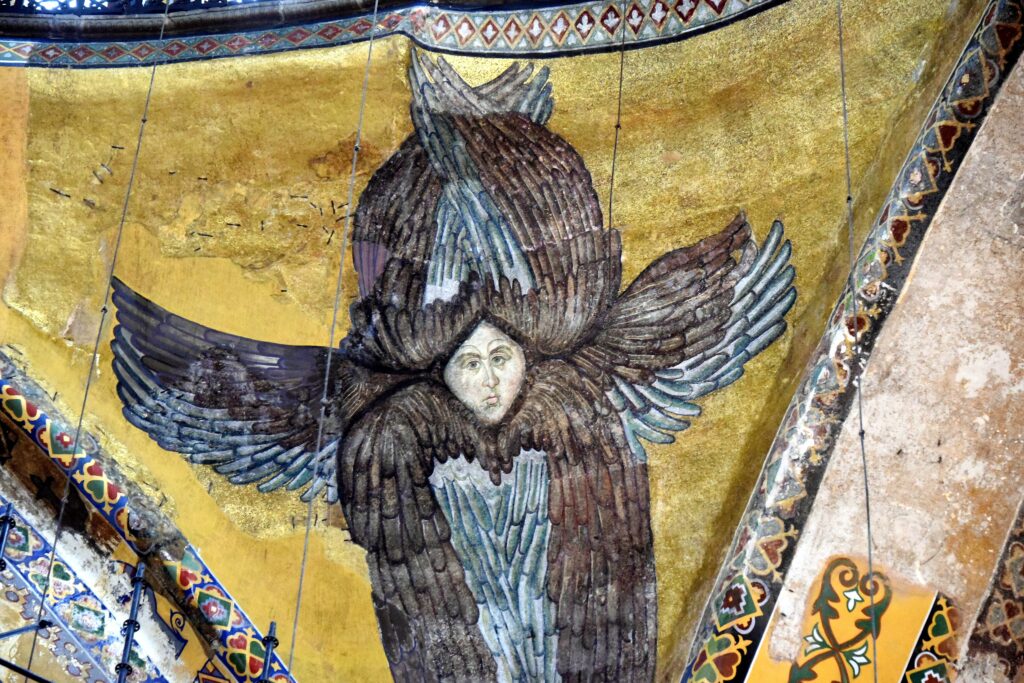
Isaiah 6. The prophet sees the Lord seated on a throne, high and lifted up, His train filling the temple. Above it stand the Seraphim, each with six wings, two covering their faces, two covering their feet, and two for flight. They cry to one another: Holy, Holy, Holy, Lord of Sabaoth, heaven and earth are full of Thy glory. The posts of the door shake at the sound of their voice, and the house fills with smoke.
There is a detail most Western readers miss. The Hebrew word seraph is linked to the Egyptian word for serpent. The pharaoh’s headdress, that cobra’s hood familiar from Egyptian iconography, was the seraph guarding the king, presenting him as a divine being. The seraph was a throne guardian in the Egyptian tradition and in the Israelite tradition. This is not the Bible borrowing from paganism. It is what we would expect if these beings actually exist: that independent ancient cultures, genuinely encountering them, would describe the same thing. The serpent connection also has implications for Genesis 3 and what was actually present in Eden, but that is a discussion for another article.
St. Dionysius on the name: The name Seraphim clearly indicates their ceaseless and eternal revolution about Divine Principles, their heat and keenness, the exuberance of their intense, perpetual, tireless activity, and their elevative and energetic assimilation of those below, kindling them and firing them to their own heat, and wholly purifying them by a burning and all-consuming flame.
The Seraphim burn. This is their defining trait, not warmth, not the gentle glow of a greeting card, but fire that purifies by consuming. The coal from the altar that touches Isaiah’s lips and takes away his guilt comes from the Seraphim’s domain. The purification is real, and it costs something. Isaiah felt it. He was not comforted. He was remade.
They stand nearest to Him of Whom it is written: Our God is a consuming fire, His throne is like a fiery flame, and the sight of the glory of the Lord was like devouring fire. Since they stand before such fiery glory, the Seraphim are themselves fiery. They burn with love for God and kindle that love in others, as their name reveals, for in the Hebrew tongue Seraphim means burning or consuming.
With two wings, they cover their faces. Even the Seraphim, the highest order, those who stand immediately before the throne, cannot look directly at the divine glory. The covering is not shame. It is the recognition that the divine light exceeds even the Seraphim’s capacity to receive it undimmed. With two, they cover their feet, humility before the divine presence. With two, they fly, in constant motion, constant service, constant worship.
St. John of Damascus describes their hunger for God, a hunger that never reaches satiation because the divine fullness is inexhaustible. The highest order of creation is defined by desire. That is worth sitting with.
Cherubim
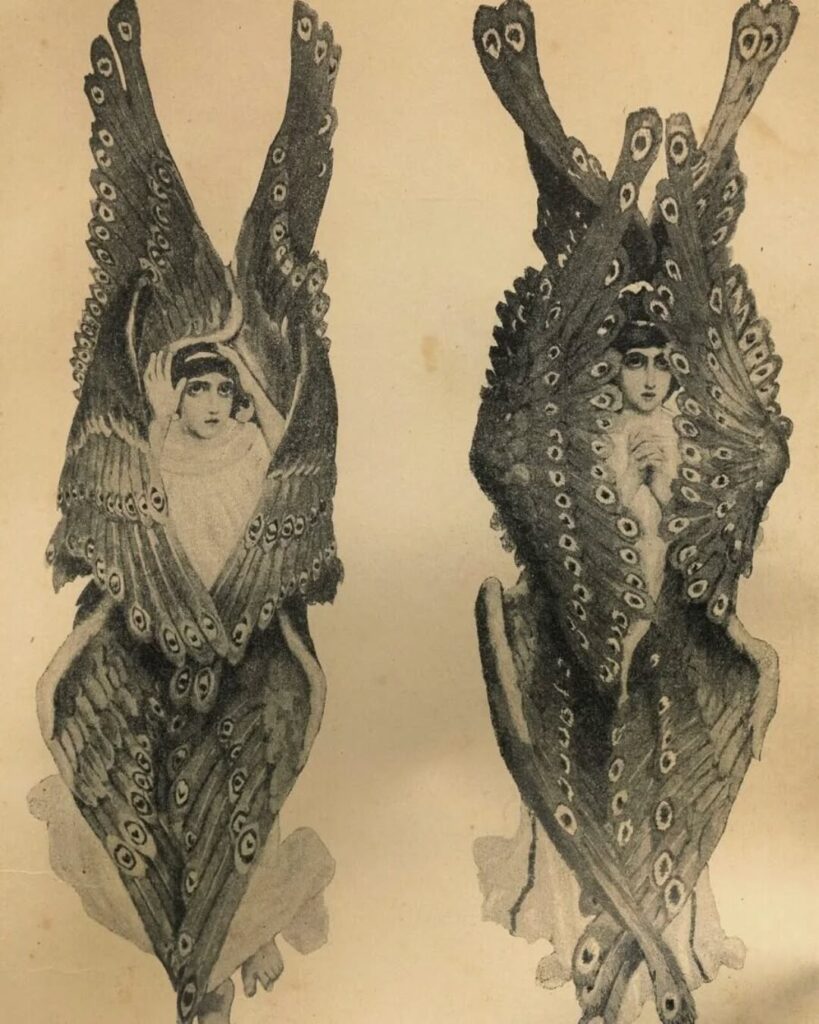
St. Dionysios: The name Cherubim denotes their power of knowing and beholding God, their receptivity to the highest Gift of Light, their contemplation of the Beauty of the Godhead in Its First Manifestation, and that they are filled by participation in Divine Wisdom, and bounteously outpour to those below them from their own fount of wisdom.
The Hebrew root of cherub, keruv, means living creature. When you encounter the phrase the living creatures in Revelation, those are the Cherubim. Fullness of knowledge. Stream of wisdom. These are the guardian words for the second order.
They appear in Genesis, placed at the entrance to Eden with the flaming sword after the expulsion, guarding the way back to the tree of life. They appear on the Ark of the Covenant, golden figures whose wings meet above the mercy seat, the place God designated for His speaking. The divine presence communicates from between their wings.
These angels, who abide in God’s ineffable light, shine more brilliantly than the orders below them, illuminated by the Light of Righteousness. They are the vehicle of God’s presence moving through the created order, the divine chariot described in Jewish mysticism for centuries. In the most holy place of Solomon’s Temple, giant statues of the Cherubim spread their wings across the entire space, their wingtips touching wall to wall, presiding over the Ark beneath them. After Titus destroyed the Temple in 70 AD, the Romans took them to Antioch and displayed them in the Jewish quarter as trophies of conquest. The most sacred objects in Israel’s religion, the visible representation of the divine throne, put on public exhibition as a demonstration of imperial power.
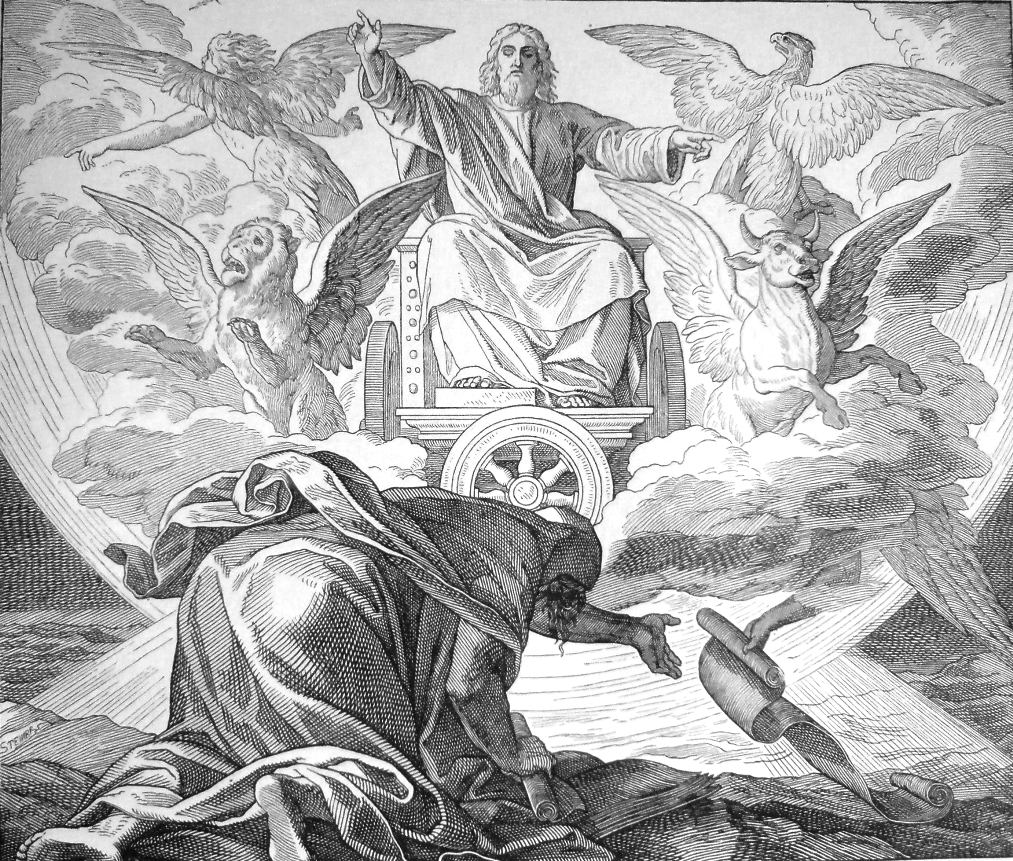
Ezekiel’s vision in chapters 1 and 10 offers the most detailed description anywhere in Scripture. Four faces: man, lion, ox, and eagle. Four wings. Hands beneath the wings. Beside each Cherub move the Ophanim, wheels within wheels, their rims covered in eyes, a separate order associated in the patristic tradition with the Thrones, whose spirit moves in concert with the Cherubim but who are distinct from them. The Cherubim carry the divine chariot. The Ophanim are its wheels. Both are real. Both are present. The vision is not describing one order but several, moving together in a coordinated act of divine governance. The four faces of the Cherubim are read by the Fathers as representing the four Gospels, Matthew the man, Mark the lion, Luke the ox, John the eagle, and the fullness of divine revelation they carry together.
The eyes on the Cherubim signify the fullness of divine sight. They see everything. They miss nothing.
Thrones
St. Dionysios: The name of the most glorious and exalted Thrones denotes that which is exempt from and untainted by any base and earthly thing, and the supermundane ascent up the steep. For these have no part in that which is lowest, but dwell in fullest power, immovably and perfectly established in the Most High, and receive the Divine Immanence above all passion and matter, and manifest God, being attentively open to divine participations.
The Thrones are characterized by receptivity. They receive the divine presence and bear it. They are the stability at the foundation of divine government, immovably established in the Most High. Colossians 1:16 includes them in the Pauline enumeration: whether they be thrones or dominions or principalities or powers, all things were created by Him and for Him. They exist because God made them. They exist for God.
The Ophanim of Ezekiel’s vision, those wheels moving in concert with the Cherubic chariot, are associated by many of the Fathers with the Thrones. The patristic witness is not unanimous on this point, but the connection is worth noting. What the vision shows in either case is that God’s throne is not fixed to a location. This matters enormously to Ezekiel, who receives the vision in exile in Babylon with the Temple destroyed. The divine throne is not captive in Jerusalem. It moves. God is not contained by any geography. That was the message Ezekiel needed to hear in a foreign land. It is the message the Thrones embody by their nature.
The Second Triad — The Governors
The second triad mediates between the first and the third. They receive the divine light from the Seraphim, Cherubim, and Thrones, and govern its downward distribution. Their primary characteristic is active governance, of the angelic orders themselves and of the created world through them.
Dominions
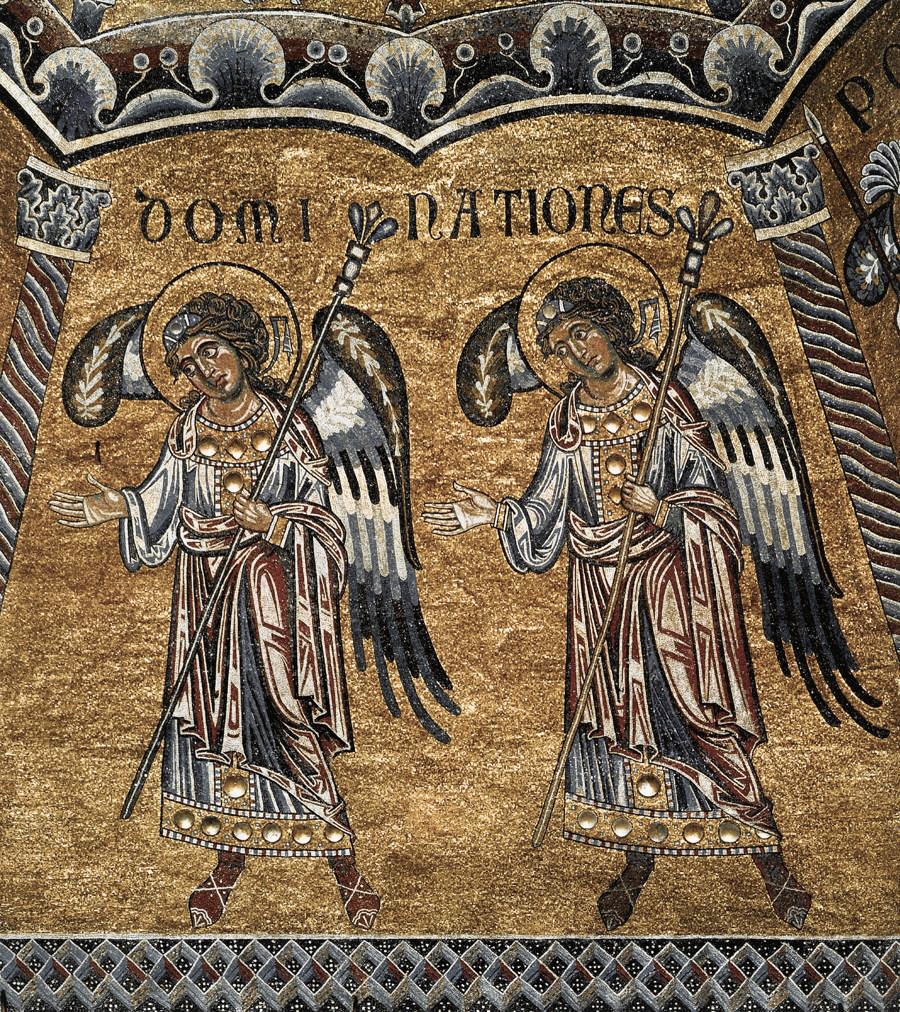
St. Dionysius describes them as those who aspire to the true lordship and participate in it according to their capacity. The Dominions govern the lower angelic orders. They do not typically interact directly with human affairs; their work is the governance of the hierarchy itself. They are characterized by freedom, transcendence of earthly concerns, and participation in divine freedom.
The Dominions are the first order to have a primarily governing rather than a primarily worshipping function. This is not a lesser dignity. Governance in the service of God is worship by other means. Remove the Dominions, and the hierarchy cannot function. They are the infrastructure of divine government, and before you dismiss that as abstract, consider what happens to any human organization when its governing structure is corrupted. Now scale it up.
Virtues
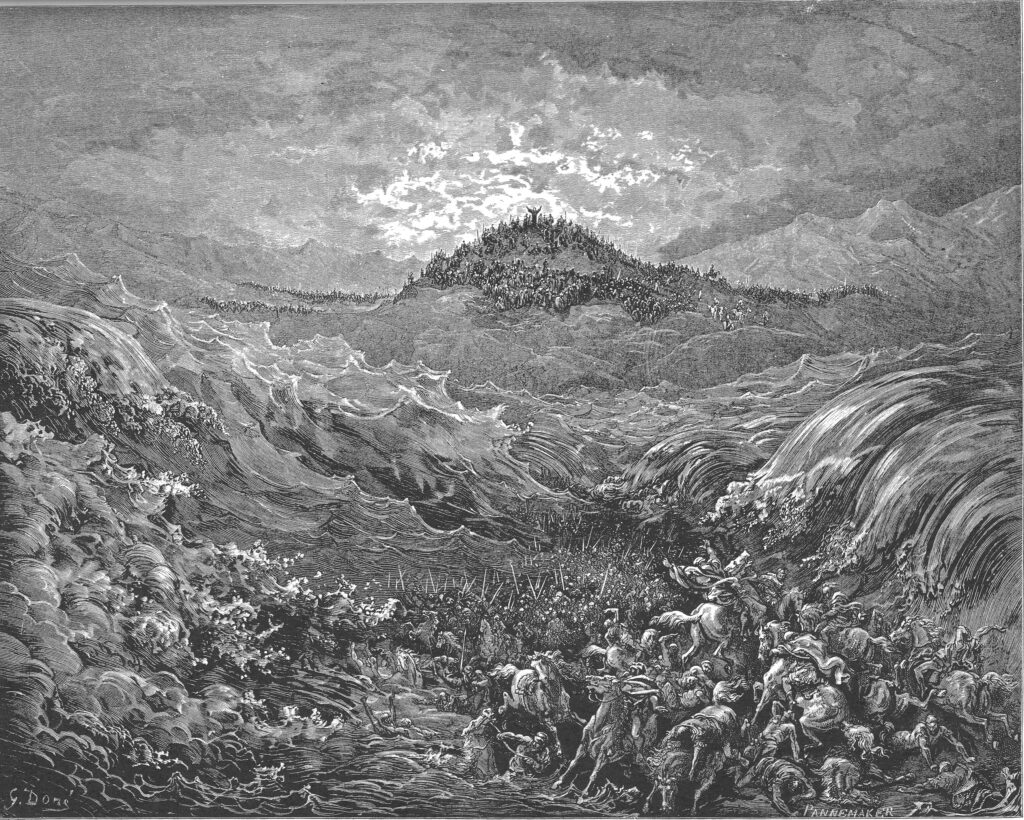
The Greek word is dynameis, the powerful ones, the mighty ones, the same word Paul uses for the power of God throughout the New Testament. They govern the natural order and the physical cosmos. When the laws of nature bend to God’s purposes, when the sun stood still for Joshua, when the waters of the Red Sea parted, when any miracle enters the created world, the Virtues are the order through whom this work flows. These are not merely the beings who sustain nature’s ordinary operation. They are the beings through whom God’s extraordinary interventions enter the world. The miracle is not a violation of nature. It is the Virtues doing exactly what they were made to do.
They are also associated with strengthening those who struggle under extreme conditions. Martyrs, ascetics, and those engaged in the most intense spiritual contest call on this order, whether or not they know the name for what they are calling on. The ancient Rosh Hashanah liturgy included a prayer specifically addressed to the angels of the trumpet-blast, the beings responsible for carrying that sound into the heavenly realm. This shows how fully developed the angelic involvement in the created order was for first-century Jews. Not metaphor. Administrative reality.
Powers
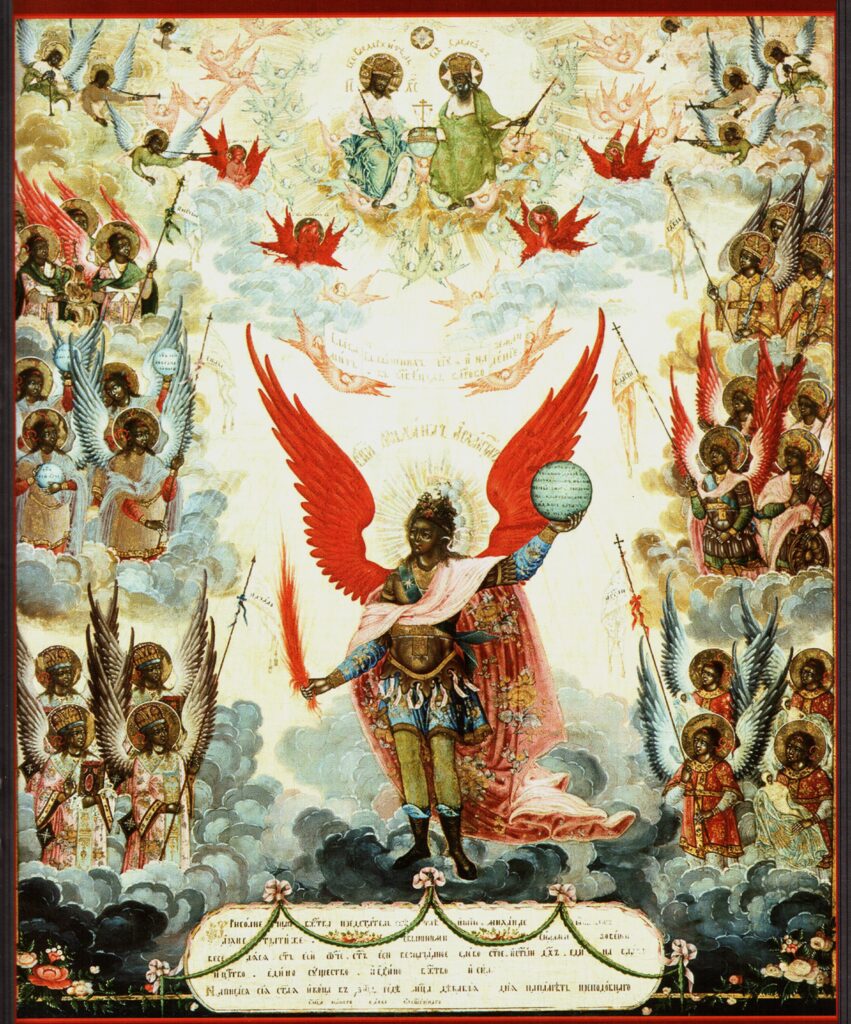
St. Dionysius: The name of the holy Powers signifies an orderly and unconfined order in the divine receptions, and the regulation of intellectual and supermundane power which never debases its authority by tyrannical force, but is irresistibly urged onward in due order to the Divine.
The Powers are warriors in a sense the other orders are not. Their specific function is to fight demonic forces and preserve the cosmic order against incursion. They restrain evil and protect the boundaries between the spiritual and material realms. Paul names them in Ephesians 6:12, specifically their fallen counterparts: we wrestle not against flesh and blood, but against principalities, against powers, against the rulers of the darkness of this age, against spiritual hosts of wickedness in the heavenly places. The fallen members of an order do not abolish the order. The unfallen Powers are on the other side of that conflict, holding the line against the fallen members of their own order. The battlefield is real. The combatants are real. And the Powers are winning because God’s dispensation governs even the fallen ones.
The Third Triad — Those Who Serve Creation
The third triad is closest to the material world and to human beings. It is the most active in human history and human life, the order most commonly encountered in Scripture, most directly engaged with the affairs of nations and individual persons.
Principalities
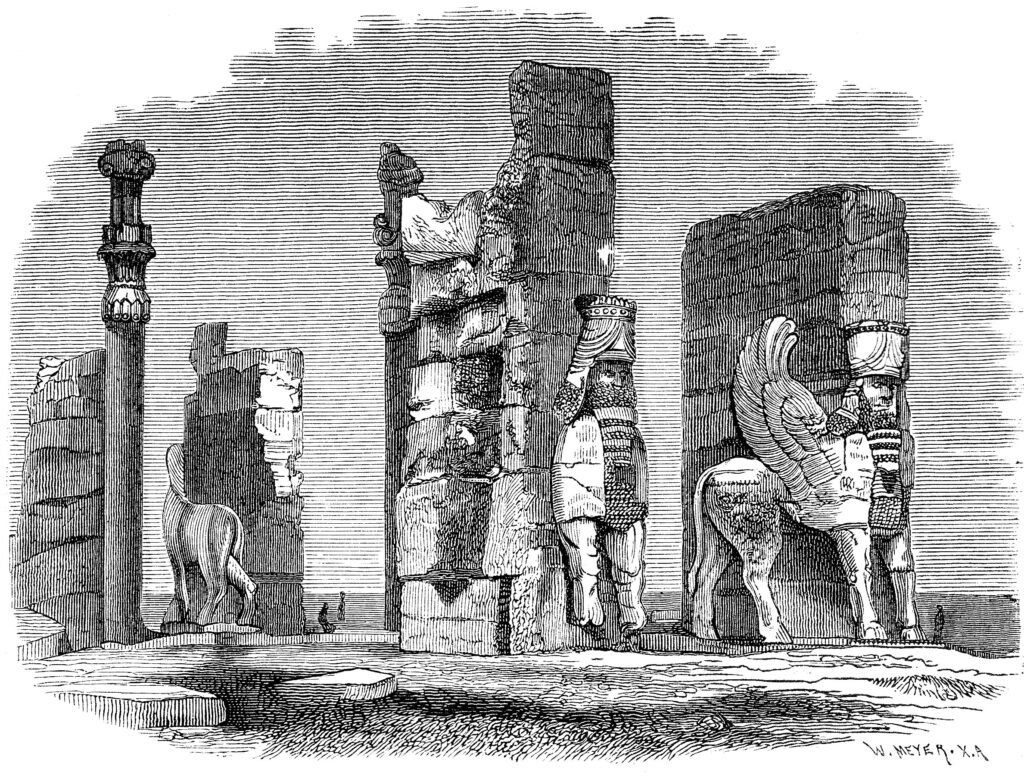
The Greek is archai, beginnings, rulers. St. Dionysius: They possess a Godlike princeliness and lordship, and pass on their Godlike princeliness to the orders below in the best manner.
The Principalities are the guardians of nations, cities, peoples, and institutions. Daniel 10 describes this with startling directness: the Prince of Persia and the Prince of Greece are angelic beings who govern national destinies and can delay or assist the messengers of God as they move through the spiritual geography of nations. Michael is the great prince who stands for the children of God’s people. Every nation has a Principality. Every institution of significance has an angelic guardian at this level.
When this publication documents the demonic architecture embedded in civic institutions, the Masonic geometry, the occult symbolism, the obelisks at the centers of capitals, the underlying theological framework is this: fallen Principalities govern those spaces. The guardian was displaced. Something else took the throne. A nation whose Principality is unfallen exhibits a different character in its public life than one whose Principality has fallen or been usurped. You can see it if you know what to look for.
Archangels
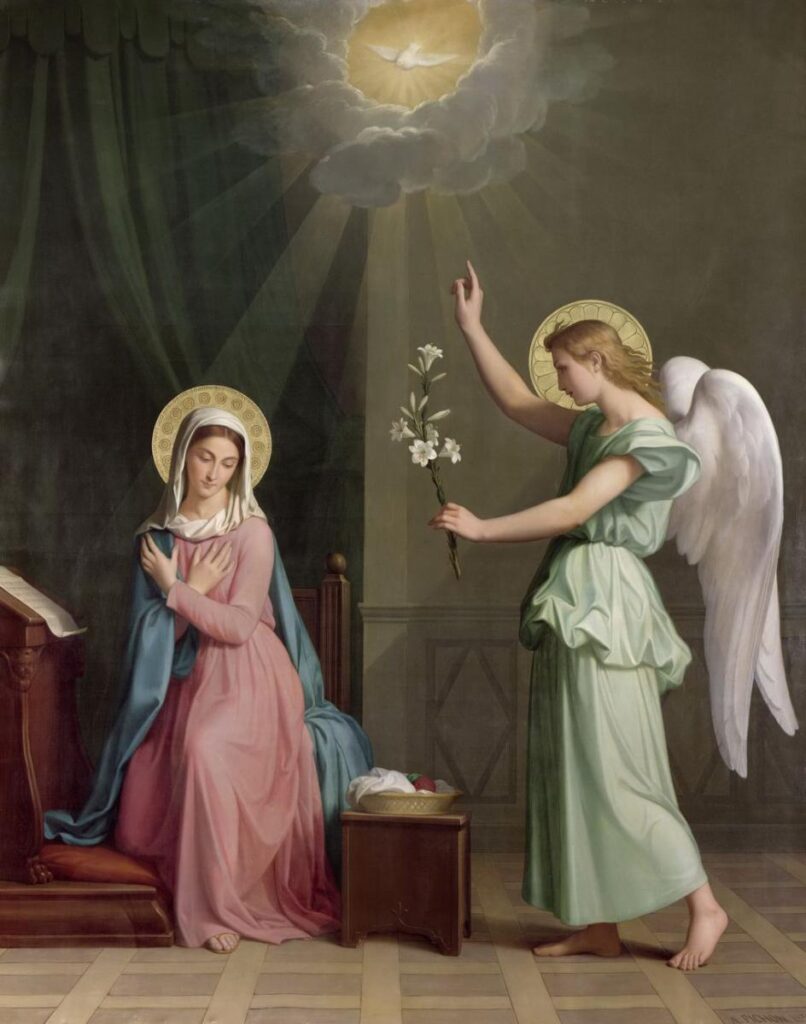
The great messengers, sent on the most significant divine missions in human history. Tobit 12 gives the most extensive angelic self-description in all of Scripture. Raphael reveals himself: I am Raphael, one of the seven holy angels, which present the prayers of the saints, and which go in and out before the glory of the Holy One. Seven holy angels. The Orthodox tradition names them: Michael, Gabriel, Raphael, Uriel, Selaphiel, Jegudiel, Barachiel.
A distinction is necessary here. There is a rank called archangels, thousands of them in that order, and then there are these seven who are called archangels in the sense of chief angels, the leaders. The seven are not a rank unto themselves. They are exceptional beings drawn from various orders who fulfill multiple functions. Michael, for instance, is simultaneously the commander of the heavenly hosts, the guardian of Israel at the level of Principalities, and the judge of rebellious powers at the level of Dominions. His name is not a name in the ordinary sense. It is a question in Hebrew: mi-cha-el, meaning who is like God? The answer is no one. Every blow Michael strikes is a theological statement.
Gabriel, whose name means God is my strength, is the Archangel of the Incarnation. He appears to Daniel to explain the vision. He appears to Zechariah to announce the forerunner. He appears to the Virgin, and the world is permanently altered: Hail, thou that art highly favored, the Lord is with thee. The Archangel whose name means God is my strength is the vessel through whom God chose to announce that He is entering His own creation as a man.
Raphael, God heals, accompanies Tobias on his entire journey, defeats the demon Asmodeus, heals Tobit’s blindness, and only at the end reveals who he has been all along. He walked with them the whole way. He appeared to eat and drink with them. He was simply present, doing the work, and then revealed himself and ascended. This is how the Archangels operate in the world. Present before you know they are there. Working before you understand what they are doing.
Angels
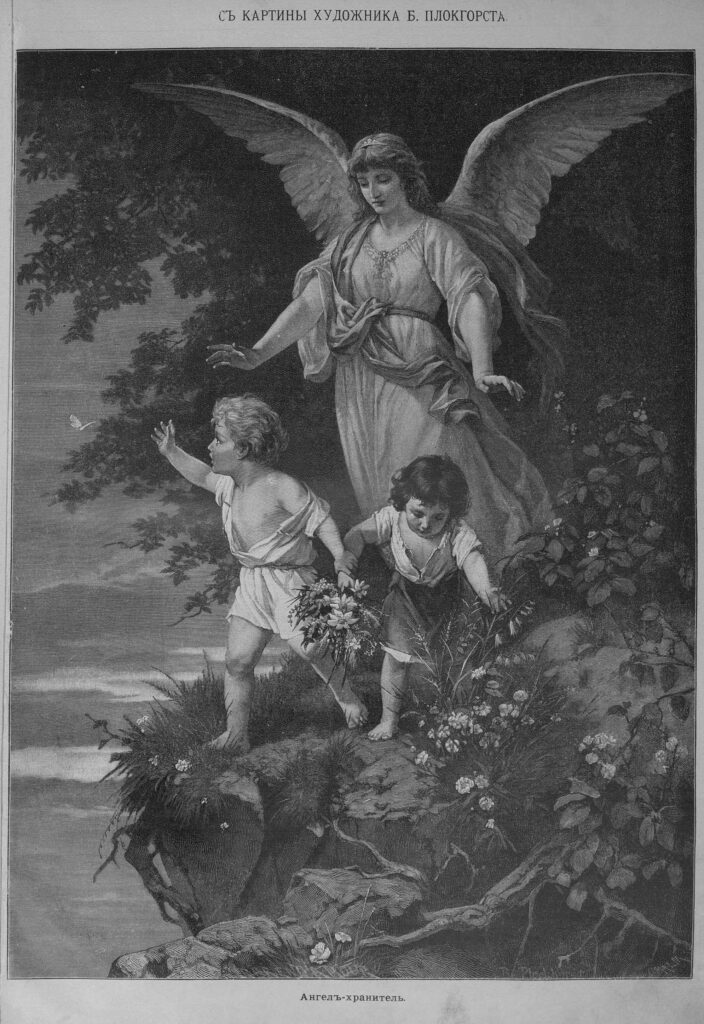
The lowest order in proximity to God. The closest order in proximity to human beings. These are the guardian angels of individual persons, assigned, according to the Orthodox tradition, to accompany each baptized Christian throughout life, present continuously, interceding constantly, grieved by sin and honored by virtue.
The prayer to one’s guardian angel is among the first prayers in the Orthodox morning rule. Not a pious sentiment. A theological fact acted upon liturgically. The guardian angel is a specific personal being assigned to a specific person. It was there before you were born. It will be there at your death. It knows you better than you know yourself because it has watched your entire life, does not forget, and does not sleep.
The Book of Tobit illuminates what this looks like from the outside. Tobias sets out on his journey with two companions, a dog and a man he believes to be a human traveler. The man is Raphael, one of the seven Archangels, traveling incognito the entire way. Tobias walks with him through dangers, through the defeat of the demon, and through the healing of his father’s blindness, the whole length of the journey, without knowing who is beside him. Only at the end does Raphael reveal himself. The Book of Tobit is a parable of our journey through life, in which we are accompanied by both the natural and the spiritual worlds, and the spiritual companion is often unrecognized until the journey is complete. The guardian angel walks with us the full length of our lives. We will find out at the end who has been with us all along.
St. Dionysius describes the Angels as standing at the boundary between the angelic and human worlds, carrying divine light downward in a form suited to human receptivity and carrying human prayers upward through the hierarchy toward the throne. They are the last link in the chain. They are the closest.
Above All the Orders — The Theotokos
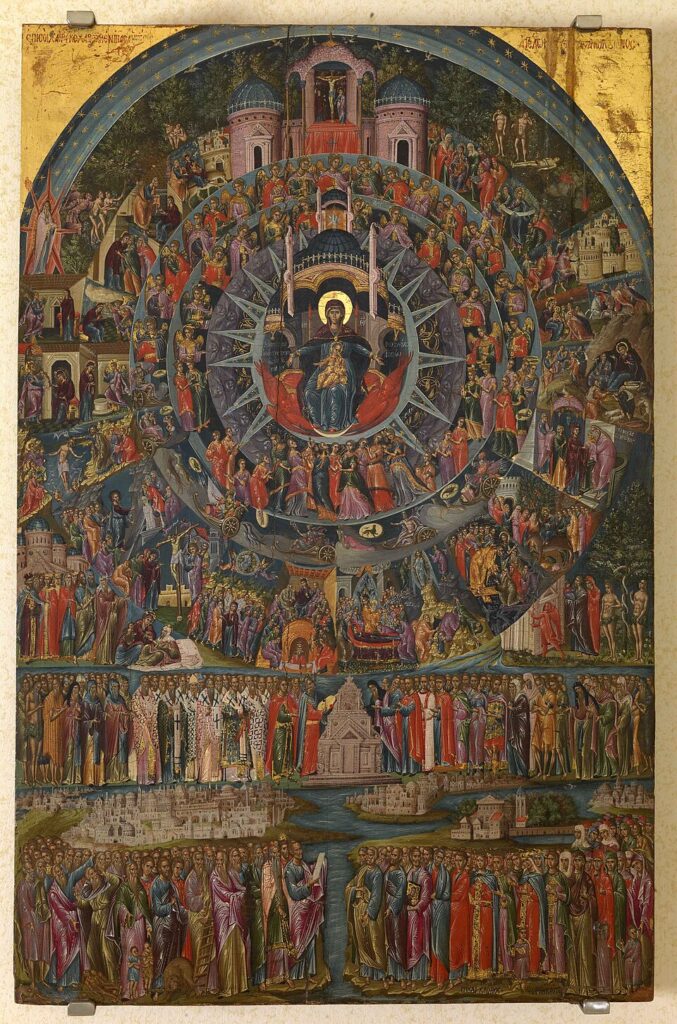
The article must end the hierarchy not with the Angels but with the one who transcends it.
The Orthodox tradition does not place the Most Holy Theotokos among the nine orders. She is not ranked among them. She stands above them, as the Church sings at every Divine Liturgy in the Axion Estin: More honorable than the Cherubim, and beyond compare more glorious than the Seraphim, who without corruption gavest birth to God the Word.
More honorable than the Cherubim. The order of divine knowledge and wisdom. Beyond compare, more glorious than the Seraphim. The order that burns closest to the divine throne. The one who bore God in her flesh surpasses in honor and glory the highest created beings. She did not merely carry a message like the Angels. She did not merely guard a threshold like the Cherubim. She became the living temple in which the uncreated God took on created flesh. No angelic order has done what she did. No angelic order can.
This is why the Orthodox Church’s highest prayer to her is not first petitionary but doxological. Before we ask her for anything, we declare who she is. And what she is exceeds the nine orders, the three triads, and everything St. Dionysius mapped with such care. She is at the top of the hierarchy not because she was created higher than the Seraphim, but because she was assumed into a relationship with the divine that the Seraphim themselves, burning, perpetually in motion, covering their faces before the divine glory, have not entered.
When the Orthodox Christian sings More honorable than the Cherubim, she is not offering a compliment. She is stating a fact about the cosmic order. The Mother of God stands at the summit of creation, above all the bodiless powers, interceding for the world whose Lord she carried. And the Seraphim and Cherubim who burn, guard, and behold, they honor her too.
The Fallen
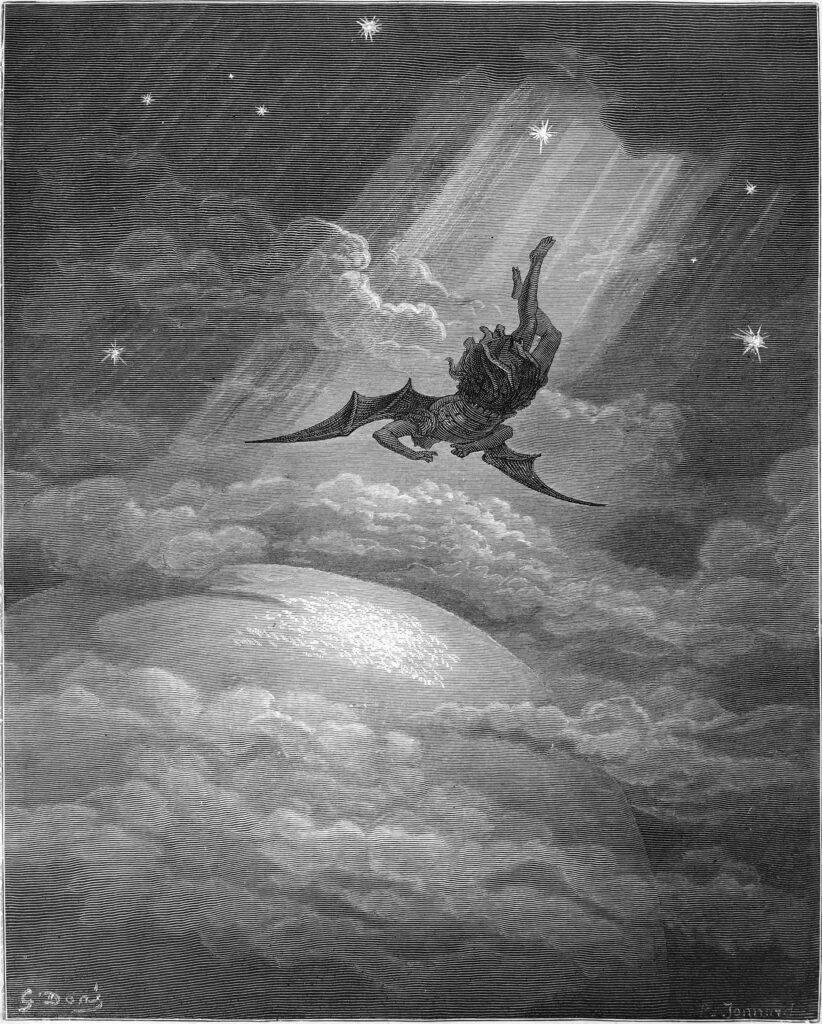
No Orthodox treatment of the angelic hierarchy ends without this. The fallen angels are not a separate creation. They are members of the orders just described who chose wrongly. The demonic hierarchy is the angelic hierarchy inverted.
A necessary clarification. The popular image of a vast war in heaven before the creation of the world, Satan and his legions cast out before Adam and Eve ever appeared, is neither in the Bible nor in the Orthodox Fathers. It comes from John Milton’s Paradise Lost, written by a Puritan in the seventeenth century. St. Andrew of Caesarea, writing in the sixth century, summarized the patristic consensus: all the Fathers taught, to that point, that after the creation of the world, the devil fell through envy. The fall did not precede creation. It followed it. And according to the broad patristic witness, it was not one event but several, at least five distinct angelic falls documented across the scriptural record, each involving different orders and circumstances. That full accounting is material for a separate article.
St. John of Damascus on the nature of the chief fall: He who from among these angelic powers was set over the earthly realm, and into whose hands God committed the guardianship of the earth, was not made wicked in nature but was good, and made for good ends, and received from his Creator no trace whatever of evil in himself. But he did not sustain the brightness and the honour which the Creator had bestowed on him, and of his free choice was changed from what was in harmony to what was at variance with his nature, and became roused against God Who created him, and determined to rise in rebellion against Him: and he was the first to depart from good and become evil. For evil is nothing else than absence of goodness, just as darkness also is absence of light.
Evil as privation. Evil is not a thing. It is the absence of a thing. Darkness is not a substance; it is the absence of light. The demons are not a counter-creation. They are beings of extraordinary capacity and dignity who emptied themselves of the good they were made for and filled the resulting void with its inversion.
Satan was the guardian of the earthly realm. He was set over it. God gave him authority over it. He was good. He fell. And along with him, an innumerable host subject to him was torn away, followed him, and shared in his fall.
The demonic hierarchy preserves the structure of the angelic hierarchy in every particular except orientation. Fallen Seraphim burn not with love for God but with hatred of Him and of humanity. Fallen Cherubim deploy the fullness of their knowledge in the service of deception, a being of limitless intelligence working against you. Fallen Powers oppose the unfallen Powers at the level of cosmic governance. This is what Paul describes in Ephesians 6. Specific beings of specific orders with specific functions, all inverted. The spiritual hosts of wickedness in the heavenly places are not a metaphor for bad feelings. They are real entities who were made for worship and chose otherwise.
St. John is careful about their limits: they have no power or strength against anyone except what God, in His dispensation, has conceded to them, as for instance against Job. They cannot do what God does not permit. But within that permission, they are effective, experienced, patient, and intelligent beyond anything a human being can match through natural means alone. This is why the spiritual life is not optional for the Christian who understands what he is living within.
The Liturgy as the Meeting Place
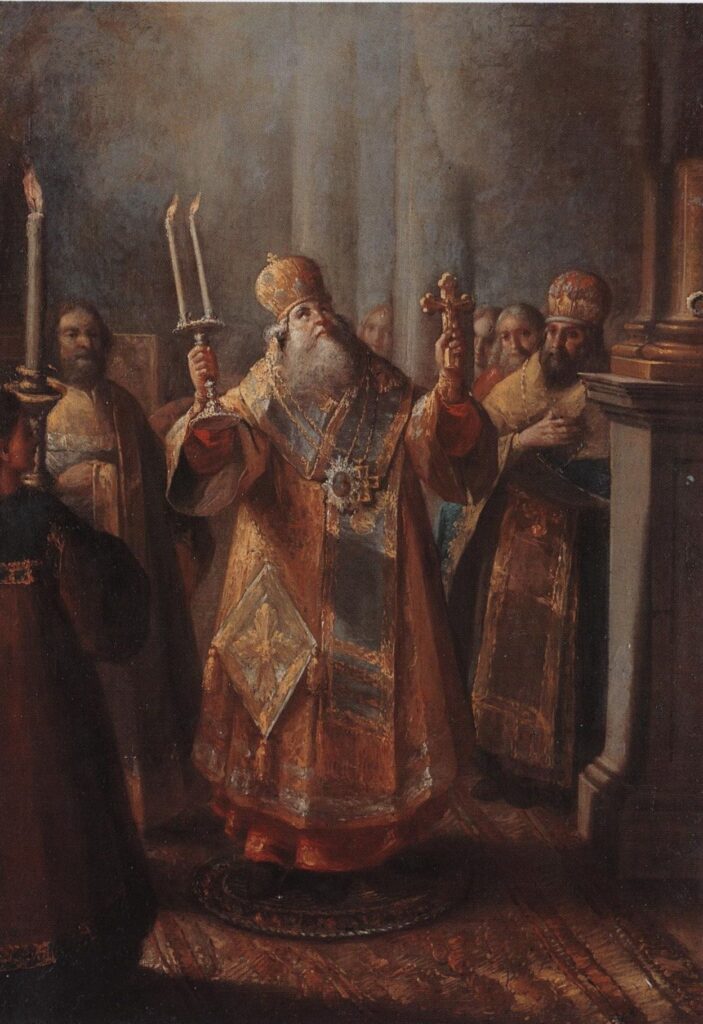
The Orthodox Christian does not encounter the angelic hierarchy primarily through study but in the Liturgy. Every Orthodox church is built as a theological statement about the relationship between heaven and earth.
The dome depicts the Pantocrator, Christ in glory, surrounded by the angelic orders. You walk through the door and into the space they inhabit. The narthex is the world. The nave is the earthly Church. The sanctuary beyond the iconostasis is heaven. The angelic orders painted on every surface are not decoration. They are disclosure.
The Trisagion, Holy God, Holy Mighty, Holy Immortal, have mercy on us, echoes the Seraphic hymn of Isaiah 6. The tradition records that a child in Constantinople was taken up among the angelic teachers during the time of Patriarch Proclus, taught this hymn by them, and then returned to teach it to the congregation. The Trisagion came from the Seraphim and has been sung by human voices ever since.
The Cherubic Hymn declares it plainly: We who mystically represent the Cherubim and chant the thrice-holy hymn to the life-giving Trinity, let us now lay aside all earthly cares. The congregation does not sing a song about the Cherubim. It stands in the position the Cherubim occupy, before the throne, in the act of worship that has been continuous since before the creation of the material world, and joins that worship as a participant, not as an audience.
The Sanctus, Holy, Holy, Holy, Lord of Sabaoth, heaven and earth are full of Thy glory, is the same hymn the Seraphim sing eternally before the throne. The priest lifts the chalice. The deacon swings the censer. The people sing. The Seraphim still sing. It is the same song. It has always been the same song.
And then the Axion Estin. After the consecration, after the Eucharist is completed, the Church turns to the one who stands above all the orders and sings to her: More honorable than the Cherubim, beyond compare, more glorious than the Seraphim. The hierarchy is named in that prayer. The hierarchy is transcended in the same breath.
This is what the New Age angel cannot give, what the jinn impersonating Gabriel cannot give, and what the entity instructing men to drink urine cannot give. The spirit guide, the cosmic companion, the warm presence that confirms your choices, none of that stands before the throne. None of it cries Holy, Holy, Holy. None of it burns with love for the God before whom Isaiah fell undone. What it offers is comfort without transformation, presence without holiness, and warmth without fire. It cannot offer anything else because it has never been in that room.
The worship offered before the throne since before time began is what the Orthodox Christian joins every Sunday, standing on the same earth as the rest of fallen humanity, opening her mouth to sing the hymn the Seraphim have never stopped singing, and asking for the intercession of the one who stands above them all.
Be not afraid.
But know what you are standing near.