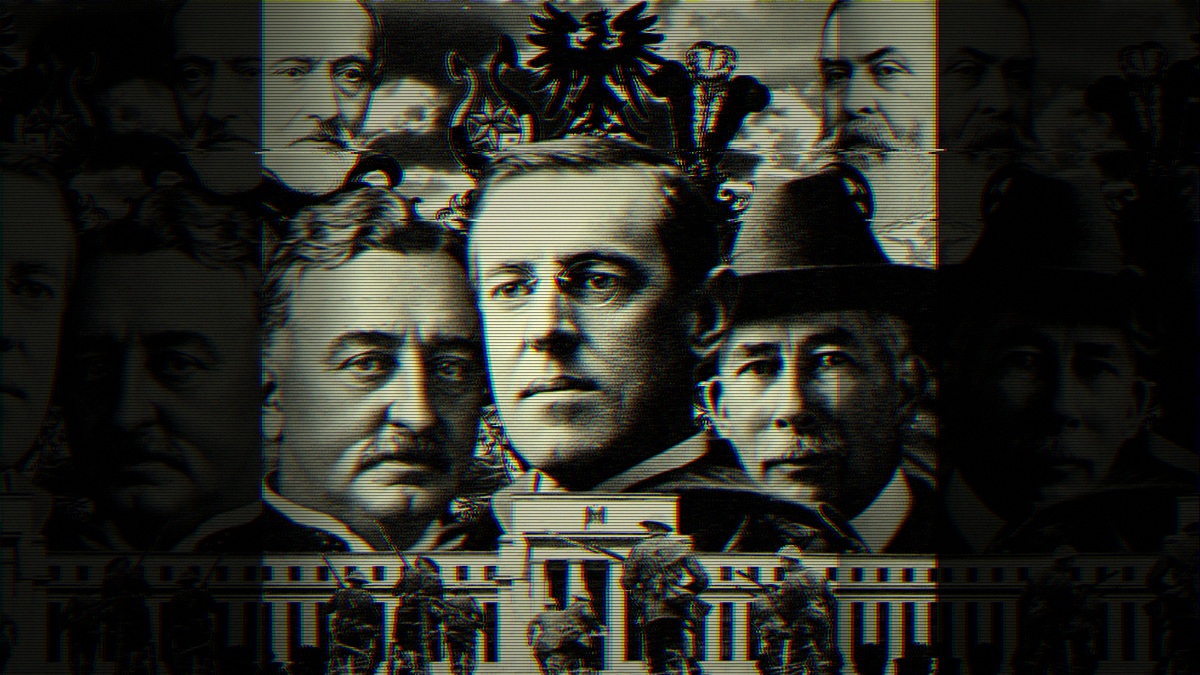
“Now there were more than forty who had formed this conspiracy.” — Acts 23:12 (NKJV)
I. First Principles and the Long Prelude to World War I
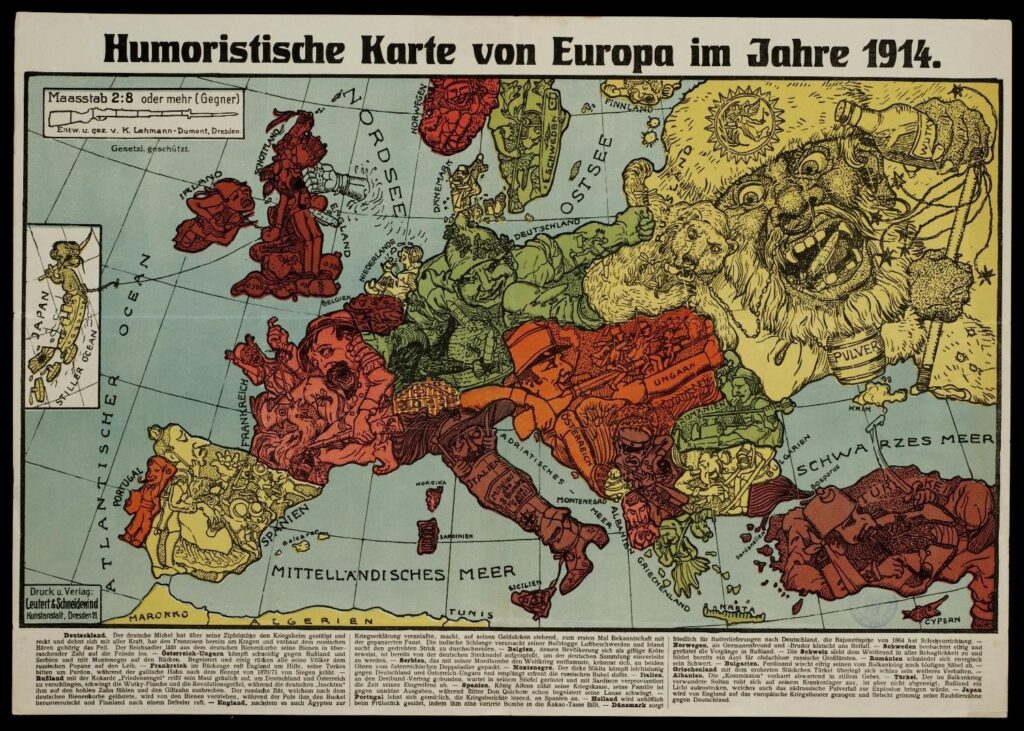
What if I told you that World War One wasn’t just an accidental surge of nationalism or a simple chain reaction of alliances that your school textbook taught you growing up, but the final chapter of a long-term plan carefully designed by powerful financial networks, secret negotiations, subversive societies, and ideological movements that served the interests of a few elites at the expense of everyday people — inflicted on our ancestors and still controlling us today?
Before dismissing this reality — which you might secretly believe is true — you may instinctively dismiss it as a conspiracy theory. You tell yourself that people can’t organize such lies or keep such secrets. How evil would people have to be to conspire to start a world war for their own benefit? But consider what earlier generations understood the word conspiracy to mean. Webster’s Dictionary of 1828 gave it no mystical, hysterical, or speculative connotations. It was a simple legal definition:
“CONSPIRACY, noun. A combination of men for an evil purpose; an agreement between two or more persons, to commit some crime in concert; particularly, a combination to commit treason, or excite sedition or insurrection against the government of a state; a plot.”
Nothing in that definition implies fantasy, hallucination, or mental illness. A conspiracy is simply when people work together — often in secret — toward goals they don’t openly share. Every job interview you’ve had, and the decision to hire or not, is technically a conspiracy. History is full of them: royal coups, assassinations, intelligence operations, political purges, and corporate collusion. It’s actually easier to believe conspiracies exist than to believe they don’t. To deny conspiracy is to deny the basic mechanics of political power.
In the West, we live under an “iceberg model” of historical education. The rulers — the puppet masters, if you will — control the narrative: a concise summary floating on the surface while the true bulk of events remains submerged, hard to access, intentionally concealed. When someone tries to expose the truth, they’re quickly labeled a conspiracy theorist or anti-Semitic to prevent people from engaging with the material. Hollywood amplifies this illusion with dramatic, easy-to-digest versions of history — alternative narratives that won’t upset us or incite rebellion — leaving us convinced we know the facts. Meanwhile, we stay stuck on the surface of the ice where they want to keep us.
Genuine understanding requires going beyond assigned textbooks or sanitized “approved literature” with glowing blurbs from the New York Times, and spending time with old books — hard to find, out of print, and often banned from modern marketplaces. I thought we had free speech. All we have is commodified speech. These are sources you’ll never see on a government-mandated curriculum list or assigned by your propagandist academic professor who wants to keep his pension. I was no different. I’m not an academic, an expert, or a sage — just a curious fool who wants to know the truth, nothing but the whole truth. The sources here are meant to guide you in the right direction for your own homework. I want you to challenge me, to prove me wrong. Use this as your launchpad.
You don’t even need a library. All you need is a computer — get off censored Google search. modernhistoryproject.org and archive.org are invaluable resources. Many of the books referenced throughout this piece can be found there for free. Anyone can do this research, which is precisely why it’s often discouraged. But who has the time? We work, pay taxes, and live inside digital distraction machines with weaponized algorithms — not far off from chaos magick — designed to drain curiosity. The mass ritual of sports, the modern bread and circuses, keeps us docile. Pop open another Bud Light, why don’t you?
With that in mind, let’s start from the very beginning — not in 1914 or with the assassination of the Archduke in Sarajevo, but centuries earlier, with the financial system that shaped the world well before World War I.
Eustace Mullins, in The New World Order — a book initially dismissed by me after a quick glance at his Wikipedia page until I realized that such weaponized language is precisely meant to discourage people from reading “dangerous” writers — argues that the modern global financial system isn’t truly modern but a continuation of ancient Babylonian methods of debt, taxation, and money creation. Babylonian religious rituals are also still employed by elites in their Masonic ritual halls, though they will gaslight and deceive you into thinking otherwise — story for another day.
The financial system evolved from the Phoenician trading networks to the influential Phanariot families of the late Byzantine era, and later into the Venetian and Genoese banking houses of medieval Latin Europe. These families and financial institutions eventually extended to the Protestant banking hubs of England, Scotland, and Frankfurt am Main. The key point is that by the early nineteenth century, international finance held more power than most governments. The same is true today. In the nineteenth century, monarchs governed, but bankers could always support or undermine their rule through financial influence.
By the fourteenth century, Genoese financiers already controlled large Scottish estates — Scotland being a hub for secret societies like the Freemasons. At the same time, the Byzantine Empire was collapsing, and the Orthodox Palaiologos dynasty faced ideological enemies whose mystical, proto-Gnostic, and materialist ideas later influenced the philosophical currents behind the Enlightenment, Hegel, Marx, and modern revolutionary movements — funded by oligarchs, never grassroots. When Constantinople fell in 1453, remaining Orthodox scholars and traditions migrated to Russia, forming the ideological foundation for Russia’s claim to be the Third Rome, where Christianity was preserved as the spiritually declining West continued to falter.
This matters because it established a long-term adversarial relationship: a conflict between Russia’s Orthodox Christian monarchy and the Western banking networks that increasingly influenced European politics but faced ongoing resistance within Russia. By the nineteenth century, the Rothschild family — one of the most influential families in history, yet never mentioned in state curricula — based in Frankfurt, Paris, Vienna, London, and Naples, was at the heart of this financial system. For 150 years their story was, to an amazing degree, the backstage of the history of Western Europe.
They were more than just bankers. They financed nations, stabilized governments, and toppled them. A nation in debt is constantly under its control. Whether true or not, the quote attributed to Mayer Amschel Rothschild reflects reality: “Let me issue and control a nation’s money, and I care not who writes the laws.”
Giuseppe Mazzini — revolutionary, 33rd-degree Freemason, and founder of nationalist movements — was quoted in 1844 as saying that Rothschild could be king of France if he wanted. Exaggeration? Maybe. But exaggeration only forms around genuinely powerful forces.
Even mainstream sources acknowledged this influence. The Jewish Encyclopedia of 1909 noted that by 1848, the Paris Rothschild house alone was worth 600 million francs — more than all other Paris bankers combined. The New York Evening Post in 1924 claimed that the German Kaiser had once consulted a Rothschild before declaring war, and that another Rothschild financed the coalition that toppled Napoleon.
To understand the origins of WWI, we need to explore the era of Napoleon.
At the start of the nineteenth century, Europe consisted of numerous states, but the main powers were Russia, England, Austria, Prussia, and France. France had grown into not only a global force but a center of revolutionary and Masonic influence. Napoleon Bonaparte’s rise in 1804 brought about significant military victories and, for a period, nearly total control over Europe. His major mistake happened in 1812 when he invaded Russia, which led to the collapse of his empire. After his defeat, the winning coalition gathered at the Congress of Vienna from 1814 to 1815 — one of the most significant political meetings in European history — a proto-European Union, if you will.
The Congress of Vienna was more than just a diplomatic meeting to restore borders after Napoleon. It marked the first coordinated effort by Europe’s creditors and aristocrats to create a supranational political structure — a model for the League of Nations and ultimately modern global governance. Behind the crowned heads and titled delegates, financial powers pushed Europe’s monarchies to accept a new order: an alliance between political elites and international finance. The visible delegates represented nations; the hidden interests represented banks.
The goal was “to overturn monarchies representing authority and tradition and replace them with the universal atheist masonic republic.” Whether taken literally or symbolically, traditional structures were being replaced by systems easier to control through ideological and financial networks rather than hereditary rulers.
While the Congress debated Europe’s future, Napoleon escaped from exile on Elba in February 1815, marched through France facing no resistance but receiving applause, and briefly regained power for the Hundred Days. His final defeat at Waterloo ended this episode almost as suddenly as it began. His exile to St. Helena — a remote island chosen to prevent escape — removed the last major obstacle to the emerging post-Napoleonic order.
Czar Alexander I sensed something deeper at work. He believed the Congress was a cover for establishing a European federation controlled by secret power networks. In response, he formed the Holy Alliance on September 26, 1815, with Austria and Prussia — an explicitly Christian alliance to defend monarchs who upheld Christian principles. British statesman Castlereagh mocked it as “sublime mysticism and nonsense,” while Austrian diplomat Metternich — widely considered aligned with Rothschild interests — called Alexander insane for supporting it. Yet the Holy Alliance exposed the ideological fractures beneath the polished diplomacy.
This interpretation is further supported by the Secret Treaty of Verona of 1822, which was included in the U.S. Congressional Record in 1916 — available today through the Government Publishing Office archives. Its first article stated that the great powers intended to “put an end to the system of representative governments… wherever it may exist.” Taken at face value, it shows that post-Napoleonic Europe was organized not for freedom but for control.
Various Enlightenment revolutions led up to the Decembrist Revolt, influenced by Freemasonic lodges operating in Russia.
From this point forward, the Romanov dynasty became the main obstacle to these networks’ long-term plans. Czar Alexander I was poisoned in 1825, and Czar Nicholas I died under suspicious circumstances in 1855. Later Romanovs faced ongoing efforts — political, ideological, and revolutionary — aimed at undermining the dynasty. All these efforts culminated in the Bolshevik Revolution of 1917, when revolutionaries stormed the Imperial Bank, seized Romanov assets, and confiscated over 150 million acres of imperial land. The Imperial Family was later executed in Ekaterinburg — a crime that, within the spiritual reality of the Orthodox Church, revealed them not merely as political victims but as the Holy Royal Martyrs, canonized in 1981 and 2000, venerated as saints who intercede for the faithful.
Few realize that the Romanov dynasty stored massive reserves abroad long before the revolution. Between 1905 and 1910, the Tsar deposited over $900 million into major New York banks: Chase, National City Bank, Guaranty Trust, J.P. Morgan, Hanover, and Manufacturers Trust — institutions that later became the core of the Federal Reserve Bank of New York when the Federal Reserve was created in 1914. The Tsar also held significant assets in London, Paris, and Berlin. Over the course of more than a century, the value of these lost Romanov funds would now be astronomical.
Efforts by alleged Romanov survivors were strongly opposed. Lord Mountbatten played a key role in suppressing these claims. A 1959 Observer report mentioned that Barings still held a significant Romanov deposit, yet no legal challenge was ever filed.
Controlling Russia’s future — and gaining access to its wealth — was not a side project but a primary goal for the networks shaping Europe’s future. This is the initial groundwork for fully understanding World War I.
II. The Shadow War Against Monarchy
After the Congress of Vienna restructured Europe and the Holy Alliance aimed to preserve Christian order, monarchy remained in place — an obstacle to subversive forces because Enlightenment-inspired democracy was necessary for ultimate control. So they adapted. Throughout the 19th century, revolutionary networks continued to operate covertly, supported by the same financial interests that helped shape the Congress while also working to undermine it. They shared the same long-term goal: dismantling Christian monarchies and establishing an international system that favored ideological materialism over tradition and faith.
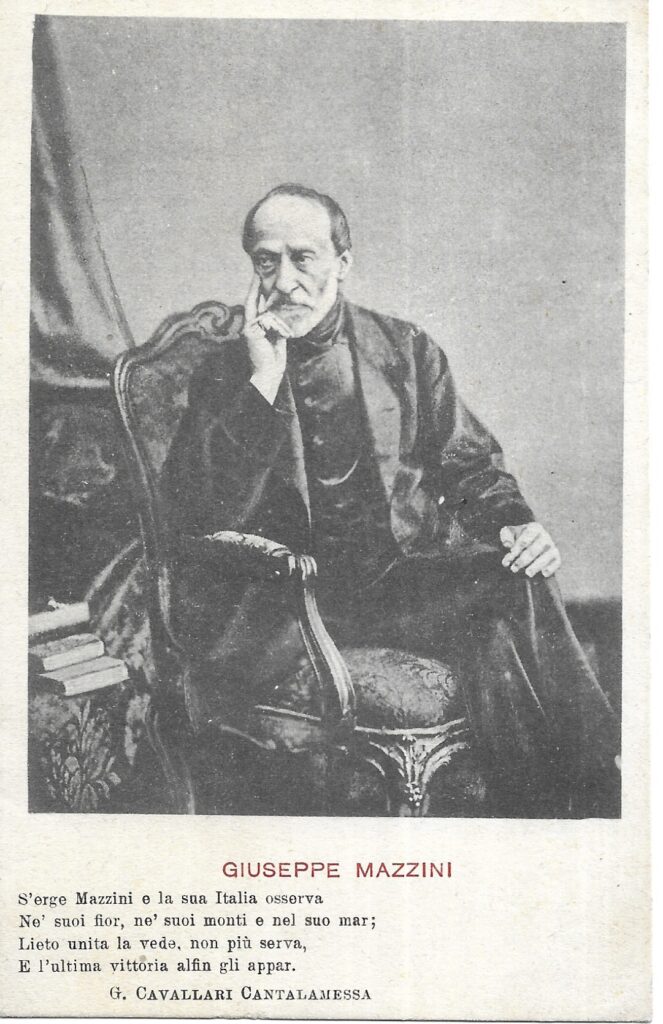
Giuseppe Mazzini is a great example. He became head of the Illuminati after Weishaupt died and was one of the most influential revolutionary figures of the century — his writings would later inspire President Woodrow Wilson, the president who pulled an isolationist America into a world war that forever changed the country and the world for the worse. Mazzini, a 33rd-degree Mason, led the Carbonari, an organization whose 1818 catechism stated the destruction of the Catholic Church as a core goal — a fact the Catholic Encyclopedia records openly. These secret societies overlap significantly. They use different names but pursue the same ends — a beehive structure that allows blame to shift across labels while the same unified objective moves forward in secrecy. One half of that goal was achieved a century later with Vatican II, whose intellectual genealogy modern historians partly trace to 19th-century liberal Catholic and revolutionary currents.
Mazzini’s influence reached well beyond Italy. He kept extensive correspondence with Albert Pike, the key figure in the Scottish Rite in America and author of Morals and Dogma. Pike shared Mazzini’s view that secret networks could reshape nations through careful, staged reform — order out of chaos. Although the letters exchanged between them are debated by historians, their ability to predict future events makes it easier to believe they were real. In these letters they discussed a “super-rite” to guide Freemasonry from above and even laid out a plan for future conflicts — three world wars — the first aimed at toppling Europe’s Christian monarchies. By the end of World War I, all of these monarchies had fallen, especially Russia, replaced by a system openly hostile to religion and fully controlled by the networks that helped establish it.
Their reported plan stated: “The First World War must be brought about in order to permit the Illuminati to overthrow the power of the Czars in Russia…”
We can debate the authenticity of the letters endlessly. But the predicted outcome proved correct: the fall of the Romanovs, the rise of Bolshevism, and the creation of the first supranational political organization — the League of Nations.
This reading views the nineteenth century as a long prelude to World War I — a clash between Christian monarchies on one side and revolutionary, Masonic, and secret society-aligned networks intertwined with financial powers. Each group pushed for its vision of Europe’s future, ultimately leading toward the third conflict mentioned in those letters — a planned conflict between Zionism and the Arab world, which is not difficult to imagine in today’s climate.
The fall of the Romanovs, the centralization of political power, and the weakening of traditional institutions were not isolated incidents but connected movements. Many of the participants probably never knew the overall plan — secrecy keeps things compartmentalized — but each played their part.
By the end of the century, these revolutionary, ideological, and financial networks were no longer limited to Europe. They had fully integrated into the United States, where a new tool for global control would soon be developed. Not a political treaty or military alliance, but a banking system — centralized, privately created, capable of funding wars, shaping economies, and transforming nations to match the will of its controllers.
But before this banking system could be established, another overlooked layer of coordination had to be put in place: an Anglo-American elite initiative that believed England was destined to lead the next phase of global order. To accomplish this, they aimed to bring America back under British influence — effectively undoing the Revolutionary War. Carroll Quigley documented this in The Anglo-American Establishment, one of the most important and least read books in American political history.
III. The Anglo-Imperial Blueprint: Rhodes, Milner, and the Making of a Managed World
While Europe experienced wave after wave of revolutionary movements and the rebellious worker bees dismantled the Old Order, a parallel effort was emerging in the English-speaking world. It was driven by elite imperial strategists, financiers, and thinkers who aimed to design the new world order from above. Their tactics were more subtle — almost like comic-book villains with their sneaky schemes — focused on global integration, supranational authority, and the transformation of civilization itself. Their ambitions echoed those of Mazzini and were influenced by the same mix of Masonic and Jesuit tactics.
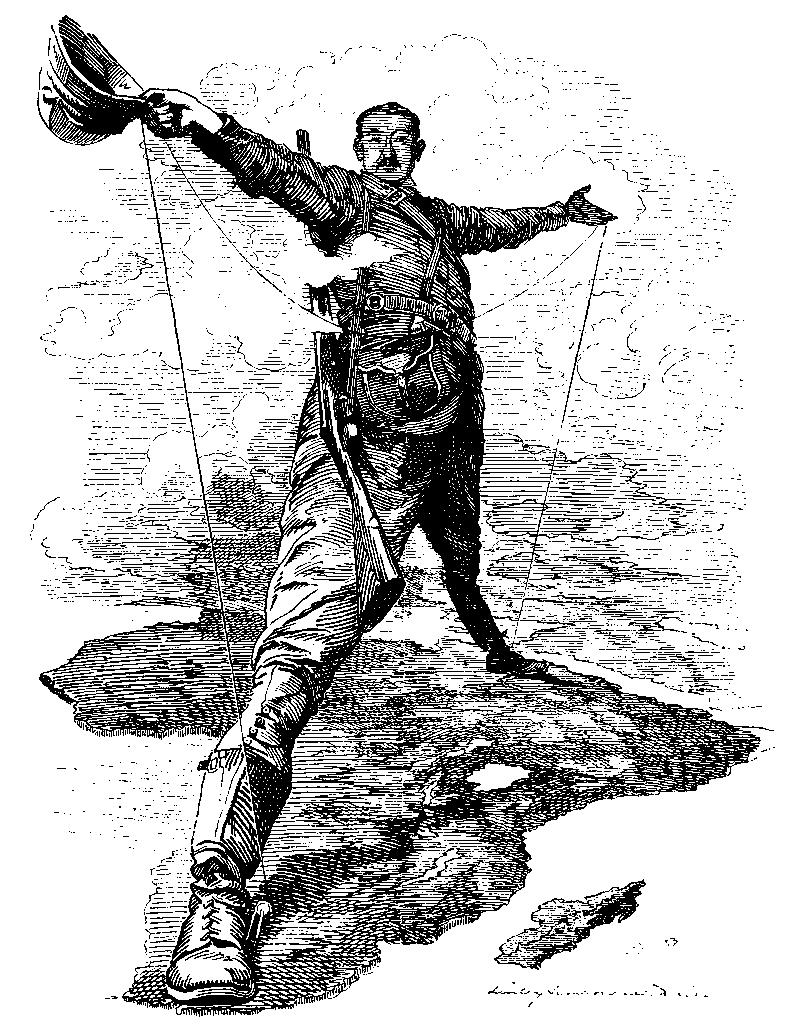
One of the most notable elite circles centered around Cecil Rhodes, one of the wealthiest men on Earth and the architect of the De Beers diamond monopoly in South Africa. His influence was so extensive that neighboring Rhodesia was named after him. He believed the emerging new world order would have to be led by Britain. My belief, and many others’, is that Britain represents the financial arm, Washington the military arm, and the Vatican the religious arm — three privatized city-states operating above and beyond the nations they reside in. Rhodes himself was a Freemason. Wherever Britain expanded, Masonic lodges appeared immediately afterward.
Partially funded by the Rothschild banking family, Rhodes envisioned an Anglo-led federation that would eventually unite all nations into a single political entity. He openly mentioned a secret society dedicated to that goal in his 1877 Confession of Faith. When he died, Alfred Milner became the executor not only of Rhodes’ vast estate but also of his political vision.
Milner assembled a group of young Oxford men known as Milner’s Kindergarten — Lionel Curtis, Philip Kerr, Geoffrey Dawson, and others — strategically placed throughout the empire. Between 1909 and 1913, they organized Round Table groups in Britain, Canada, South Africa, India, Australia, New Zealand, and later the United States — all strongholds of prominent Masonic lodges. The long-term goal was a “world state” managed by Anglo-Saxon elites. After the Great War, these networks played a significant role in the League of Nations, which eventually inspired the creation of the Council on Foreign Relations, still active today.
Operating alongside them was the Pilgrims Society, founded in London in 1902 and New York in 1903 — a crucial link between the British establishment and the American financial elite. Its members included J.P. Morgan, leading diplomats, industrialists, strategists, and media magnates. Even Tucker Carlson and his father are/were members — whether still active or not, the symbolism alone reveals how journalism can be weaponized to create mass psychosis.
Milner’s circle also played a role in the Balfour Declaration, which set the course for the eventual creation of the Israeli state. The famous Round Table diagram depicting its organizations and NGOs forms a six-pointed star shape — an uncanny coincidence. Oxford also produced the Scofield Bible, which convinced countless American Protestants that Scripture mandated a modern Israeli state. Never trust Oxford is my maxim.
Woodrow Wilson’s closest advisor — the man responsible for most of the key decisions — was Colonel Edward Mandell House. His “Colonel” title was self-bestowed; he never served a day in the military. That detail alone illustrates the nature of his character. House operated within the Pilgrims’ circles, interacted with their leaders, and shared their Anglo-American outlook. In practice, he acted as the president.
The intellectual foundation for this emerging order was partly provided by the Fabian Society. Although publicly socialist, it operated as an elite reformist organization. Their London School of Economics, created with donations from Passmore Edwards and supported by Lord Rothschild, became a training ground for future technocratic administrators. The Fabians supplied the vocabulary — scientific planning, rational administration, managed society — that the Round Table networks used to develop imperial strategy.
By the time war broke out in 1914, these interconnected groups — Round Table, Pilgrims, Fabians, imperial administrators, financiers, and academics — were already functioning as a single entity. After the war, they formalized their cooperation through the Royal Institute of International Affairs in London and its American counterpart, the Council on Foreign Relations. But even before the first shot was fired, the blueprint for a new world order had already been drafted.
This elite project did not operate in isolation from the revolutionary networks that came before it. The two paths — revolutionary and managerial — moved toward the same goal: toppling Christian monarchies and establishing centralized supranational governance suited for the modern financial era. With the Anglo-American network in place, they could add the final piece: a central bank capable of funding a world war and controlling nations through debt.
IV. Central Banking and the Final Mechanism of Control
At the turn of the 20th century, isolationist America entered what historians call the Golden Age of Fraternalism — roughly 1870 to 1920 — a period when nearly a third of the American population belonged to fraternal orders, many of which were linked with or influenced by Freemasonry. I personally suspect that President Trump’s modern references to a new “Golden Age” may allude to that era of widespread fraternal mobilization and its contemporary counterpart.
In Washington D.C., a statue of Albert Pike was erected in 1901 — Confederate general, 33rd-degree Mason, who corresponded with Mazzini about three planned world wars — placed within the Masonic geometric layout of the capital.
It was in this atmosphere that Paul Moritz Warburg arrived in America. Warburg, a German-born banker trained in Hamburg, London, and Paris, was a partner at Kuhn, Loeb & Co. — a prominent New York investment bank with strong European ties and documented support for the Bolsheviks. Warburg’s goal was to reshape the American financial system along European central-bank lines. The European model focused on a central bank with the power to print money, expand credit, and finance war. At that time, the United States lacked such an institution. Thousands of independent banks issued their own notes — many backed by tangible assets. For those who wanted America to align with international finance, this decentralization was unacceptable.
Then came the Panic of 1907 — a severe financial crisis whose origins appear suspicious or at least conveniently timed. Whether orchestrated or exploited, the crisis exposed the weaknesses of America’s fragmented banking structure. Warburg publicly called for a “national clearing house” and an “elastic currency” in a 1907 New York Times piece. The metaphorical question was: who would control the lungs of this system?
The first legislative effort to create such a bank was the Aldrich Plan, named after Senator Nelson Aldrich of Rhode Island — with strong ties to J.P. Morgan. Public opinion made approval impossible, so a secret strategy developed, culminating in one of the most important and least recognized episodes in American financial history.
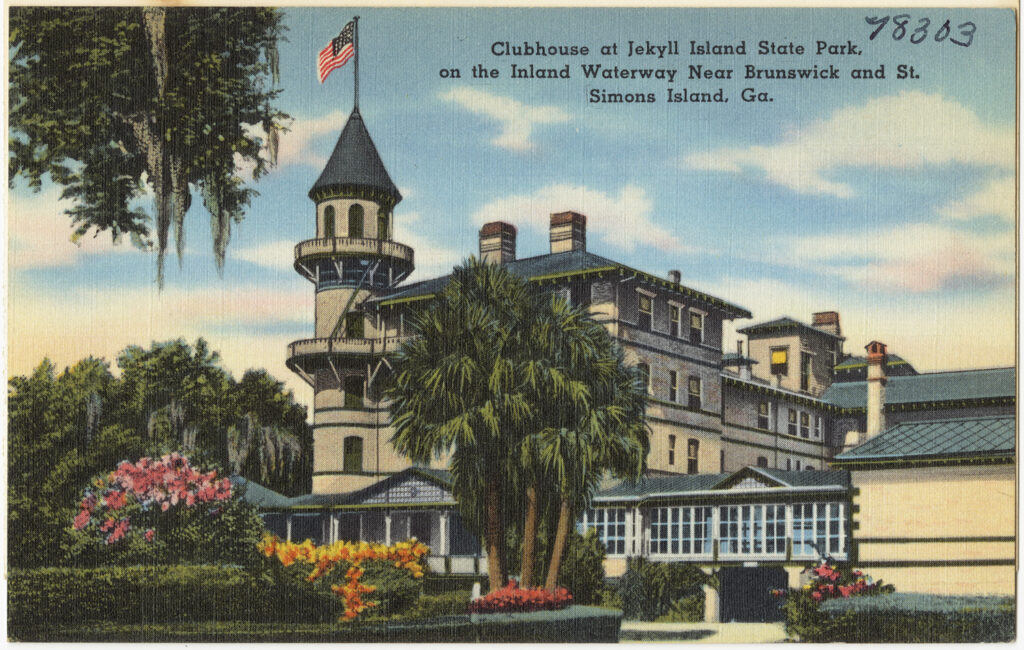
On November 22, 1910, as Europe approached the tensions that would lead to World War I, Aldrich gathered a select group of bankers, economists, and political operatives. Secrecy was strict. Participants were told not to use last names. They met on a remote platform in Hoboken, New Jersey, boarded Aldrich’s private railcar, and traveled overnight to Jekyll Island — an exclusive Georgia resort owned by America’s wealthiest families: Morgan, Rockefeller, Vanderbilt, Pulitzer, and others. One of the attendees later described the meeting in his memoir. Members of the Jekyll Island Club controlled an enormous share of global wealth. As recent scandals have shown — cough, Epstein, cough — private islands often serve as hidden venues for elites with questionable interests.
For ten days, behind sealed doors, this group drafted the blueprint for what became the Federal Reserve System. Warburg’s notes formed the core of the final design. The public did not learn of this meeting until 1933. This secrecy was necessary: had Americans known that private financiers were designing the system that would control national money and credit, widespread outrage would have followed.
By any reasonable description, this was a conspiracy.
To make the public demand the very system being built, the banking establishment allowed — or even encouraged — periodic financial panics, functioning as psychological conditioning. The Panic of 1907 fits this pattern. In 1911, the National Citizens’ League for the Promotion of a Sound Banking System was created to simulate grassroots support for central banking — a facade controlled by the same financial interests backing the plan.
Aldrich’s bill ultimately failed — not because of opposition to the idea of a central bank, but because Aldrich had become politically radioactive. The plan was reworked, the language softened, the phrase “central bank” removed. One obstacle remained: President Taft, who would never sign such legislation. A new president was required.
That person was Woodrow Wilson.
The 1912 election was orchestrated with precision. Wilson entered national politics with academic prestige but limited understanding of finance. Behind the scenes, he received support from figures like William Rockefeller and James Stillman. One of Wilson’s future advisors remarkably predicted in 1910 that Wilson would become governor, then president, then win re-election — such accuracy suggests coordination rather than coincidence.
Wilson’s campaign garnered financial backing from Jacob Schiff, Bernard Baruch, Henry Morgenthau, Samuel Untermyer, Cleveland Dodge, J.P. Morgan, August Belmont, and individuals associated with the New York Times.
To divide the Republican vote, Theodore Roosevelt — backed by many of the same interests — ran as a third-party candidate. His Bull Moose campaign drew votes away from Taft, paving the way for Wilson. This tactic remains common in modern politics.
Once Wilson entered the White House, the plan moved forward quickly. On December 23, 1913 — two days before Christmas — with many lawmakers already gone, the Federal Reserve Act passed quietly through nearly empty chambers. Wilson signed it within hours.
A new institution had been established — neither fully federal nor accountable to the public. Its purpose was the transfer of American monetary power to private banking dynasties, many connected to European financial networks. The nation’s money and credit had been handed to international bankers whose loyalties lay elsewhere.
The Federal Reserve was established in 1914, just months before World War I broke out in Europe. Three years later, Wilson himself stated: “We have come to be one of the worst ruled, one of the most completely controlled and dominated governments in the civilized world.” He only confessed this after he had already handed the country over to them.
Once the Federal Reserve was established, the final mechanism was in place — the instrument needed to finance World War I, permanently indebting the United States and linking it to a credit system that has never been dismantled.
V. Engineering Consent: From Neutrality to Intervention
World War I broke out in the summer of 1914. However, the version presented in American classrooms — through familiar McGraw-Hill textbooks, which trace their history to Robert Maxwell, the father of Ghislaine Maxwell — never fully captured the scale of what truly happened. The story was always too tidy, too sanitized, too convenient for a catastrophe that claimed millions of lives.
The war really began in August 1914 when Germany invaded neutral Belgium. A web of alliances built over many years since the Congress of Vienna did precisely what it was supposed to do. By the end of that year, ten countries were at war. The United States was not among them. America would not join for another three years.
At that time, the American public was strongly anti-interventionist. President Woodrow Wilson publicly embodied neutrality. On August 19, 1914, he announced: “Every man who really loves America will act and speak in the true spirit of neutrality… We must be impartial in thought as well as in action.”
Meanwhile, American banks had already invested huge sums into Britain and France. By 1915, U.S. loans to the Allies totaled $500 million. In 1916, a single French loan reached $750 million. By 1917, J.P. Morgan, Kuhn Loeb & Co., and related firms had issued roughly $1.5 billion in Allied loans. These fortunes relied entirely on an Allied victory. If Germany won, the loans — and the financial system backing them — would collapse.
Secretary of State William Jennings Bryan warned that “money is the worst of all contraband” and called for an outright ban on loans to belligerents. Wilson disagreed. Bryan resigned.
Germany was nearing exhaustion. Food and coal shortages threatened its survival. Grand Duke Hesse-Darmstadt — Kaiser Wilhelm’s cousin — secretly traveled to Russia seeking a separate peace. Empress Alexandra, fearing accusations of treason because of her German heritage, refused to see him.
Behind the scenes, transnational financial channels helped keep the conflict going. Paul Warburg — now a key figure in the Federal Reserve — supervised credit flows routed through Stockholm to his brother Max Warburg’s Hamburg banking house. Humanitarian shipments to Belgium, publicly labeled as relief for starving civilians, were described by critics as covert supply routes feeding Germany through Rothschild-connected railway networks. A 1915 article in the Norddeutsche Allgemeine Zeitung even claimed the provisioning plan had been coordinated with American relief committees.
Without the Fed’s intervention, the war might have ended in its early stages. Under Wilson, the national debt grew nearly 800%, while the financial architects of the new system secured exemptions shielding their fortunes from the taxes levied to fund the war.
Even Henry Ford recognized a pattern. He remarked: “Mr. Wilson, while President, was very close to the Jews. His administration, as everyone knows, was predominantly Jewish.” His statement reflects a broader modern view: that American foreign policy is shaped not by the electorate, but by a small interconnected elite.
Privately, Wilson was far from neutral. He was heavily influenced by Colonel Edward Mandell House — profoundly shaped by Giuseppe Mazzini’s political writings. Wilson openly admired Mazzini and said he had “derived guidance from the principles which Mazzini so eloquently expressed.” Mazzini envisioned a liberal-internationalist mission for America, and Wilson increasingly saw himself as the man chosen to carry it forward.
Neutrality served as the mask. Intervention was the objective.
The official story focuses on the assassination of Archduke Franz Ferdinand in Sarajevo on June 28, 1914. Gavrilo Princip was part of the secret group known as the Black Hand — described by one historian as a “progeny of Freemasonry.” Princip’s associate Ciganović said he belonged to a lodge and that the lodge had “condemned” the Archduke to death.
Kaiser Wilhelm II — who was initiated into Freemasonry in his youth but distanced himself in old age — believed that Grand Orient lodges played a significant role in causing the conflict. In his memoirs, he wrote that an “international Grand Orient” network aimed to dismantle monarchies, crush the papacy, and undermine Christian civilization — a statement aligning with patterns attributed to Mazzini and Pike in earlier decades.
Just weeks before the war broke out, Colonel House wrote from London to Wilson on May 29, 1914: “Whenever England consents, France and Russia will close in on Germany and Austria.” House understood the trap. When Austria demanded concessions from Serbia, and Serbia responded with almost complete compliance, war still broke out. The alliances were designed to set Europe ablaze on schedule.
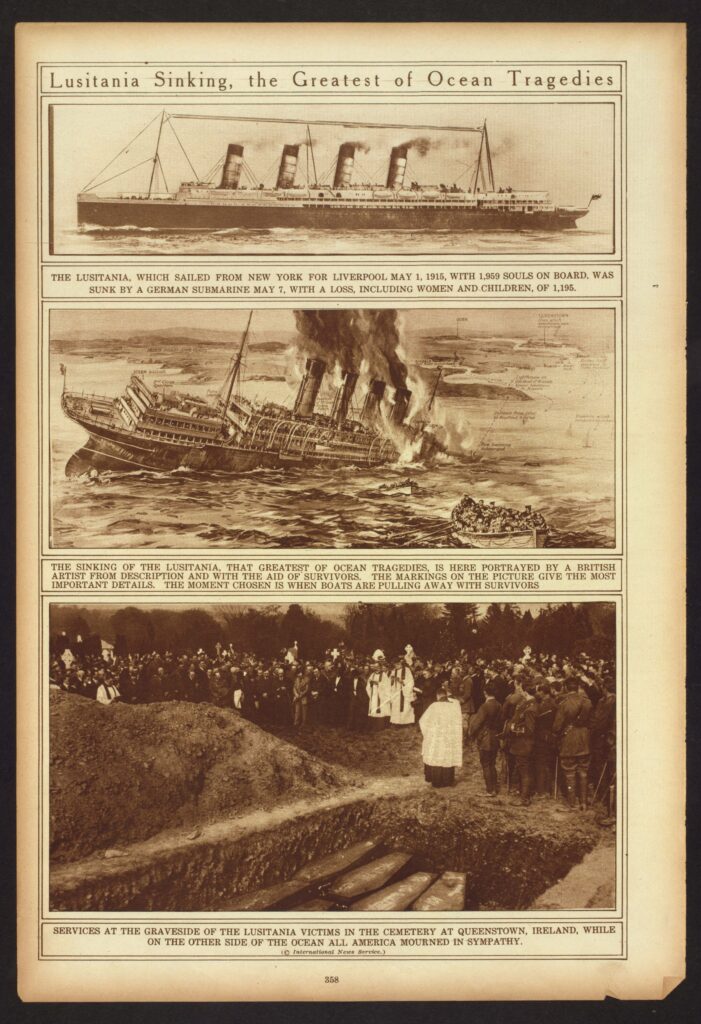
The propaganda machine found its perfect symbol on May 7, 1915: the sinking of the Lusitania. The textbook story describes a peaceful passenger liner ruthlessly torpedoed by the barbaric Hun, shocking American sensibilities and pushing the nation toward war. But the deeper story is more complex.
The Lusitania was not a neutral civilian vessel. It was registered as an auxiliary cruiser for the British Navy and carried millions of rounds of ammunition and war materiel bound for Britain and France. Germany publicly warned that any British liner in the declared war zone would be treated as a military target. German diplomats even placed advertisements in New York newspapers warning Americans not to sail — the New York Tribune published one such notice on May 1, 1915. When the torpedo hit and the ship sank, its true cargo was hidden beneath outrage.
Aleister Crowley — occultist, 33rd-degree Freemason, and British intelligence asset — was involved in propaganda efforts surrounding the Lusitania and may have influenced the psychological aftermath. What is undeniable is that the sinking was used to condition the American public long before the official move toward intervention.
Despite all this, America did not immediately join the war. Wilson still needed time — and he still had an election to win.
By 1916, America remained neutral in public opinion even as its financial support for the Allies deepened. Wilson ran for re-election on the slogan “He kept us out of war.” Behind closed doors, plans were already made — echoing a certain modern president’s strategy. On March 9, 1916, ten months before the election, Colonel House arranged a secret understanding with Britain and France: the United States would intervene on the side of the Allies under the right conditions. Wilson agreed. After the war, House casually shared this with a journalist, who published it.
VI. War, Propaganda, and Managed Democracy
Wilson campaigned as the peace candidate, yet while he made his public appeals, a network of unelected organizations, industrialists, and financiers quietly but steadily pushed the United States toward mobilization. In August 1916, Congress formed the Council on National Defense even though there was no credible threat of foreign invasion. Its membership included railroad executives, corporate magnates, and financiers like Bernard Baruch, who would later oversee wartime industrial coordination. This acted as a soft proto-mobilization structure — preparing the nation for war without publicly admitting preparations were underway.
Parallel groups formed almost immediately. The Navy League, the League to Enforce Peace, and similar organizations gained support from men connected to J.P. Morgan, Bethlehem Steel, AT&T, and Rothschild-linked banking firms. Their slogan was “preparedness” — but in reality this meant weapons contracts, shipbuilding, political lobbying, and the gradual normalization of intervention.
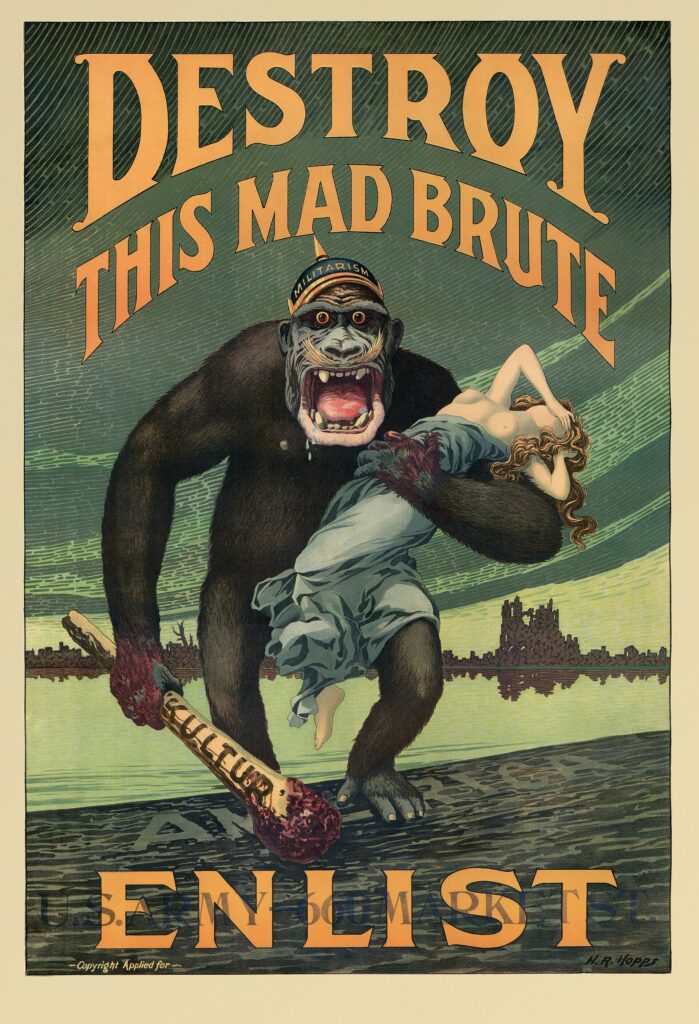
Across the Atlantic, Britain had already developed the world’s most advanced propaganda machine. Wellington House — the War Propaganda Bureau established in 1914 — recruited some of Britain’s most renowned cultural figures: Arthur Conan Doyle, Rudyard Kipling, G.K. Chesterton, John Buchan, and others. They created atrocity stories, graphic pamphlets, staged photographs, and carefully crafted narratives depicting Germany as barbaric and the Allied cause as a moral crusade. I wonder if the same thing still happens secretly today.
The United States soon adopted Britain’s approach. After winning re-election, Wilson authorized the Committee on Public Information, led by journalist George Creel, which coordinated messaging nationwide. Newspapers, films, pulpits, classrooms, civic groups, and public speakers all conveyed a unified message. War became righteous, necessary, and unavoidable. Neutrality was seen as unpatriotic. The well-known “Four Minute Men” speaking in movie theaters created a synchronized psychological atmosphere impossible to escape.
On April 2, 1917, Woodrow Wilson stood before Congress and delivered the speech that pushed America into World War I. His language was dramatic and accusatory. He claimed the German government had “put aside all restraints of law or of humanity” — a warfare “against all nations.” But the actual number of American losses did not support his apocalyptic tone. From August 1914 to April 1917, German submarines sank twelve American merchant ships, resulting in thirty-eight deaths. Overall, America lost fifteen ships, all supporting the Allied cause. The gap between Wilson’s rhetoric and reality was staggering.
Wilson’s language of universal peril perfectly suited the financial necessity of protecting America’s enormous exposure in London and Paris. On April 4, the Senate voted 82-6 in favor of war. On April 6, the House approved 373-50. America was officially in.
“A war to end all wars.” “The world must be made safe for democracy.” These phrases have echoed through American politics ever since — their solemn tone masking a very different reality.
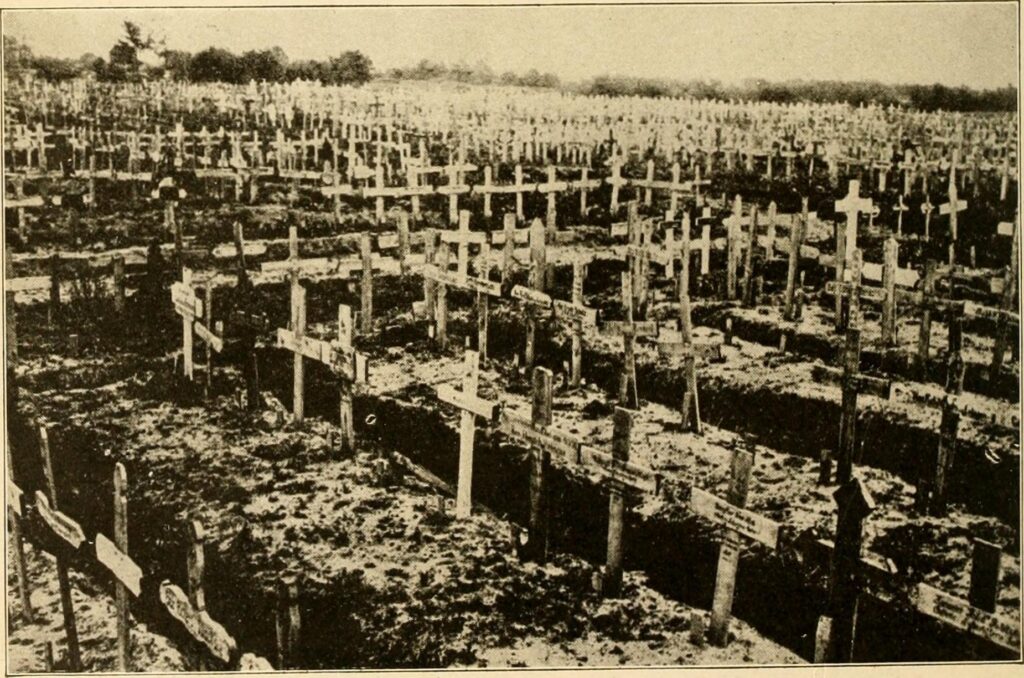
America’s entry was not a sudden moral awakening triggered by German villainy. It was the result of a long-planned effort. The fall of Christian monarchies — long-standing pillars of the old European system — was not just a consequence but part of the larger transformation. Forty million people, mostly from Christian nations, lost their lives as the tragic toll of this change.
Once American troops crossed the Atlantic, the same men who orchestrated the Federal Reserve took control of the wartime economy. Paul Warburg oversaw the Federal Reserve. Bernard Baruch ran the War Industries Board. Eugene Meyer directed the War Finance Corporation. With Allied victory assured, these men moved on to the next phase: shaping the postwar world. Plans for the League of Nations, the Balfour Declaration, and the partitioning of the Middle East were already being drafted before American soldiers even reached France.
Once war was officially underway, “war socialism” descended upon the nation. Washington assumed control of shipping, railroads, telegraphs, factories, labor, and industrial output. The Espionage Act and Sedition Act criminalized large areas of dissent. The administrative machinery created in 1917 proved durable and adaptable. Once government expands, it rarely contracts.
The Balfour Declaration further illustrated the geopolitical complexity of the moment. Emerging from circles influenced by Cecil Rhodes and broader imperial networks, it promised a Jewish “national home” in Palestine — part of a broader arrangement linking London, Washington, and leading Zionist figures, designed to influence both the war and the geopolitical map that followed.
By the end of the war, Americans and Europeans had been conditioned to accept that national sovereignty, local economies, and individual liberties could be suspended for the supposedly higher aims of “peace” and “security.” Wilson himself was startlingly open about the deeper purpose when he told Congress that the war’s true aim was “to set up a new international order.” For the average citizen, this sounded like idealistic rhetoric. For those drafting postwar institutions, they cackled with laughter behind the curtain while clinking glasses in reptilian-like fashion.
From this atmosphere of warfare, socialism, controlled public opinion, high finance, and secret diplomacy, the next initiative arose — claiming the authority to resolve disputes between nations and positioning itself as the guardian of global peace.
That project was the League of Nations, the predecessor to the United Nations.
VII. Pattern Recognition
If you’ve made it this far, you’ve probably noticed something — or even noticed something else (wink, nudge). Monarchy had to fall so controllable democracies could thrive. What started as a personal interest in World War I became a framework for understanding how power operates over time — an alternative perspective, the kind that never shows up in the short, sanitized paragraphs of our school textbooks. I challenge you to prove me wrong. I know I’ve made mistakes, but I’m not lying to you. Use this as a starting point. Follow the threads yourself. Don’t become an algorithm zombie. All the propaganda machinery built during this era is now fully automated — gaslighting AI deciding what is “fact” and what is “fiction.”
In the conventional narrative, World War I happened because Europe “sleepwalked” into disaster. A fanatic shot the archduke, alliances set it off, tragedy followed, a lesson was learned, and then the League of Nations strolled in like a noble knight to save the day — flawed, but sincere in its pursuit of peace. Just as its successor, the United Nations, has “prevented” wars ever since. (Sarcasm, obviously.)
In the framework I present, you see something very different. You have a centuries-old financial system, emerging from Babylonian-style debt and tax methods into modern central banking. You have families and companies sitting above nations, moving capital, funding wars, shaping treaties, and settling peace. You have secret meetings — Jekyll Island, the Congress of Vienna, back-channel deals in London and New York — where unelected men create structures the public only learns about after they have already been established. This is the nightmare we live in now, and its blueprint was set long ago.
A Christian empire in the East — Russia — was targeted, drained, bankrupted, and looted, with its Tsar’s treasures stolen and never recovered. Yet there is hope, because Orthodoxy endures and rises again through the Holy Spirit. God brings good even from tragedy. For every Christian killed during the communist holocaust, a saint is made — martyrs who intercede for us.
The Habsburgs — the flawed but last remnant of Christian monarchy in Central Europe — are reduced to ruins. The Ottoman Empire was divided up. Palestine was promised in a letter from Balfour, a descendant of the Cecil Rhodes ideological line. Israel was funded and established by the Rothschild network. A weaponized global Jewry is used as a political tool. Insisting that no one was coordinating is intellectually dishonest. Conspiracy is not just a theory — it is a reality, acknowledged by every sharp observer whose so-called “weaponized autism” is really nothing more than pattern recognition, the same skill intelligence agencies rely on every day.
All I’m asking is this: recognize patterns and avoid dismissing “coincidence.” Conspiracy, as defined by Webster in 1828 — men working secretly together to achieve hidden goals — definitely existed then. It still exists today.
Follow the money: who funded whom, and on what terms? Follow the credit: who needed which side to win so their bonds wouldn’t evaporate? Follow the language: who openly discussed “new international orders,” “world federations,” and “reconstructing” the map? Follow the erasures: whose archives vanished, whose testimonies were mocked, whose questions were never allowed in classrooms?
Line those events up, and World War I stops appearing as a tragic accident and instead looks like a planned transition — moving from an era of Christian monarchies and competing empires to one of centralized finance, ideological revolutions, and supranational organizations. The League of Nations collapses. World War II mirrors this pattern on an even larger scale. The United Nations emerges from the ruins as the subsequent synthesis in this dialectic.
As a Christian, I believe history is purposeful. Scripture clearly states: we wrestle “not against flesh and blood, but against principalities, powers, and the rulers of the darkness of this world.” These powers operate through everyday mechanisms — laws, loans, treaties, think tanks, foundations, party platforms, focus-grouped speeches, and yes, central banks.
We don’t need paranoia; we need discernment. We must stop accepting official narratives without questioning them. We should not dismiss the mention of “conspiracy” as madness when our entire legal system is designed to uncover conspiracies. We must resist propaganda — whether it’s a 1915 atrocity pamphlet or a 2025 media cycle — from controlling our thoughts and defining who the heroes and villains are before we’ve examined the evidence.
The same group of people continues to move between boardrooms, government offices, universities, NGOs, and media outlets. They tell us that centralization is “progress,” and questioning it is “extremism.”
You don’t have to accept every point I’ve made or every source I cite. All I ask is that next time a war breaks out, a crisis occurs, or a new global “solution” is announced, your first question isn’t “What did they tell me on the news?”
Your first question should be: “Who benefits — and who financed it?”
World War I provided the prototype. Ignoring that pattern is risky. As Ecclesiastes reminds us, there is nothing new under the sun.
The war did not end with an armistice; it ended with an idea. The old world was shattered. In its place, something new arose — something Pike and Mazzini hinted at in their outlines of a reorganized world: a system of managed peace, supranational authority, and global oversight.
The war provided the thesis. The destruction, exhaustion, and social upheaval served as the antithesis. The League of Nations became the synthesis — the first model of the international system that eventually led to the United Nations, the IMF, the World Bank, NATO, the EU, and the entire apparatus of global governance.
To understand the twentieth century, you need to understand this first iteration. Study it. Follow the thread. Question everything.
I couldn’t have traced these patterns without modernhistoryproject.org — which is suspiciously plagued by constant 503 errors — and the works listed in the Further Reading and Watching section below, each a landmark in their own right.
And at the core of the tragedy lies the spiritual martyrdom of the Romanovs. Their murder, carried out by the Bolsheviks and supported by secret networks operating behind the scenes, signaled not only the fall of a dynasty but the next chapter in a hidden war against Christian civilization itself.
And so, as the world keeps moving toward whatever “order” awaits, it is right to conclude with prayer — not as decoration, but as a weapon and a witness.
Prayer to the Holy Martyred Tsar Nicholas II
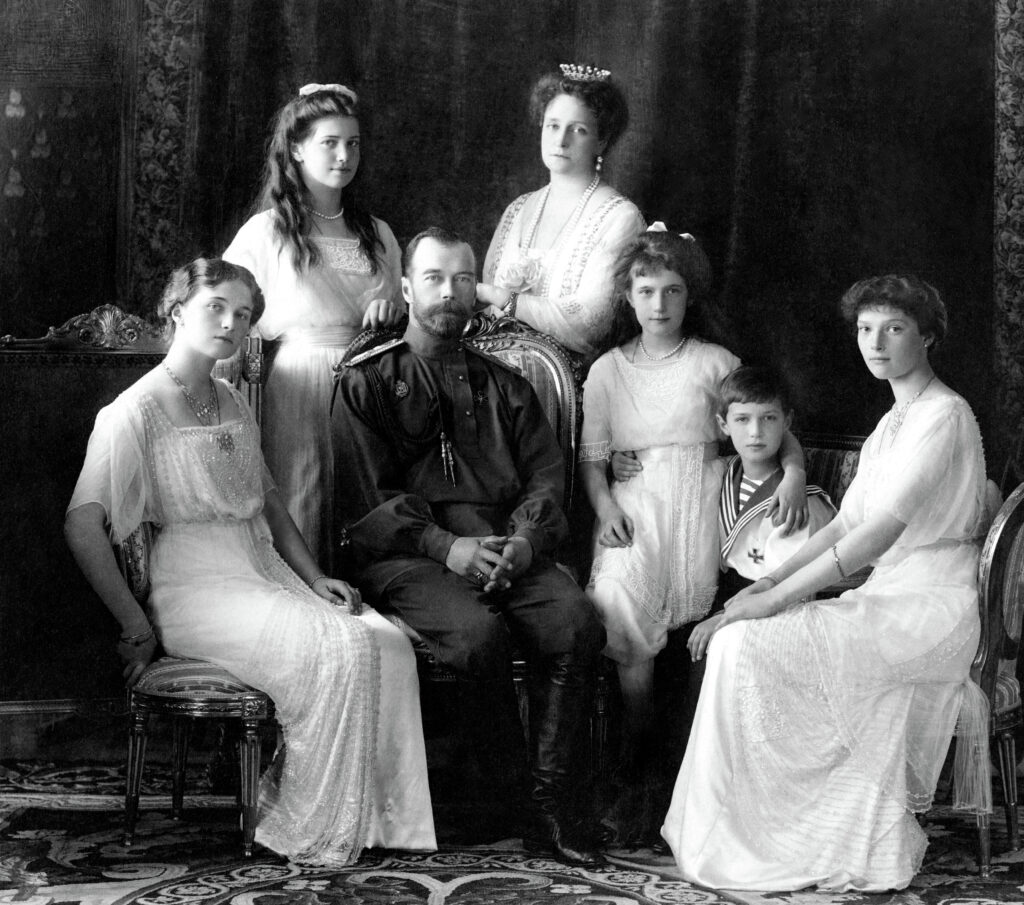
O holy martyred Tsar and passion-bearer Nicholas, the Lord chose thee as His anointed to be the preserver of the Orthodox realm and to judge thy people with mercy and justice. And with the fear of God thou didst accomplish royal ministry and show care for souls. And testing thee, like gold in a crucible, the Lord permitted bitter tribulations to assail thee, like Job the much-suffering, and afterwards He sent upon thee the deprivation of thy royal throne and a martyr’s death. And all these didst thou meekly endure, as a true servant of Christ, and thou dost now delight in the glory which is on high at the throne of the King of all, together with the holy martyrs: the holy Tsaritsa Alexandra, the holy youth the Tsarevich Alexis, the holy Tsarevnas Olga, Tatiana, Maria and Anastasia, and thy faithful servants, as well as the holy martyred Princess Elizabeth and all the royal martyrs and the holy martyr Barbara. But as thou hast great boldness before Christ the King, for Whose sake ye all suffered, pray with them, that the Lord forgive the sins of the people which did not hinder the murder of thee, the Tsar and anointed of God, that the Lord deliver the suffering land of Russia from the cruel godless ones who have been permitted to torment us for our sins and falling away from God, and that He restore the throne of Orthodox kings and grant us remission of sins, and instruct us in all the virtues, that we may acquire meekness, humility and love, which these holy martyrs showed forth, that we may be accounted worthy of the heavenly Kingdom, where with thee and all the holy new martyrs and confessors of Russia, we may glorify the Father, the Son and the Holy Spirit, now and ever, and unto the ages of ages.
Amen.