
I had been deep in the UFO material for weeks, in the Jacques Vallée rabbit hole, the Project Blue Beam documentation, and the pattern of intelligence agencies using anomalous phenomena to reshape religious consciousness. At some point, the thread pulled sideways into Havana Syndrome, which led to targeted individuals, including Martti Koski.
Koski was a Finnish man who spent decades documenting what he described as ongoing electronic harassment by government agencies, voices, physical sensations, and the feeling of being monitored and manipulated at a distance. He documented it obsessively. He filed reports. He named agencies. He believed he was being targeted by non-lethal directed-energy weapons as part of an ongoing mind-control program. My first reaction was the trained one: a delusion, schizophrenia, paranoia, classic mental illness. Then I kept reading.
Then I found the Senate hearings. The Frey Effect, confirmed by US Air Force research in 1998, is a microwave-induced auditory phenomenon, the perception of sound produced by pulsed radio-frequency energy directed at the human skull. The Havana Syndrome diplomatic incidents affecting American and Canadian embassy personnel in Cuba, China, Austria, and Colombia, which the CIA’s own 2022 assessment concluded were very likely caused by directed pulsed radio-frequency energy. The patents. The non-lethal weapons programs. The 1998 US Army research paper on voice-to-skull technology, filed under the subject heading Emerging Technologies.
The Institute for Strategic Dialogue, a UK-based research organization that studies disinformation and extremism, published an explainer on the gangstalking and targeted individuals phenomenon, framing the targeted individual community as a population of people with genuine psychological vulnerabilities who have been radicalized by online communities into a shared delusional framework. That framing is partly correct. There are people in that community who are mentally ill, and others who have been manipulated by bad actors online into believing they are under surveillance when they are not. The ISD is not wrong about that.
The ISD framework, however, cannot account for the documented history of programs that did exactly what targeted individuals describe. COINTELPRO, the FBI’s Counter-Intelligence Program, operated from 1956 to 1971 and was exposed by the Senate Church Committee. It systematically surveilled, harassed, discredited, and psychologically destabilized American citizens, including journalists, civil rights leaders, and political activists, using the very methods the targeted individual community describes: anonymous letters, false rumors, infiltration of social networks, manipulation of relationships, and coordinated harassment designed to produce paranoia and social isolation. The program was real and well-documented. It ran for fifteen years before its exposure. The people it targeted were told they were merely paranoid.
I am not claiming that every targeted individual is a COINTELPRO victim, or whatever that program has evolved into, because it has definitely evolved into something that is currently active. I am merely noting that the history makes the blanket diagnosis of delusion intellectually dishonest. Case in point is any conspiracy realist who questions a talking-head gatekeeper outside the perimeters of accepted discourse and is written off as mentally ill. The trained response, the one I had when reading about Koski, is the one the system trains you to have, and it is itself part of the management, even though I still instinctively gravitate to it as a first response to something I do not want to believe.
Around the time I was deep into writing these articles, I went for a walk and stopped into a convenience store, feeling completely fine. The moment I stepped back outside, I was hit with a headache unlike anything I had experienced before. Zero to catastrophic, instantaneously, as if every headache of my life had been compressed into one. I could not walk properly. My stomach turned. I had to consider lying down on the street.
I want to be honest about what went through my mind. It was not a fleeting thought. I scared myself properly. Was I being targeted? My search history is questionable because of the articles on this site. I am just an unimportant person with a big imagination, and probably that is all this was, a freak headache, the kind that happens to people, the kind that has no explanation and goes as suddenly as it came. But I had just spent weeks reading about exactly this kind of thing happening to exactly this kind of person, and the fear was real enough that I had to talk myself down.
Then I laughed at myself, recited the Jesus Prayer, walked home, and took an Advil that did nothing. I got checked out, and nothing was found.
Those moments matter. The paranoia that research into surveillance technology produces is not incidental to that research. A population that cannot distinguish between legitimate concern and clinical delusion is already partially managed. When every person who raises the surveillance question can be neutralized by comparison to the most extreme case, the most theatrical case, the one who spiraled completely, the legitimate question goes unasked. Targeted individuals are the noise that renders the signal inaudible. I will cover this topic in detail at a future date, when I feel I am up to the mental task.
Your body is being processed as data. Not metaphorically, not in the vague sense that companies know things about you. Technically. Physically. At the level of your breathing rate, heartbeat, gait, face, voice, location, and sleep. The infrastructure to do this is operational. Some of it is in your pocket. Some is in your house. Some is in the air around you, deployed for purposes that have nothing to do with making your phone calls clearer. Some of it you invite in by not reading the terms and conditions in our materialist society, and some is deployed on you without any meaningful consent.
The Apostle Paul wrote to the Corinthians, “Do you not know that your body is a temple of the Holy Spirit who is in you, whom you have from God, and you are not your own? For you were bought at a price; therefore glorify God in your body and in your spirit, which are God’s.” The body is not a container for the soul. It is not the prison the Gnostics called it. We will get to the Gnostics in Part II because their heresy, a stain on humanity, is very much still with us and will never go away. The body participates in salvation. The body will be resurrected. The body is the site of Theosis. At this moment, there is a very large and very well-funded project to render that irrelevant, not by arguing against it but by building the infrastructure that renders the question moot. When the body has been fully converted into a data node, it has already been consecrated to a different god.
I. The Spectrum

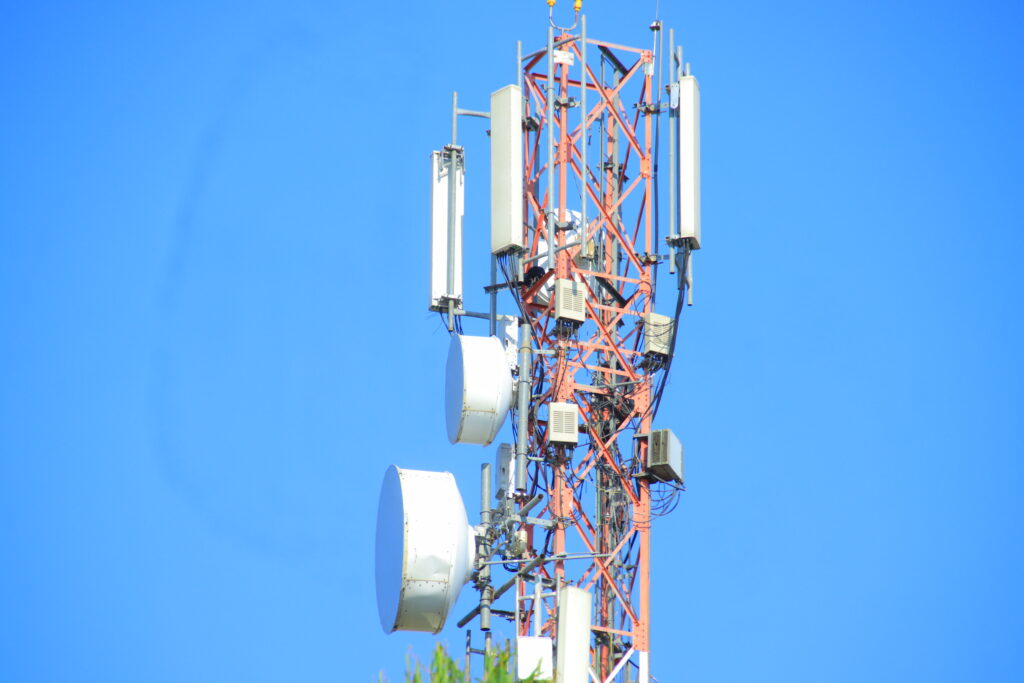
In December 2023, the International Telecommunication Union held its World Radiocommunication Conference in Dubai. The ITU is the United Nations agency that coordinates global spectrum use. 193 member states send delegations. Among the use cases formally adopted into the ITU-R IMT-2030 framework, the technical standard defining what 6G is and what it is for is Integrated Sensing and Communication, abbreviated ISAC.
ISAC means a single 6G device transmits radio signals that carry communications and perform environmental sensing simultaneously. The same antenna that sends your phone call also detects physical objects in the surrounding space. The ITU’s official documentation describes the sensing capabilities of IMT-2030 as including object detection, recognition, localization, and imaging, with positioning accuracy ranging from 1 to 10 centimeters to sub-inch precision.
Among the documented applications: device-free human activity recognition, meaning the system detects and identifies human movement without any device attached to the person being sensed, and vital sign detection, meaning breathing and heart rate monitoring through walls using ambient 6G signals.
In December 2025, President Donald Trump signed National Security Presidential Memorandum 8, titled Winning the 6G Race. Section 1 states that 6G will play a pivotal role in the development and adoption of emerging technologies, including artificial intelligence, robotics, and implantable technologies. The term implantable appears in the Presidential Memorandum. Filed, signed, and published. The standard that governs how 6G will work completed its technical performance requirements in February 2026. The infrastructure build-out is already underway. Are you tired of winning yet?
By the time 6G is fully deployed, the ambient radio environment in any urban area will be a continuous sensing field. Walking through a city will mean moving through a surveillance apparatus whose primary medium is the air itself. No one asked for this, and no one would if they had a vote on it. It was decided in Dubai, codified as a telecommunications standard, and the rest followed.
II. Your Television
The most intimate surveillance currently in use does not require 6G. It is running in your living room right now, and you agreed to it when you clicked through the terms of service on your television.
Automatic Content Recognition (ACR) is built into modern Samsung and LG smart televisions. In 2024, researchers at UC Davis, University College London, and Universidad Carlos III de Madrid published a peer-reviewed study in the ACM Internet Measurement Conference documenting what ACR actually does. They analyzed network traffic from these televisions and found that ACR was capturing screenshots of screen content at rates up to 48,000 snapshots per second. Continuous, not periodic sampling. A complete visual record of everything displayed on the screen, transmitted to manufacturer servers without notification. The captures included content from HDMI-connected laptops, so the computer you plugged into the television was being photographed by the television at that rate.
The researchers filed GDPR data access requests to determine what the manufacturers were retaining. The data returned was significantly less than the observed transmission volume. The companies were capturing more than they admitted to retaining.
The 48 kHz capture rate was confirmed by LG’s configuration file. The Texas Attorney General filed lawsuits against television manufacturers in December 2024. The FBI had already issued warnings to consumers. The University of Maryland IT security office issued an institutional advisory in January 2026.
The television watches you as you watch it. Get your hands out of your drawers. Orwell rolls over in his grave.
The phone is doing something more intimate. I used to notice the pattern everyone has noticed: mention a product in conversation, and the ad appears. I stopped being surprised by that years ago. What I notice now is different. The ads arrive without a trigger. I did not say the thing. I did not type the thing. The ad is there anyway. This could mean any number of things, many of them mundane, predictive algorithms, purchase-pattern inference, or data purchased from third parties who inferred the interest from other signals. It could mean the microphone is always on and the processing is just good enough to keep the pipeline invisible. It could mean something stranger. I am not claiming to know. What I am noting is that it produces a very specific cognitive effect, a Philip K. Dick quality, the sense that the border between your inner life and the data economy is less solid than you assumed. The paranoia is functional and is meant to make you doubt your own perception rather than the system’s reach.
Shoshana Zuboff, a secular academic and former Harvard Business School professor, wrote the definitive account of the market logic underlying all of this in her 2019 book The Age of Surveillance Capitalism. She calls the extraction process rendition. Render means two things at once: to extract something from raw material and to surrender. Every time you encounter a digital interface, your experience is rendered into data extracted from you, translated into behavioral information, and transmitted to systems you cannot audit. She writes, “Our lives are rendered as behavioral data in the first place; that ignorance is a condition of this ubiquitous rendition; that decision rights vanish before one even knows that there is a decision to make.”
Zuboff traces the market logic of this from Google’s 2002 discovery that user behavioral data, clicks, searches, and the residue of online activity beyond what was needed to improve the search product itself, constituted a proprietary behavioral surplus that could be fabricated into prediction products and sold to advertisers in behavioral futures markets. Google was the pioneer; the model spread to Facebook, then to Microsoft, then to the entire structure of internet commerce. The competition for prediction products that approximate certainty drove the expansion from the virtual world into the physical one. The smart home device, the connected car, the wearable, and the smart television are all extraction nodes in a single apparatus whose purpose is to convert your lived experience into behavioral data and trade it.
She names the endpoint of this process with a precision that is devastating without requiring theological framing: “It is no longer enough to automate information flows about us. The goal now is to automate us.”
III. Your Face
In April 2024, the US Government Accountability Office published a report, GAO-24-106293, on the federal use of biometric identification technology. The TSA is testing facial recognition at airports, and Customs and Border Protection’s Traveler Verification Service is already operational. Since 2019, there have been at least six documented false arrests of American citizens due to facial recognition misidentification. All six wrongfully arrested citizens were African American, as that is the American way. Federal law enforcement has access to, in the GAO’s own words, tens of billions of photos through databases owned by private companies or government agencies.
The private company is Clearview AI. In October 2025, proceedings before the UK Upper Tribunal confirmed that Clearview’s database contains more than 30 billion photographs scraped from the internet without consent. The UK fined the company £7.5 million, and the Netherlands fined it €30.5 million. The database continues to operate and is licensed to law enforcement agencies.
Albert Fox Cahn of the Surveillance Technology Oversight Project made this point in a 2023 NPR report on the Madison Square Garden incident, in which MSG Entertainment used real-time facial recognition to identify and bar entry to attorneys whose firms were in litigation against the company: “You can change your name. You can change your Social Security number. But you cannot change your face. If your biometric data is compromised once, it is compromised for life.”
The GAO report documented that some Americans have objected to biometric systems on religious grounds, specifically because religious beliefs about the body may render biometric identification an unacceptable intrusion. The government report acknowledges this, yet the systems continue to expand.
The face is where we meet each other. In the Orthodox understanding, it is also where we will meet God. To behold His face. The database does not care about any of that. It cares only whether your face matches a record.
IV. Your Car
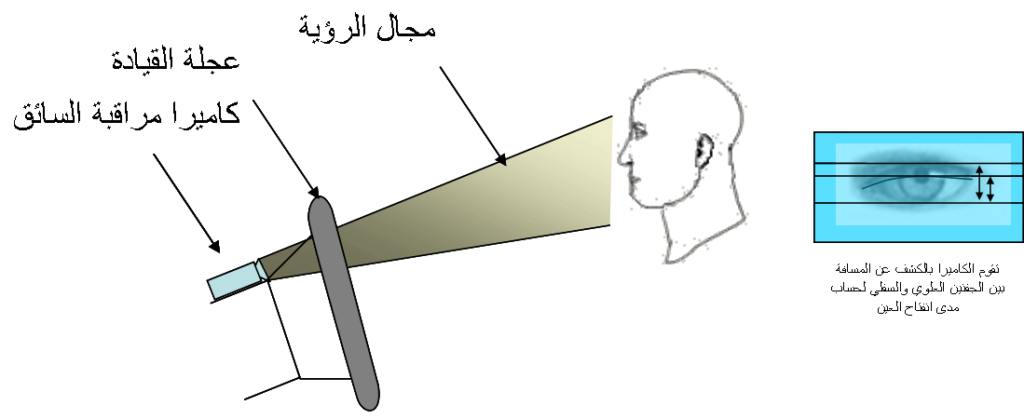
In February 2026, the National Highway Traffic Safety Administration submitted its Report to Congress required by Section 24220 of the Infrastructure Investment and Jobs Act of 2021. That section mandates passive impaired-driving prevention technology in all new passenger vehicles, which passively monitors a driver’s performance and prevents or limits motor vehicle operation if impairment is detected.
Camera-based driver monitoring systems are already being deployed in new vehicles to detect drowsiness and inattention. The insurance industry calls the broader version behavioral underwriting, the continuous monitoring of your driving behavior, sold back to you as a premium discount. The discount is your payment for agreeing to be surveilled. The NHTSA report’s own language confirms that production-ready technology for the full mandate does not yet exist, but the legal mandate does.
Your car will eventually be required by law to continuously monitor your physical state. If the system determines your body is impaired, the car will not operate. You will be permitted to move when the system determines your body is acceptable.
The logic of behavioral underwriting extends well beyond impairment detection. The telematics industry is already selling driver data to insurers, retailers, and third-party data brokers, who have identified driving patterns as a predictive signal for purchase behavior, credit risk, and lifestyle categories. Where you drive, how fast you accelerate, whether you brake hard, what time of day you travel, and which neighborhoods you pass through are all being processed and sold. The car has been an extension of identity in American culture since the Model T. The industry has spent decades studying that attachment. The data flowing from your vehicle is accordingly among the most intimate surveillance data collected, because it maps the actual geography of your life rather than the curated version you present online. Going back to a horse-and-buggy sure sounds appealing. Maybe the unvaccinated Amish were on to something after all?
V. Your Signal
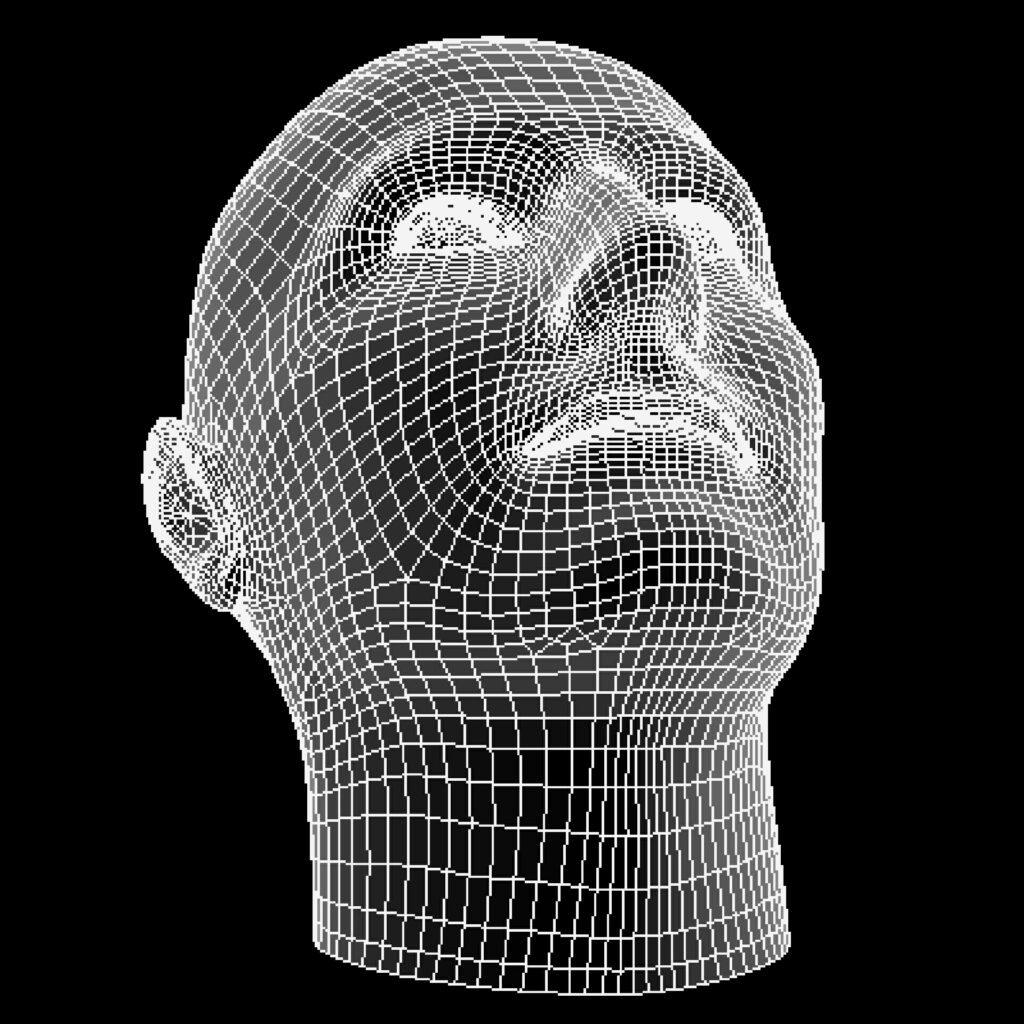
In May 2026, researchers at the Karlsruhe Institute of Technology published a paper in the proceedings of the ACM Conference on Computer and Communications Security. Their system, named BFId, demonstrated that standard WiFi routers, the kind already installed in homes, offices, schools, and churches, can identify specific individuals with near 100 percent accuracy using only the unencrypted beamforming feedback information that every WiFi device transmits as part of its routine operation.
The system was tested on 197 participants and does not require the person being identified to carry any device or connect to the network. It only requires that they be in a space where a WiFi router is operating, which is basically everywhere these days, unless you live in the deep recesses of nature. The router’s signals, bouncing off the human body, create a unique signature. BFI data captures the physical signature of how radio waves interact with a specific person’s body. Professor Thorsten Strufe, one of the paper’s authors, said, “This technology turns every router into a potential means for surveillance.”
Every router. The one in your house. The one in your child’s school. The one in your church. Any space with a WiFi network is now a place where your specific body can be identified without your knowledge, without any device on your person, and without your consent, using the same signal that carries your wireless internet traffic. The researchers called for privacy protections to be built into the upcoming IEEE 802.11bf standard, which will govern WiFi sensing applications. The standard is still being written, yet these capabilities are deployable on existing hardware today. Something to think about as you read this article on your device.
This is where WiFi and the 6G ISAC framework converge. The 6G standard formalizes sensing as a built-in function of the telecommunications infrastructure. The WiFi paper shows that existing hardware already does so as an unintended byproduct. The direction of travel is the same in both cases. The radio environment becomes a surveillance apparatus, and your body becomes the object of surveillance, passively and continuously, in every space you enter.
VI. The Health Question

In July 2021, the European Parliament’s Science and Technology Options Assessment commissioned Dr. Fiorella Belpoggi of the Ramazzini Institute, which identified benzene as a carcinogen and documented pesticide effects on farm workers, to conduct a systematic review of 5G health research. Her report concluded that frequencies in the FR1 range, covering existing 4G and much of early 5G, are probably carcinogenic to humans, with peer-reviewed associations with gliomas and acoustic neuromas, and that FR1 exposure clearly affects male fertility. Protect the boys. For FR2 frequencies, the millimeter-wave range from 24 to 100 GHz used in higher-frequency 5G, she found that no adequate health studies had been conducted. Deployment was proceeding without the science.
The exposure guidelines used by regulators worldwide, set by the International Commission on Non-Ionizing Radiation Protection, whose standards inform WHO recommendations, are based solely on thermal effects. The guidelines ask whether radiofrequency exposure heats tissue sufficiently to cause damage. They do not ask whether non-thermal biological effects exist at sub-thermal levels because the regulatory consensus holds that such effects are either absent or insufficiently documented to warrant action. The Belpoggi report documented that this consensus is not the scientific consensus. It is the regulatory consensus, and the two are not the same thing.
A 2026 peer-reviewed study in Scientific Reports by Lagroye et al. at PSL École Pratique des Hautes Études found no measurable biological effects of 5G-modulated 700 MHz RF-EMF exposure on neuronal and glial cell models under controlled isothermal conditions. It is a controlled in vitro study using cell cultures, not whole organisms, under specific temperature conditions. It does not resolve the FR2 gap. It does not address chronic low-level exposure in living organisms. The International EMF Scientist Appeal, signed by independent researchers from multiple countries, argues that current exposure guidelines fail to account for documented non-thermal biological effects and that deployment has proceeded without adequate safety evaluation.
The 6G ISAC framework introduces a dimension that existing health research was not designed to evaluate. Previous research focused on communication signals incidentally present in the environment. 6G ISAC is designed to use those signals for active human sensing. The body is the target, not a bystander. The question of what happens to human biology when the ambient radio environment is engineered to interact with the body rather than merely pass through it has not been studied, because the technology did not exist in a deployable form until now.
VII. The Word for It

Zuboff names the endpoint. She calls it Big Other, a ubiquitous, sensate, networked, computational architecture of smart devices, sensors, and spaces that continuously monitors and records human behavior to modify it. She distinguishes it from totalitarianism, which sought to possess people through state power. This system works through the market, through convenience, and through the accumulated consent of a thousand terms-of-service agreements nobody reads. The goal is not to punish you. The goal is to predict you, then to steer you, and eventually, in her words, to automate you.
Automated. The removal of human decision from a process. When your television automatically captures your screen. When your car automatically monitors your impairment. When your phone automatically anticipates your desires before you have consciously formed them. When the WiFi router automatically identifies your body as you pass through a space. The human is progressively removed from the loop of his own existence. Not by force but by convenience and by the logic of a system that has decided the body is a data node and is patiently engineering the world to match that decision.
Zuboff describes the social order this system is building as instrumentarian, her term for a new species of power that knows and shapes human behavior toward others’ ends, operating through the automated medium of an increasingly ubiquitous computational architecture rather than through armaments or armies. The 1933 Chicago World’s Fair had a motto: Science Finds, Industry Applies, Man Conforms. Zuboff invokes it because it captures the logic more honestly than the current vocabulary of personalization and user experience. Science finds your behavioral signature. Industry applies the prediction product. Man conforms.
Elder Aimilianos of Simonos Petras wrote this before any of these technologies existed in their current form. He wrote it to his monastics at Simonopetra on Mount Athos, more than fifty years before the ACR study, the ITU’s IMT-2030 framework, the BFId paper, and before Zuboff named the thing:
“The most dreadful enemy created by post-industrial culture, the culture of information technology and the image, is cunning distraction. Swamped by millions of images and a host of different situations on television and in the media in general, people lose their peace of mind, their self-control, their powers of contemplation and reflection and turn outwards, becoming strangers to themselves, in a word mindless, impervious to the dictates of their intelligence. The world of the industrial image degenerates into real idolatry.”
Strangers to themselves. The surveillance infrastructure does not create this condition from scratch. It accelerates a spiritual process that has been unfolding since the first television entered the first living room. It takes the condition the Elder diagnosed and embeds it at the molecular level in the router, the television, the car, the phone, and the air’s spectrum. The distraction is no longer optional. The images are no longer external, and the monitoring is no longer intermittent.
Zuboff documents the secular mechanics of what the Fathers named. She calls it behavioral modification at scale. The Fathers called it the clouding of the nous, the highest faculty of the human person, the organ by which we perceive God, progressively dimmed by continuous engagement with images and external stimuli until it loses the capacity for stillness, for prayer, and for encounter with the Living God. Neither the Harvard professor nor the monks on the Holy Mountain were talking about anything abstract. They were talking about what happens to a specific person in a specific body when that person’s attention is continuously captured and redirected by forces operating outside his awareness and contrary to his spiritual health.
You are not your data. You are not your biometric signature. You are not a traffic pattern in a router’s beamforming feedback. You are most certainly not a behavioral surplus to be harvested by a machine that will sell predictions about your future to people you will never meet.
You are a person made in the image and likeness of God, bought at the price of the Cross, with a body that is a temple of the Holy Spirit and a destiny no algorithm can predict because it involves freedom, the real kind, the kind that begins with repentance and ends in Theosis, operating on a frequency outside the spectrum allocated at a conference in Dubai.
The surveillance infrastructure is not a problem that can be solved by better privacy regulation. It is the material expression of an anthropology that has decided the body is data, and it will continue to produce that expression until that anthropology is replaced. The replacement is not a policy program. It is a baptism.
Part I of three. The Engineered Soul continues in Part II: The New Man, on brain-computer interfaces, the transhumanist program, and what happens when the target is no longer your face but your mind.