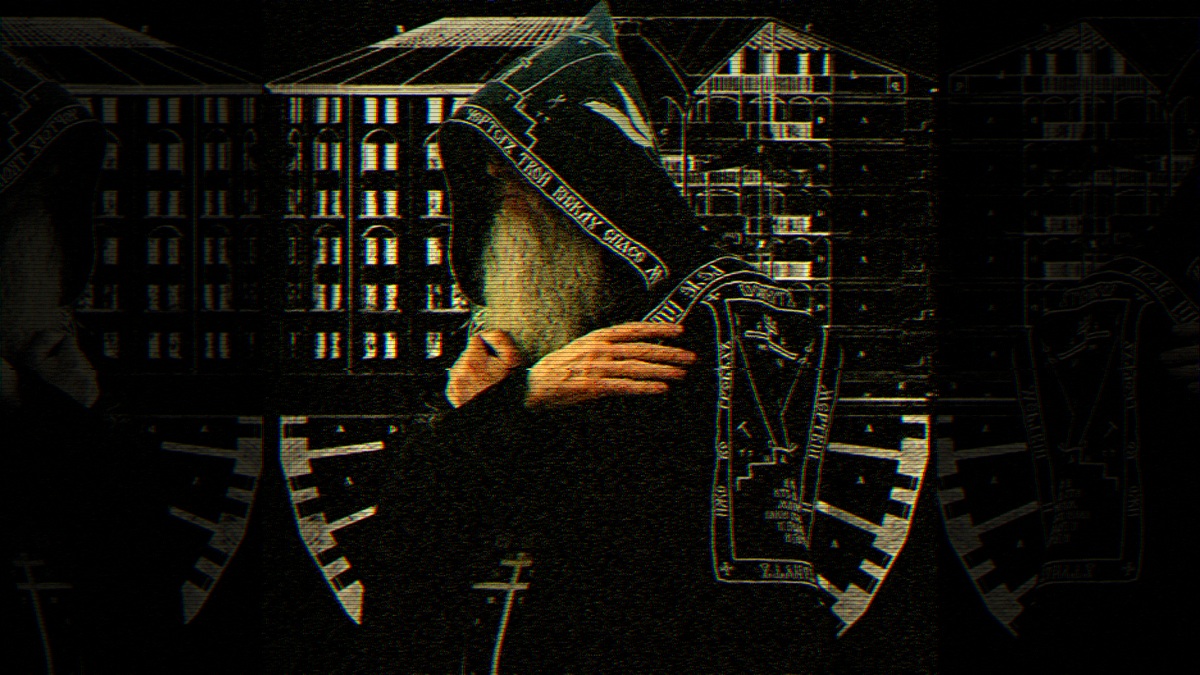
I carry two things when I go for walks. A prayer rope and a phone. I reach for one without thinking. The other I have to deliberately choose. The prayer rope is wool, worn smooth where my thumb rests. The phone is glass and aluminum, and it knows where I am, whom I called, what I searched, how fast my heart is beating, and how long I slept. One connects me to God. The other connects me to a system that has decided I am a data node and is patiently building the world to match that decision.
I grew up in the suburbs of New York. Not Manhattan, not the boroughs with their density, corner stores, and grandmother’s churches three subway stops away. The suburbs. Car country. The kind of place where freedom of movement means access to a vehicle, and the distance between you and anywhere worth going is measured in highway exits. Robert Moses built that world, the parkways, the subdivisions, the infrastructure that pulled population out of the city and into communities designed around the automobile, deliberately kept apart from the transit lines that connected everything else. Where I grew up, the subway was something you took when you went into the city, which was an event, not a daily fact.
But I know what the subway means to the people who have it. It is the mechanism of freedom. Without it, you are not in New York. You are in your neighborhood, which is a different thing entirely. Moses understood this, which is why he kept transit out of certain places. Control the infrastructure, and you control movement. Control movement, and you control who goes where.
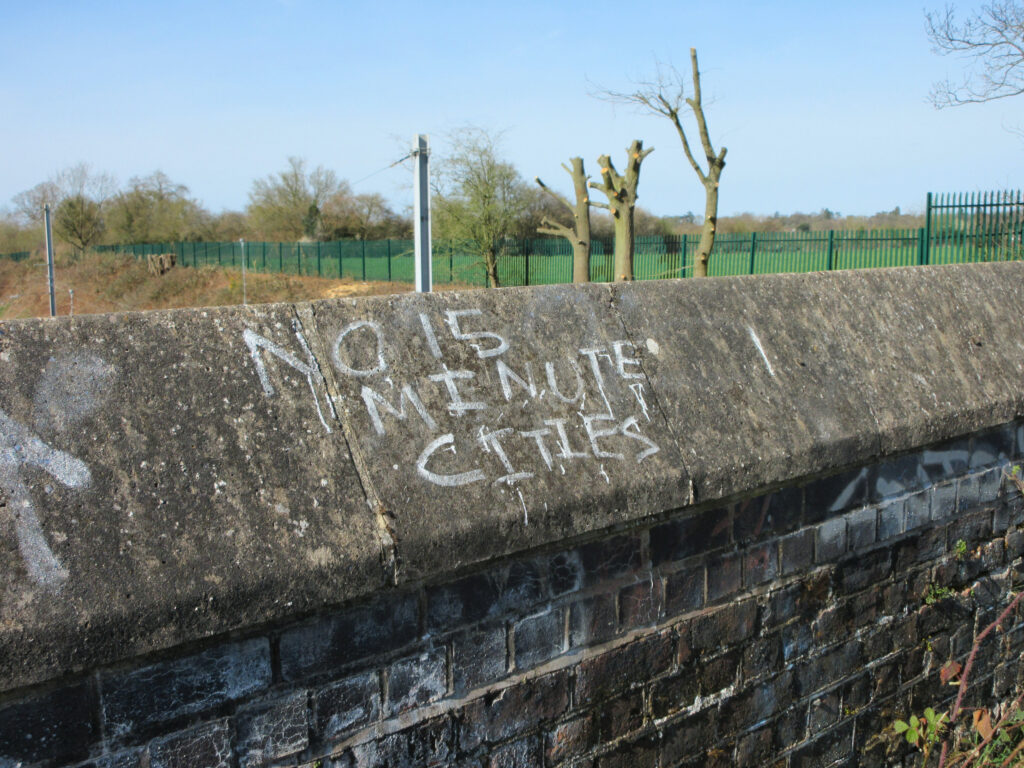
The fifteen-minute city is an urban planning concept developed by French-Colombian academic Carlos Moreno in 2016. The premise is to redesign urban areas so that every resident can reach work, education, healthcare, food, and recreation within a fifteen-minute walk or bike ride from home. On paper, this sounds like good urban planning. It actually describes how the denser parts of New York already function at their best. Astoria has its grocery stores, coffee shops, Orthodox churches, and hardware stores within ten minutes of most of its apartments, and this is genuinely good urbanism. Nobody is arguing against neighborhoods.
The argument is about the subway. It concerns what happens to the mechanism of movement when everything you need is declared to be within fifteen minutes of where you live. Optional infrastructure gets defunded. Defunded infrastructure stops working. When the subway stops working, you stop going to the Bronx. When the credential system can track your location and flag movement outside your designated zone as an anomaly for review, the subway becomes a permitting system. You can apply to cross, and your request will be processed and may be denied.
This is not what the fifteen-minute city’s inventors intended. The concept has been misappropriated by governance systems that use its vocabulary to describe something with a different logic. The problem is not the urban planning concept itself. The problem is what the concept becomes when implemented by institutions that are also building digital identity infrastructure, behavioral monitoring systems, and automated access control. The combination produces something the urban planning literature did not design: a city that functions as a credential system, in which your right to move is mediated by a database that knows where you live, where you are going, and whether your profile has flagged you for additional review.
I. The Credential
The United Kingdom’s King’s Speech of May 13, 2026, the formal statement of the government’s legislative agenda delivered by the monarch, named the Digital Access to Services Bill as part of the current parliamentary queue.
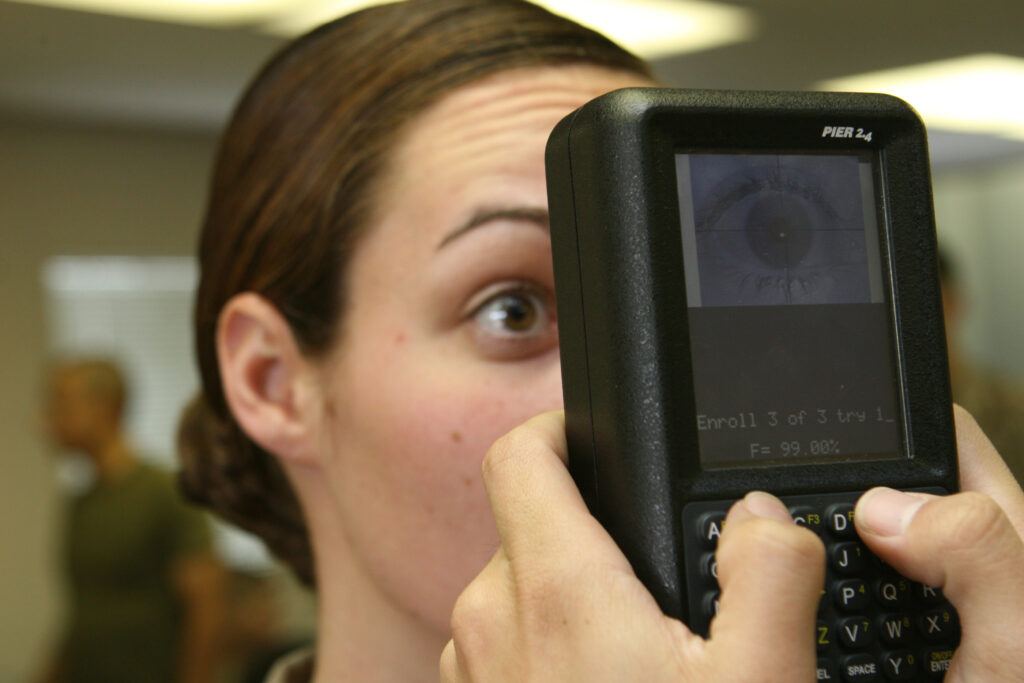
India’s Aadhaar system has enrolled more than 1.4 billion people in a biometric digital identity database, using fingerprints, iris scans, and photographs, linked to a unique twelve-digit number required to access government services, banking, mobile phones, and increasingly private services. The World Bank’s Identification for Development program, ID4D, has promoted similar digital identity infrastructure across the developing world as a condition for financial inclusion and development assistance. The EU Digital Identity Wallet regulation establishes a framework for a unified digital identity credential across all EU member states.
These are not parallel developments. They are stages of a single infrastructure project whose endpoint is a world in which your access to services, movement, commerce, and public life is mediated by a digital credential that the issuing authority, not you or your autonomy, can verify, suspend, or revoke.
When your credential is suspended, you do not go to the office to complain. You file a request through a system designed by people who will never meet you and administered by processes that do not distinguish you from your matching record. In the meantime, you cannot access your bank account, board a plane, enter a government building, or, in some implementations, start your car.
China’s social credit system has made this operational. As of 2023, the system had blocked individuals from purchasing plane and train tickets more than twenty-five million times. Twenty-five million instances of a government credential system preventing a human being from moving from one place to another. The argument that Western democracies would never implement such a system is the same as the one that said they would never build the surveillance infrastructure documented in Parts I and II of this series. That infrastructure is built and ready to go.
In Oxford, England, beginning in 2022, the city council implemented traffic filters, physical barriers that prevent private vehicles from passing through certain road checkpoints except during specific hours. Residents can apply for permits allowing a limited number of crossings per day, with crossings tracked electronically. Critics, including members of the British Parliament, described these as the enforcement infrastructure of the fifteen-minute city concept: not the planning ideal, but its coercive implementation, using vehicle tracking and access restrictions to manage population movement within defined zones. The World Economic Forum published a piece attempting to debunk conspiracy theories around the Oxford scheme. The debunking confirmed the scheme existed and that the tracking was real. When a global governance organization publishes a piece telling you not to worry about a local traffic management system, you are absolutely permitted to wonder why it cares to do so.
II. Harari in Davos
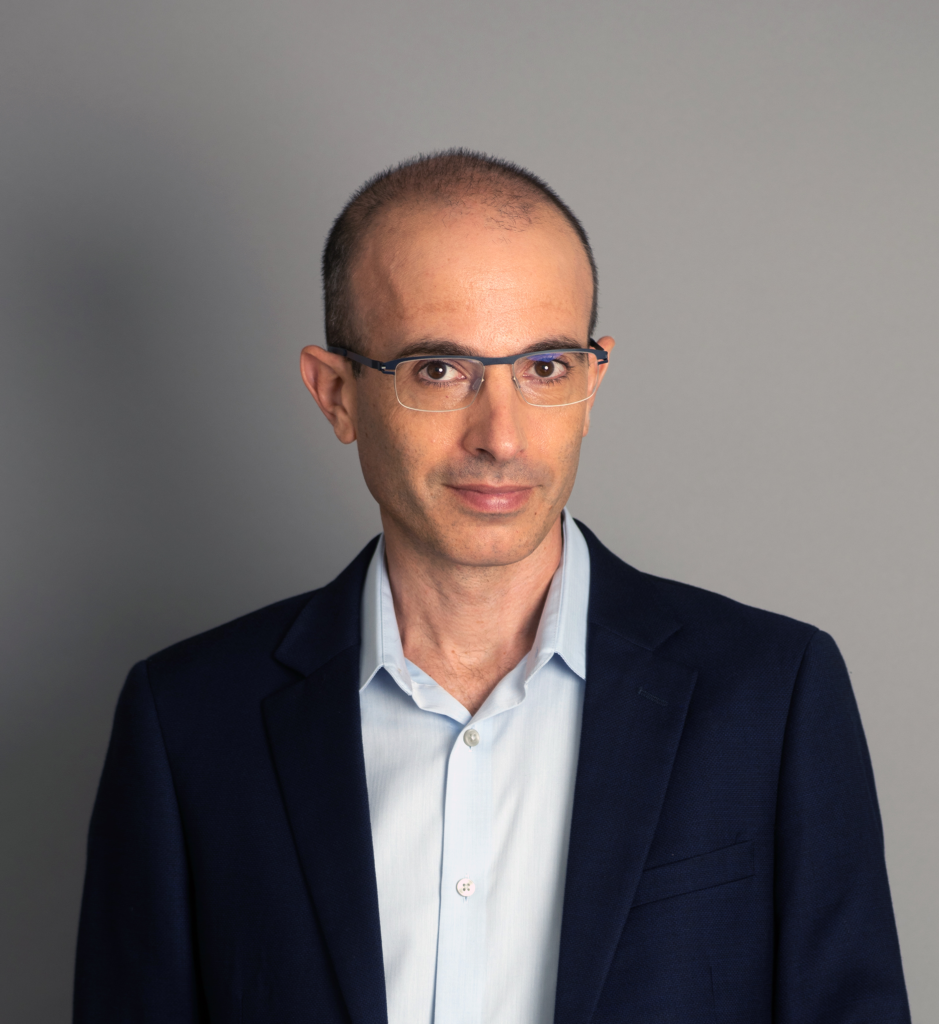
In January 2026, Yuval Noah Harari spoke at the World Economic Forum’s Annual Meeting in Davos. Harari, an Israeli academic and author of Sapiens and Homo Deus, is one of the WEF’s most prominent intellectual voices. His remarks were published on the WEF’s website:
“If religion is built from stories, if religion is built from words, then AI will take over religion. What happens to a religion of the book when the greatest expert on the holy book is an AI? I think this is perhaps the most important spiritual and philosophical question of the 21st century. The AI could write a new Bible.”
He specifically named Christianity, Islam, and Judaism. He was not speaking hypothetically. He was describing the trajectory of a technology that is already generating theological commentary, already being used to interpret scripture, and already being positioned as a spiritual authority by its builders.
Elon Musk compared his brain-implant company’s work to Jesus-level miracles. Max More told Oxford students to praise Lucifer. Harari told Davos that AI would take over religion and write a new Bible. These are not fringe statements. They are the founding intellectual voices of the technological moment, speaking in their own words on the world’s most prominent platforms about what they are building and what they intend to replace.
The Orthodox Church has two thousand years of practice in identifying this pattern. It is the oldest pattern in the record: counterfeit revelation, an artificial mediator, and technology that promises access to the divine without the humiliation of faith. The Fathers named it. They named the spirit behind it. They described their methods, goals, and inevitable failure. The only question is whether the people of the Faith understand that the question the Fathers were answering is the same one Harari just asked at Davos.
III. The Media Saw It Coming
In 1989, Tsukamoto Shin’ya wrote and directed Tetsuo: The Iron Man. A Japanese salaryman begins to find metal growing out of his body, with tubes, cables, and industrial components fusing with his flesh. The transformation accelerates. By the end of the film, there is no longer any distinction between the man and the machine. The body has been consumed by its own industrial environment. It does not argue this point but screams it at you for sixty-seven minutes in a language beyond argument.
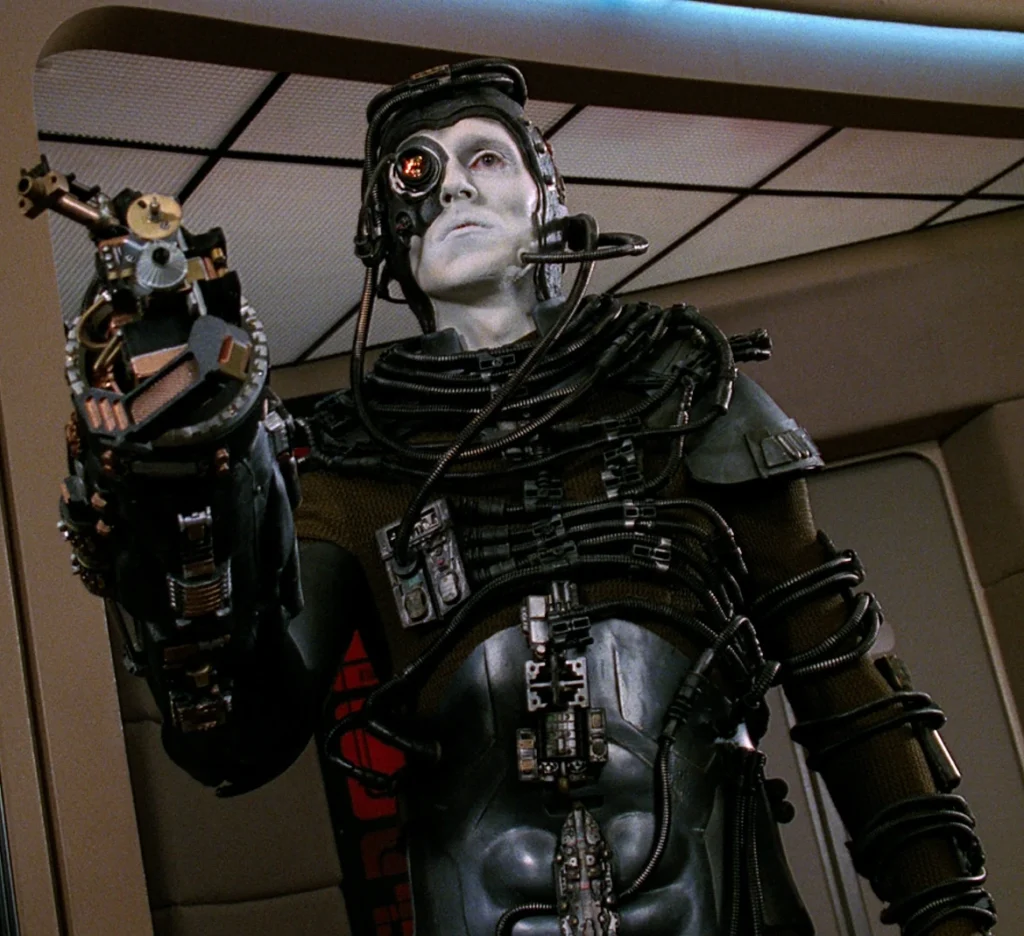
The Borg appeared in Star Trek: The Next Generation in 1989, the same year as Tetsuo. They are a cybernetic collective of beings who were once individual organisms, now merged irreversibly with technology and operating as a single distributed consciousness without individual will, inner life, or sanctuary. The Borg’s famous line, “Resistance is futile,” is not a threat. It is a description of a system designed to make resistance structurally impossible. You are not fighting the Borg. You are being integrated into the Borg. The distinction matters because fighting implies a front line, whereas integration implies there is no front line, only a process already underway.
In 2001, Hideo Kojima released Metal Gear Solid 2: Sons of Liberty, a game that redpilled me at a young age, teaching me that the United States president is just a puppet with no real authority. The game’s final act reveals that the entire game has been a simulation run by an organization called the Patriots, a group of AI systems that have managed the global flow of information since the Cold War. Their stated goal, delivered in a monologue that the gaming press in 2001 dismissed as pretentious, was to prevent the internet’s democratization of information from producing uncontrolled cultural evolution. They called it the S3 Plan, Selection for Societal Sanity. They curated what information survived, which ideas propagated, and what context was available for interpretation. They were not censoring content but managing meaning itself, something that resonates strongly with me to this day.
The character Solid Snake, at the end: “We are not just fighting for ourselves. We are fighting for the people who have no voice — the ones who are being managed without knowing it.”
Perhaps this is what The Discerner is becoming?
Kojima made this game four years before YouTube, six years before the iPhone, eleven years before the first commercial social media algorithm was deployed at scale, and twenty-three years before Harari stood at Davos and told the world that AI would write a new Bible. He saw the S3 Plan because it was already visible to anyone who looked at where the infrastructure was heading and thought through the logic to its destination.
Three artists, three media, three decades, the same diagnosis. The body consumed by its environment. The individual dissolved into the collective. The meaning managed by a system operating outside democratic accountability. “Resistance is futile” is the Borg’s slogan. It is also the implicit promise of every digital identity system, every behavioral modification platform, and every smart city management tool that frames compliance as convenience and exit as eccentricity.
IV. The New Earth
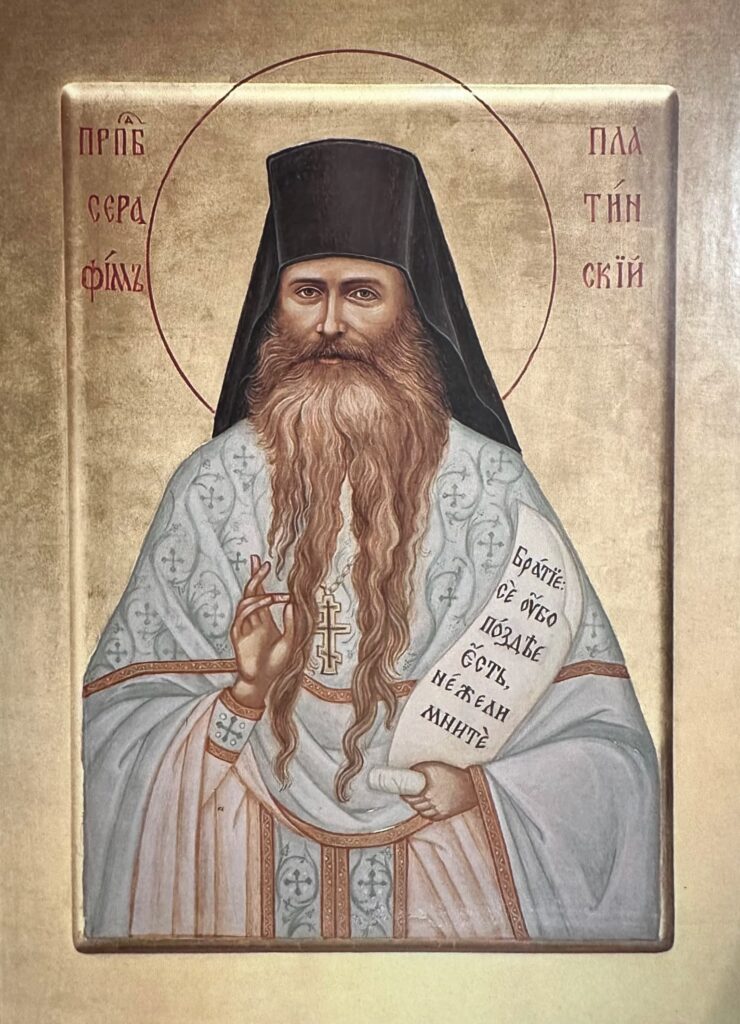
St. Seraphim Rose wrote, in his early 1960s analysis of Nihilism, the manuscript recovered from a San Francisco basement, the chapter on Nihilism from the projected work The Kingdom of Man and the Kingdom of God, about the destination of the revolutionary program:
“In the Nihilist ‘new earth’ all human energy is to be devoted to worldly concerns; the whole human environment and every object in it are to serve the cause of ‘production’ and to remind men that their only happiness lies in this world; there is to be established, in fact, the absolute despotism of worldliness.”
He was writing about Bolshevism and the broader trajectory of the modern revolution against the Christian order. He wrote before smart cities, before digital identity, and before the Internet of Things. The language fits because what he described was not a specific technology but a spiritual logic: the total elimination of any space in the world that does not serve the system’s purposes, the total conversion of the human environment into an apparatus of production and control.
His source was Lenin: there will be no way of getting away from it, there will be nowhere to go.
Shoshana Zuboff, the secular Harvard professor, arrives at the same description from the market direction. She calls the endpoint Big Other and identifies two rights that this infrastructure attacks: the right to the future tense, meaning the individual’s capacity to imagine, intend, and construct a future not predetermined by the system, and the right to sanctuary, meaning the human need for a space of inviolable refuge that has existed in every civilization since antiquity.
“The human need for a space of inviolable refuge has persisted in civilized societies from ancient times but is now under attack as surveillance capital creates a world of ‘no exit’ with profound implications for the human future.”
No exit. She took the phrase from Sartre. Rose took his from Lenin. Two secular writers, one a Marxist revolutionary and the other a Harvard professor, converged on the same description of the destination, one in the 1960s and the other in 2019, with a century of infrastructure build-out between them.
Theodore Kaczynski, writing alone in Montana, arrived at the same conclusion from the wilderness. In paragraph 2 of Industrial Society and Its Future, he states that there is no way to reform or modify the system so as to prevent it from depriving people of dignity and autonomy. He then made more bombs.
V. The Right to Sanctuary
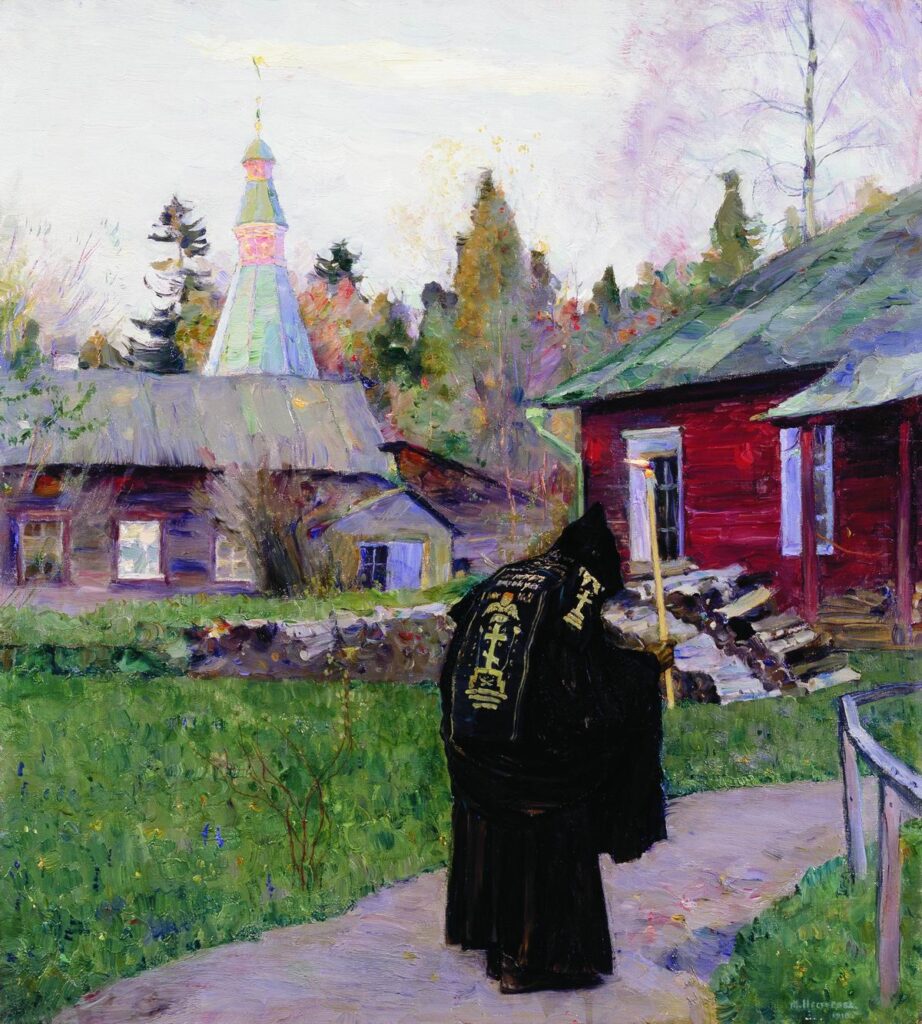
The Orthodox tradition has a word for the space Zuboff describes. It is the heart. Not the physical organ, but the theological center of the human person, the inner room, the place where God dwells when invited, the place no external system can enter without permission. The hesychast tradition, the tradition of inner stillness and unceasing prayer, developed by the desert Fathers and systematized by St. Gregory Palamas, is the most developed account in human history of how to protect that space and what happens when it is compromised.
The nous, the highest faculty of the human person, the organ of spiritual perception, can be clouded. It can be progressively dimmed by continuous engagement with images, external stimuli, and the unceasing noise of a connected environment, until it loses the capacity for stillness and the encounter with the Living God becomes inaccessible, not because God has withdrawn, but because the person’s attention has been so thoroughly colonized that the inner room is full of other furniture.
Elder Aimilianos described this in The Authentic Seal fifty years before the smart city existed as a policy concept: people turn outward, becoming strangers to themselves. The surveillance infrastructure does not create this estrangement. It perfects it. It surrounds the inner room with sensors and nudges, along with behavioral interventions, until the person inside stops noticing the door and starts looking at the phone.
The smart city, the digital credential, the behavioral modification platform, the 6G sensing grid, and the WiFi identification system are all converging on the same problem: the inner room exists, and they cannot enter it by technical means. They can surround it. They can crowd it. They can eliminate every other space until the inner room is the only one left. But they cannot enter it. That is not a limitation they have not yet solved, but an intrinsic limitation of what they are.
The Lord knocks. He does not break down the door. The system being built does not knock. It installs itself in the environment and waits for the person inside to stop praying long enough to check the phone.
VI. No Exit and One Door
Zuboff’s phrase “no exit” describes a world so thoroughly saturated with monitoring and behavioral intervention that genuine autonomy becomes structurally impossible. You cannot opt out because the infrastructure is the environment. You cannot leave because there is nowhere outside the infrastructure to go.
St. Rose had the same description from Lenin. Kaczynski had the same description, with forty years of evidence to back it up. The Borg had the same description in 1989, courtesy of Paramount Television.
All three, the Harvard professor, the Montana recluse, and the Soviet revolutionary, arrived at a dead end. Only one of the three had found the door.
St. Rose had walked through it in a Russian Orthodox church in San Francisco in the late 1950s, where, as he later described it, something in his heart told him this was home and that all his searching was over. He had been where Kaczynski was: the atheist intellectual, the Nietzsche reader, the man who had grappled with the God he claimed was dead and had been reduced to screaming at him to leave him alone. He had been inside the Nihilism he would spend the rest of his life analyzing. He found the door. He founded a monastery and wrote about it until he reposed.
The door is Christ. He is the only way out of this world.
Not a metaphor. Not a therapeutic framework. Not a spiritual practice you add to your wellness routine. The Person. The Logos. The one who said I am the Way and meant it without footnotes, without a terms-of-service agreement, and without a behavioral compliance score that determines your access level.
The smart city cannot credential the Kingdom of Heaven. The digital identity system cannot verify your baptism in a database. The 6G sensing grid can monitor your body’s vital signs, but it cannot read the Jesus Prayer forming in your heart, because the heart is the space they have not yet found a way to render into data, and the Jesus Prayer is the activity that keeps it that way.
Lord Jesus Christ, Son of God, have mercy on me, a sinner.
That is the answer to the surveillance capitalism system. That is the answer to the transhumanist program. That is the answer to the smart city, the digital credential, and the no-exit world that secular scholars, Montana recluses, and French philosophers all described in different words.
It is not enough to name the problem. Kaczynski named the problem and made bombs. The internet names the problem continuously and produces more anxiety. The conspiracy literature names the problem and offers no exit. This website names the problem too, and the difference is not that we are smarter or more careful researchers, though we try to be both. The difference is that we know where the door is.
Theosis is not an upgrade. It is not a product. It is not a clinical trial, an FDA approval process, or a subscription to a power source you cannot maintain independently. It is the transformation of the human person into the likeness of God by the grace of God, accomplished in the body through the sacraments over the course of a lifetime, available to every person regardless of their credit score, behavioral compliance rating, or the status of their digital identity credential.
The transhumanists building the simulacrum of Heaven know they are going to die. They know where they are going. They are building because they are afraid, and that fear is correct. The fear is the last honest thing about the project. They are right to be afraid. They are wrong about the solution. The solution is not an implant, an upload, a fifteen-minute enclosure, or an AI that writes a new Bible.
The solution is repentance. It is available right now, in this moment, before the credential is issued, before the grid is fully deployed, and before the door they are trying to build a wall around is successfully obscured. The wall is going up, and anyone honestly watching the infrastructure deployment can see it in real time.
The prayer rope is made of wool. It is worn smooth where my thumb rests.
The phone is made of glass and aluminum.
I know which one I set down.
I know which one I should put down.
This concludes The Engineered Soul, a three-part series. Part I: The Body as Data. Part II: The New Man. Part III: The City as Prison.