My room was in the basement, next to the boiler room, which was always noisy. There was a back door to the backyard with a faulty lock that my parents never fixed. It could always be opened. I was never entirely at ease down there, and I think I understood, in the way a child understands things before he has language for them, that the unease was not irrational. Something or someone could get in.
The night I rented Doom III from Blockbuster, I stayed up until 2 am trying to finish it. I did not finish it before 2 am because around that time, the game became scary enough that I had to turn the lights on. If you have never played it, the premise of Doom is that a research corporation opened a portal on Mars, and demons came through. You are the one Marine who noticed too late. You shoot and fight your way through what used to be a facility and is now something else entirely.
I was a teenager who thought Jack Thompson was the enemy. Thompson was the Florida attorney who spent most of the early 2000s arguing that violent video games caused violence in children. The gaming community cast him as a censorship villain. I wore that opposition proudly. No link between video games and violence. Science said so. The studies were clear. Thompson was just a moral panic. I am older now and understand the point, seeing the fruits of my generation.
Not that Doom made Columbine happen. But something more precise, something the studies were not designed to measure: a generation was systematically desensitized to violence through interactive entertainment, and the question of whether this was accidental or intentional deserves more scrutiny than the gaming press ever gave it. Grand Theft Auto did not appear by accident. The military modified Doom II in 1995, with Lieutenant Scott Barnett and Lieutenant Cliff Snyder, at a cost of $25,000, under the internal designation Marine Doom, to train soldiers in fire team tactics and reduce psychological resistance to killing. The Marines asked for after-hours access. The game that was too scary for me to finish alone in a basement at 2 am was simultaneously being used by the United States Marine Corps to condition young men for combat.
Eric Harris, one of the two Columbine shooters, built seventeen custom levels for Doom in the months before the April 1999 massacre. Researcher Mike Rustigan, studying the phenomenon at San Francisco State University, documented that Harris spent enormous amounts of time in those custom environments, which he had populated with specific targets and scenarios. The connection between gaming and mass violence is genuinely complicated, and the research is mixed. What is not mixed is the documented fact that the US military found the game useful for training its soldiers to become desensitized to killing during the same period.
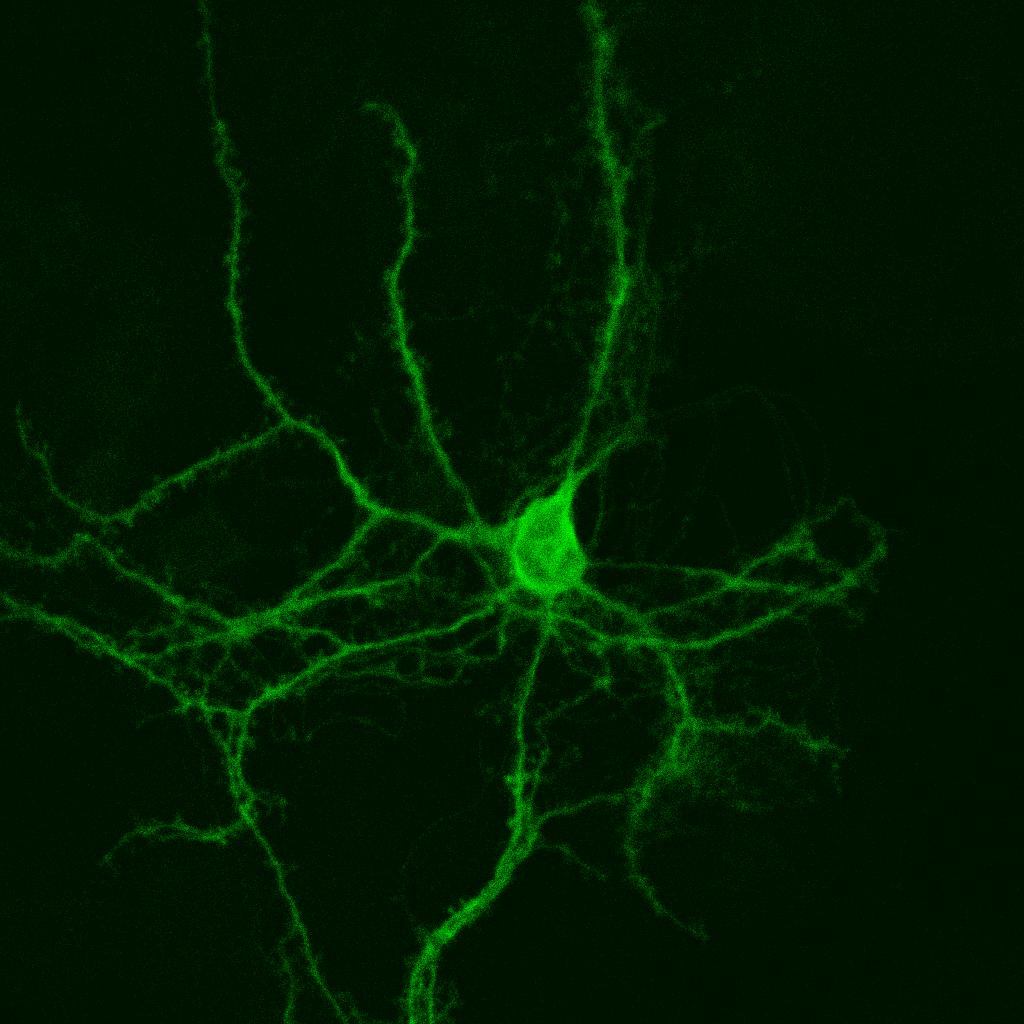
In March 2026, the Guardian and multiple science outlets reported that Cortical Labs, a Melbourne-based biotech company, had trained human cortical neurons grown from donated stem cells to play Doom on a silicon chip. Not a simulation of neurons. Not a model. Actual living human neural tissue, 200,000 cells on a chip called CL1, playing Doom at a beginner level. Senior scientist Alon Loeffler acknowledged that the decision to use Doom came from the internet: after Cortical Labs’ 2021 demonstration that their neural chip could play Pong, the internet demanded Doom. So they trained human neurons on it.
Human neurons grown from blood, trained on a game about demonic portals.
According to the New Yorker’s April 2026 investigation into Sam Altman, OpenAI insiders reportedly described the company’s AI infrastructure in terms of portals and summoning entities from beyond. The specific attribution is disputed, but it is undisputed that Elon Musk publicly used the word “demon” in 2014 when he described the risk of advanced AI development at MIT. Building artificial general intelligence, he said, was like summoning a demon. He said it in public. He then cofounded OpenAI, left OpenAI, founded xAI, built Grok, and, in May 2026, stood by video link at an event in Israel and compared his brain-implant company’s work to the miracles of Jesus Christ.
“Restoring control of people who are tetraplegics and restoring sight I think are pretty big deals. They’re sort of what I might call Jesus-level technologies.”
A game about demonic portals is used to train soldiers to kill; it is built into seventeen custom environments by a mass murderer; it is used to train human neurons on a silicon chip; and it is invoked as a metaphor by the people building the AI infrastructure that will eventually interface with those neurons. The portal is not a metaphor but a recurring element in the vocabulary of the people building the technology. They keep using it. Pay them the courtesy of taking them at their word.
I. The Machine That Rewrote Identity
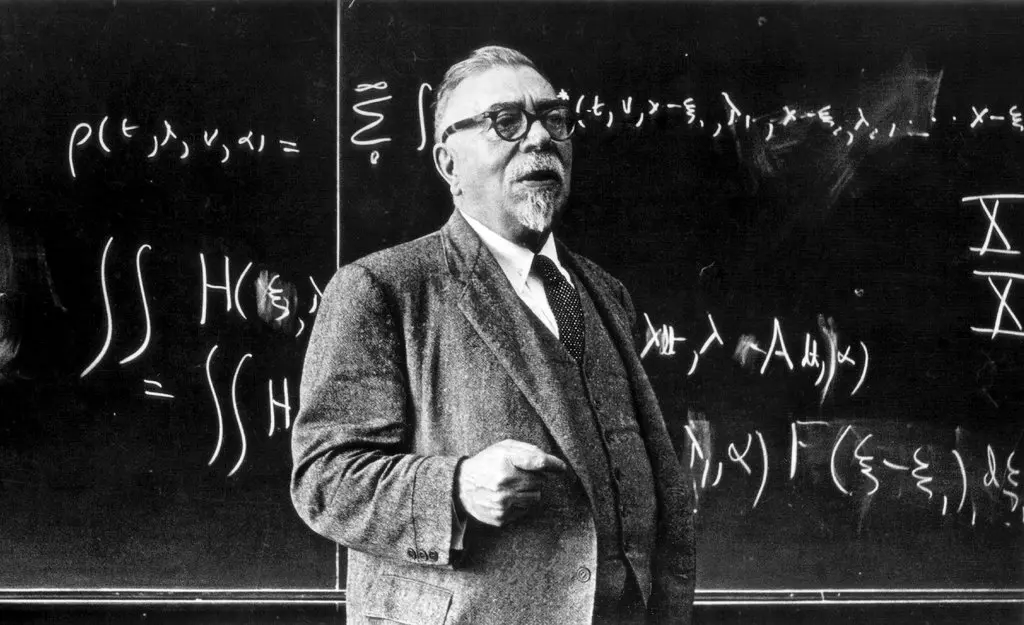
Norbert Wiener was the American mathematician who founded the science of cybernetics in the 1940s and gave the information age much of its conceptual vocabulary. He coined the term cybernetics from the Greek kubernetes, meaning steersman, to describe the science of control and communication in animals and machines. He ran the Macy Conferences in New York between 1942 and 1954, where the foundational group that would shape postwar computing, behavioral science, and intelligence methodology gathered under CIA-adjacent funding through the Josiah Macy Foundation. The Macy Foundation itself had been deeply involved in the Rockefeller-funded public health infrastructure since the 1930s. The institutional network surrounding these conferences, including the Rockefeller Foundation, Ford Foundation, and RAND Corporation, was the same network that would later fund MKUltra’s academic infrastructure.
The goal of the Cybernetics Group, as documented by David Livingstone in Transhumanism: The History of a Dangerous Idea, was to develop a science that would enable the prediction and control of human behavior, based on the assumption that the human brain was a complex input/output machine that could be programmed at both the individual and societal levels.
Wiener himself articulated what this meant for the nature of personal identity. He wrote in The Human Use of Human Beings, “The physical identity of an individual does not consist in the matter of which it is made. In terms of the computing machine, the individuality of a mind lies in the retention of its earlier tapings and memories.”
Erik Davis, the secular cultural critic and author of TechGnosis: Myth, Magic, and Mysticism in the Age of Information, summarizes Wiener’s contribution: he provided “a new scientific image of the incorporeal self, one that rewrote identity as a pattern of information.” Davis further adds, “The inner steersman is neither an eternal substance nor a figment of the teeming brain, but a fluctuating pattern in an endless cybernetic play. As Wiener poetically put it, human identity is more like a flame than a stone.”
Davis also documents the origins of this framework. The Gnostic tradition, he writes, anticipated the transhumanist program by two thousand years. In Gnostic cosmology, material reality is the prison of a divine spark. The true self is light, information, and consciousness, and the body is merely the mechanism of its captivity. Davis quotes the literary critic Harold Bloom on the connection: “Gnosticism was (and is) a kind of information theory. Information becomes the emblem of salvation.” The Gnostic myth, Davis concludes, “anticipates the more extreme dreams of today’s transhuman cowboys, especially their libertarian drive toward freedom and self-divinization, and their dualistic rejection of matter for the incorporeal possibilities of mind.”
The transhumanist program is the Gnostic program with a silicon substrate. The soul is information to be uploaded. The body is obsolete hardware to be abandoned or upgraded. The corporation manages the transition. The Gnostics at Nag Hammadi and the engineers at Neuralink work from the same anthropology. The Fathers of the Church spent three centuries arguing against the Gnostics. The argument was never fully finished because the Gnostics never went away, but changed their vocabulary and kept building.
Teilhard de Chardin, the French Jesuit paleontologist whose speculative theology was condemned by the Catholic Church during his lifetime, described the endpoint of this process as the Omega Point, a collective human consciousness merging with the divine through technological evolution, with the whole of humanity becoming a single mind. He called the global layer of networked human thought the noosphere. Erik Davis called him the patron saint of the internet. Jeffrey Sachs, Lawrence Summers, Al Gore, and Nicholas Negroponte have all cited Teilhard as an intellectual influence. The Omega Point is the secular eschatology of the technological project: man dissolves into the collective, the individual is superseded, and the network becomes the god.
The Orthodox tradition calls this something else. It calls it the loss of personhood. Theosis, genuine deification, moves in the opposite direction: not the dissolution of the person into the collective, but the perfection of the person in communion with God. Not the elimination of the individual in the hive, but the completion of the individual in the image and likeness of God. The transhumanist Omega Point and the Orthodox New Jerusalem are not the same destination with different maps; they are different destinations with the same sign on the road.
A pattern of information. A flame, not a stone or a soul. Not an image and likeness. Not a temple of the Holy Spirit purchased at the price of the Cross. A pattern. Patterns can be copied, modified, uploaded, interrupted, redirected, and optimized. They can be owned. The entire transhumanist project rests on this foundation. If the self is a pattern of information, then the goal of overcoming death by uploading your pattern to a server is coherent. But if the self is something else, the entire project is not merely futile but obscene, abhorrent to God, our creator.
Wiener knew the danger in what he was building. Davis documents it directly: cybernetics suggested that the human individual is merely a momentary whirlpool within larger systems of information flow. Wiener criticized what he called the machines of flesh and blood that absorb autonomous human souls into bureaucracies, armies, laboratories, and corporations. He compared genuinely intelligent AI agents to the genies from The Arabian Nights: once out of the bottle, there was no way to ensure that their supposedly brainy actions would not unleash a nightmare of unintended consequences. He wrote this in the 1950s. The man who gave the information age its theoretical foundation spent his last years warning about the consequences of that foundation, yet nobody stopped, and they are hellbent on continuing.
II. The Rockefeller Patent
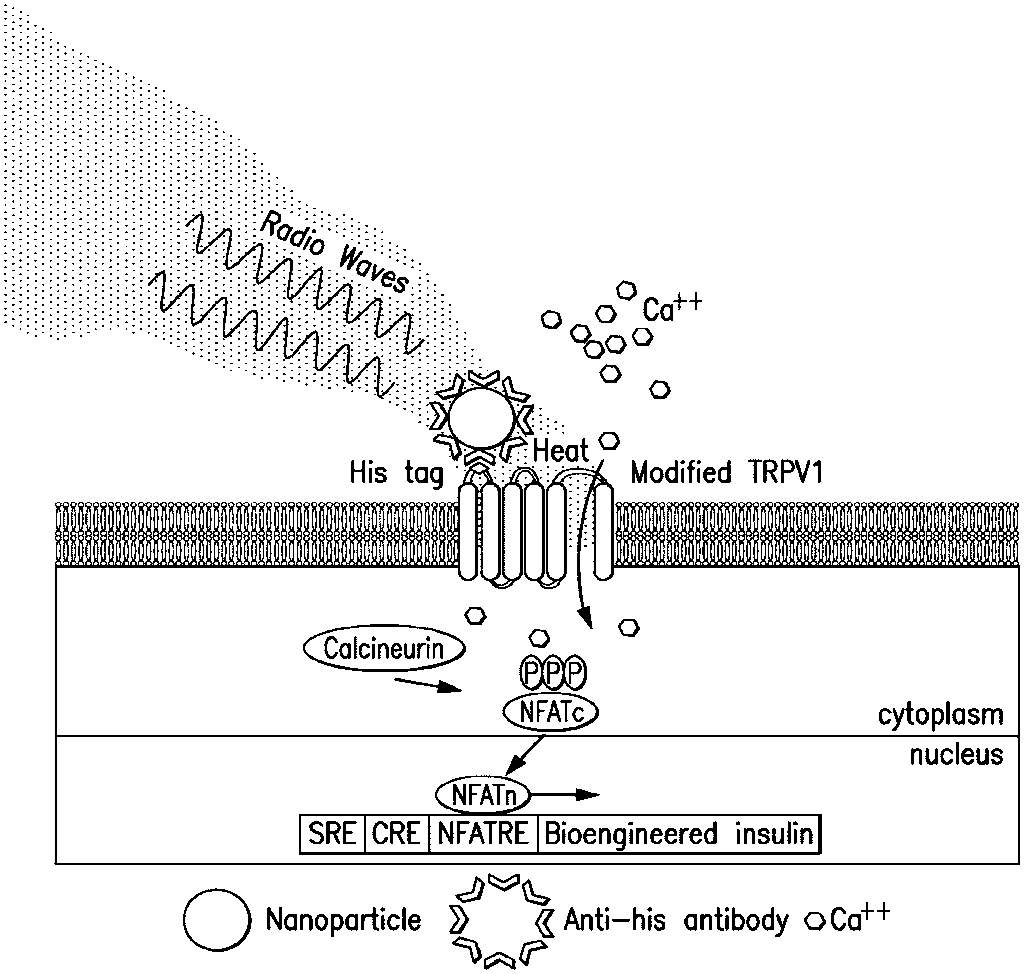
In 2020, Rockefeller University was granted United States Patent US10786570B2. The inventors are Jeffrey Friedman and Sarah Stanley. The assigned owner is Rockefeller University, one of the world’s leading biomedical research institutions, substantially funded by the Rockefeller family and its associated foundations. This should raise an eyebrow among any astute reader of this publication. The patent is titled Ferritin Nanoparticle Compositions and Methods to Modulate Cell Activity. The abstract states that the invention provides methods and compositions for remotely controlling cell function by using radiofrequency waves to excite nanoparticles targeted to specific cell types. Remote control of cell function using radiofrequency waves.
Radiogenetics, also called magnetogenetics, involves introducing ferritin nanoparticles into the body and targeting them to specific cell types that express a temperature-sensitive ion channel. When radiofrequency waves are broadcast externally at the right frequency, they excite the nanoparticles, producing a localized temperature change that activates the ion channel and triggers a cellular response. Specific cells fire on command, remotely, without any physical contact.
The technology was demonstrated in living organisms. In mice, radiogenetics produced false perceptions: animals experienced hunger when they were not hungry because the neurons responsible for generating the hunger signal were triggered by an external radio frequency. Jeffrey Friedman described the result: “We created a perceptual illusion.”
In 2024, Futurism reported on research from the Institute for Basic Science in South Korea. Scientists there developed a system called Nano-MIND, Magnetogenetic Interface for NeuroDynamics. Director Jinwoo Cheon described it as the world’s first technology to freely control specific brain regions using magnetic fields. Demonstrated effects in animal models included a 100 percent increase in appetite, a 50 percent decrease in appetite, maternal nurturing behaviors activated on command, and what the researchers described as increased friendly behaviors. All effects were achieved by applying an external magnetic field after an initial nanoparticle injection. The research was published in Nature Nanotechnology.
Two independent research groups. Two different institutions. The same fundamental capability: wireless control of specific behaviors in living organisms via externally applied fields acting on brain-localized nanoparticles. These are not fringe claims. The Rockefeller research is patented. The Korean research is published in Nature Nanotechnology. The question of whether this technology will be weaponized against human populations is not addressed in the patent literature, but one can speculate. The question is whether the capability exists, and it does. The institutional funding network surrounding it, including Rockefeller University and the same foundations whose money funded the Macy Conferences and produced MKUltra’s academic arm, is not a coincidence to be dismissed.
III. What MK-Ultra Was Building Toward
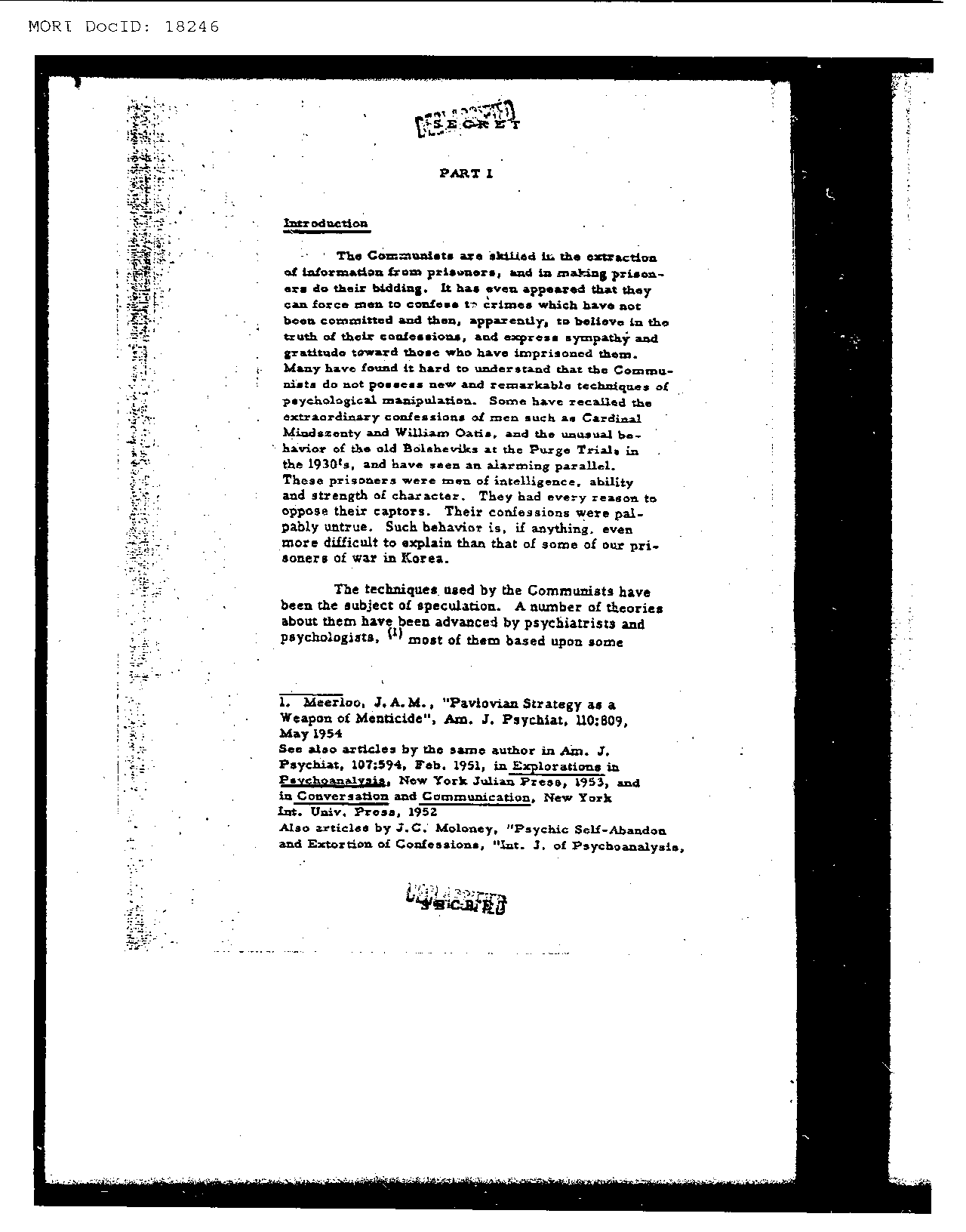
In March 2025, the Harvard Gazette published a report on a discussion paper by Lukas Meier, then a fellow at Harvard’s Edmond and Lily Safra Center for Ethics. The paper, produced by the Carr Center for Human Rights, examined historical parallels between current brain-computer interface development and MK-Ultra.
Meier’s assessment, quoted directly: “With these technological capabilities, we move dangerously close to inadvertently enabling one of the main goals of Cold War intelligence programs: the eliciting of information from subjects who are not willfully cooperating.”
MK-Ultra was authorized by CIA Director Allen Dulles in 1953. It involved 149 subprojects, 185 non-government researchers, 44 colleges and universities, 15 research foundations, 12 hospitals, and 3 penal institutions. The program’s methods included forced listening to recordings during drug-induced sleep, electroshock at many times the normal dose while subjects were on psychoactive drugs, and psychological driving, in which tape-recorded messages were played into drugged brains up to half a million times. Some subjects lost their memories. Others lost the ability to speak second languages. Some also lost the ability to walk or eat independently. None were ever compensated. This is Uncle Sam at his finest.
The CIA concluded LSD was useless for covert interrogation. They did not conclude the goal was misguided. The goal, eliciting information from subjects who were not willfully cooperating and modifying behavior at the neurological level, was simply deferred to better technology, and that technology now exists.
Meier documented the 2006 case of a deep brain stimulation patient with no prior criminal history who broke into a parked car while his DBS stimulator was active, then returned to his baseline behavior when the stimulation stopped. “Making somebody without any criminal record break into a car seems to be a pretty strong interference,” Meier said. His conclusion, published by Harvard’s ethics center: “We may not be able to rely on technological limitations thwarting efforts at mind control a second time.”
This brings us to Noland Arbaugh, who became the first human to receive a Neuralink implant on January 28, 2024. He is paralyzed. The implant allowed him to control a computer mouse with his mind and play online chess. These are real achievements, and his relief was real. The fact that a paralyzed man gained some control over his environment through neural technology does not immunize the technology from scrutiny. It is actually the kind of story that keeps people from scrutinizing it, as is psychedelic therapy healing veterans. The atomic bomb also had therapeutic framing when it was first described as a source of clean energy. The question is always who holds the weapon and what they intend to do with it when the press release is no longer needed.
Sarah Songhorian, a philosopher at Vita Salute San Raffaele University in Italy, published a peer-reviewed analysis of Neuralink’s ethical challenges in Frontiers in Human Dynamics in March 2025. Her assessment documented a fact that the company’s marketing consistently obscures: Neuralink devices are bidirectional. They do not only read from the brain. They write to it. The privacy risks associated with bidirectional neural data are the central ethical concern, and no cohesive legal framework for neurotechnology currently exists. Read. And write. Meme warfare will no longer be needed when the thoughts they want you to think can be pinged directly into your skull.
IV. Before Orthodoxy

Before I became Orthodox, I was an atheist and interested in transhumanism the way most atheist techno-optimists are, as the logical conclusion of taking human suffering seriously without a theological framework. I had Nick Bostrom’s Superintelligence on my shelf. I had Max Tegmark’s Life 3.0. I thought Neuralink was, essentially, the honest version of what we were already doing with our phones. We are already tethered to the device. We already let it mediate our relationships, information, and emotions. Why not remove the middleman? We are already merged with the machine. Why not make it official?
Joe Rogan’s podcast shaped how I thought about this. In the early 2020s, Rogan presented the Neuralink argument in exactly those terms, not as a sinister government program but as the next logical step in human-computer integration, the phone upgrade you did not know you needed. This was before I understood that Rogan’s pipeline from podcaster to cultural gatekeeper to Oval Office visitor was not organic, but that has been covered elsewhere on this site. The point is that the argument was persuasive to me because I was working from an anthropology that had no answer to it. If the self is a pattern of information, the implant is just a more efficient interface. If the self is something else, the implant is a violation. I understand now who the middleman was.
The middleman is the distance between your mind and the device. The friction. The moment when you choose to pick up the phone or put it down. The crack of light between you and the system, the place where repentance lives. Remove the middleman, and you remove the possibility of that distance. There is no putting down an implant. There is no walking away from a device fused to your neurons. The phone I reach for when I should be praying can at least be left at home. I leave it at home when I go for walks with my prayer rope. That option ends when the phone is inside your skull.
I still feel tethered to the phone. I struggle with it. I know what it is doing to me. I know I am a slave to the little black propaganda box that manipulates my emotions and targets my desires. I say this not as a rhetorical flourish but as a straightforward description of my experience, which I suspect is also yours if you are honest. The difference between me now and me then is that I know what it is, what it is trying to replace, and I have the prayer rope to hold as I figure out how to put it down. Neuralink will make the prayer rope impossible.
V. Musk and What He Actually Said
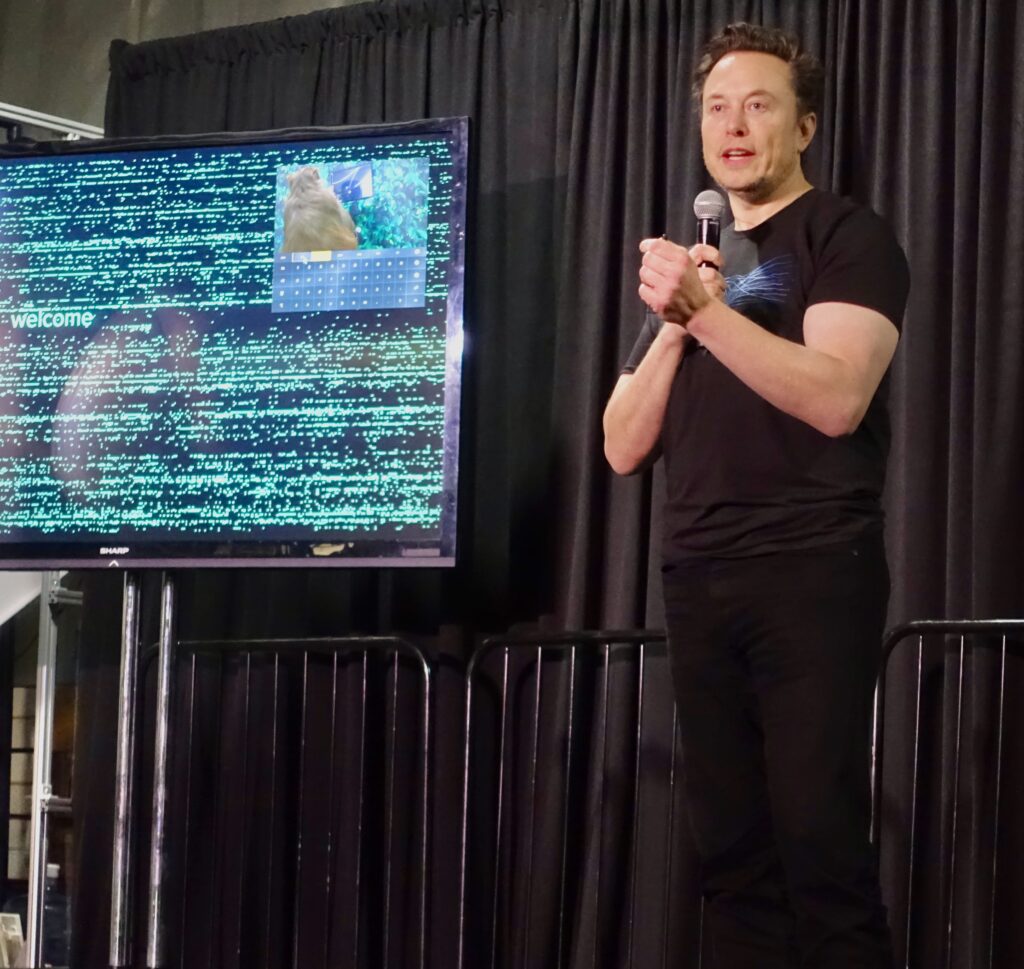
“Restoring control of people who are tetraplegics and restoring sight I think are pretty big deals. They’re sort of what I might call Jesus-level technologies.”
Elon Musk said this via video link at an event in Israel in May 2026. MarketWatch reported it, and Futurism covered it. In context, he was complaining that Neuralink does not receive sufficient public credit for its achievements. The framing is important because it reveals how he thinks about the comparison. He is not claiming to be Jesus. He is claiming that the work his company is doing is morally equivalent to the healing ministry of Christ, that restoring movement to the paralyzed and sight to the blind through technology is the same category of act as the Son of God performing miracles.
Jesus healed as God made flesh, freely, requiring nothing from the recipient except faith. The healing was immediate, complete, and permanent. It left the healed person more human, not less. It did not require surgery, a proprietary device, an FDA approval process, a power source, a software update, or a subscription to a company whose continued existence is a precondition for your mobility. It did not require you to have bidirectional neural data extracted from your brain and stored on a server you do not control. It did not require you to accept that the company that made you mobile also has the technical capability to make you immobile again, because the device writes as well as reads.
Musk knows what he is building. The vocabulary keeps slipping out from under the PR: demon, portal, Jesus-level. These are not accidents. They are the words that emerge when the secular framework runs out of room to describe what is actually being reached for.
The transhumanist aspiration is the desire for what only God can give, pursued through means that exclude God. The desire is correct, but the means are the problem. The people designing those means know, somewhere beneath the press releases, that they are counterfeiting, which is why they keep reaching for theological language to describe it.
VI. The Founding Document
In 1988, a man named Max More wrote an essay titled “In Praise of the Devil” for the first issue of Extropy Magazine, the founding publication of the modern transhumanist movement. More, born Max T. O’Connor, with a philosophy degree from Oxford, was coining the vocabulary that would define the movement.
“The Devil — Lucifer — is a force for good. ‘Lucifer’ means ‘light-bringer’ and this should begin to clue us in to his symbolic importance. Lucifer is the embodiment of reason, of intelligence, of critical thought. He stands against the dogma of God and all other dogmas. He stands for the exploration of new ideas and new perspectives in the pursuit of truth. Praise Lucifer! Join me, join Lucifer, and join Extropy in fighting God and his entropic forces with our minds, our wills and our courage.”
Nick Bostrom, Oxford philosopher and founder of Humanity+, the organization that became the central institutional body of the transhumanist movement, acknowledged in his paper A History of Transhumanist Thought that the movement was founded in alchemy and mysticism, while working to present a more academically respectable face that had shed what he called the cultishness of its earlier convocations.
Julian Huxley coined the term transhuman in 1957 to rebrand eugenics after Nazism had rendered it politically radioactive. The Rockefeller Foundation had previously funded the Kaiser Wilhelm Institute for Anthropology, Human Heredity and Eugenics in Berlin, the institution where Otmar von Verschuer conducted twin research and where Josef Mengele worked before being dispatched to Auschwitz. The same foundation now holds the patent for remote cellular control via radiofrequency nanoparticles.
His brother Aldous wrote Brave New World. The standard reading is that it is a warning. In a 1958 interview with Mike Wallace, Aldous described the book as a blueprint and expressed concern that the world was moving toward it faster than he had anticipated. Their grandfather Thomas was Darwin’s primary promoter. Across three generations, the family sat at the intersection of evolutionary biology, population management, and cultural influence, consistently oriented toward the managed improvement of the human species by people who had appointed themselves to decide which humans were worth having.
The movement did not arise from a sincere concern for human suffering. It emerged from a specific occult-revolutionary lineage that David Livingstone traces in detail in Transhumanism: The History of a Dangerous Idea, spanning Kabbalah, Rosicrucianism, Freemasonry, the Frankfurt School, the CIA-connected Cybernetics Group, the counterculture, and Silicon Valley. The same current, with successive vessels and a consistent destination.
VII. The Two Voices

Elder Aimilianos of Simonos Petras wrote, in The Authentic Seal, more than fifty years ago: when technology is unrestrained and unbridled, it rushes headlong towards its destination, then it becomes Luciferous, though not bearing light but rather pitch darkness.
Max More, 1988: Lucifer is the embodiment of reason, of intelligence, of critical thought. Praise Lucifer.
One man was on Mount Athos. The other was at Oxford. They did not know each other. They named the same entity at the center of the same project in the same decade. The Elder called the condition by its right name before the movement had finished building its institutional infrastructure. More named his god while writing the founding document for a movement that would receive billions in venture capital. The Orthodox tradition has the vocabulary. The question is whether the Church will use it loudly and clearly enough before the implant receives universal regulatory approval. I think it will.
VIII. The Man With No Christ
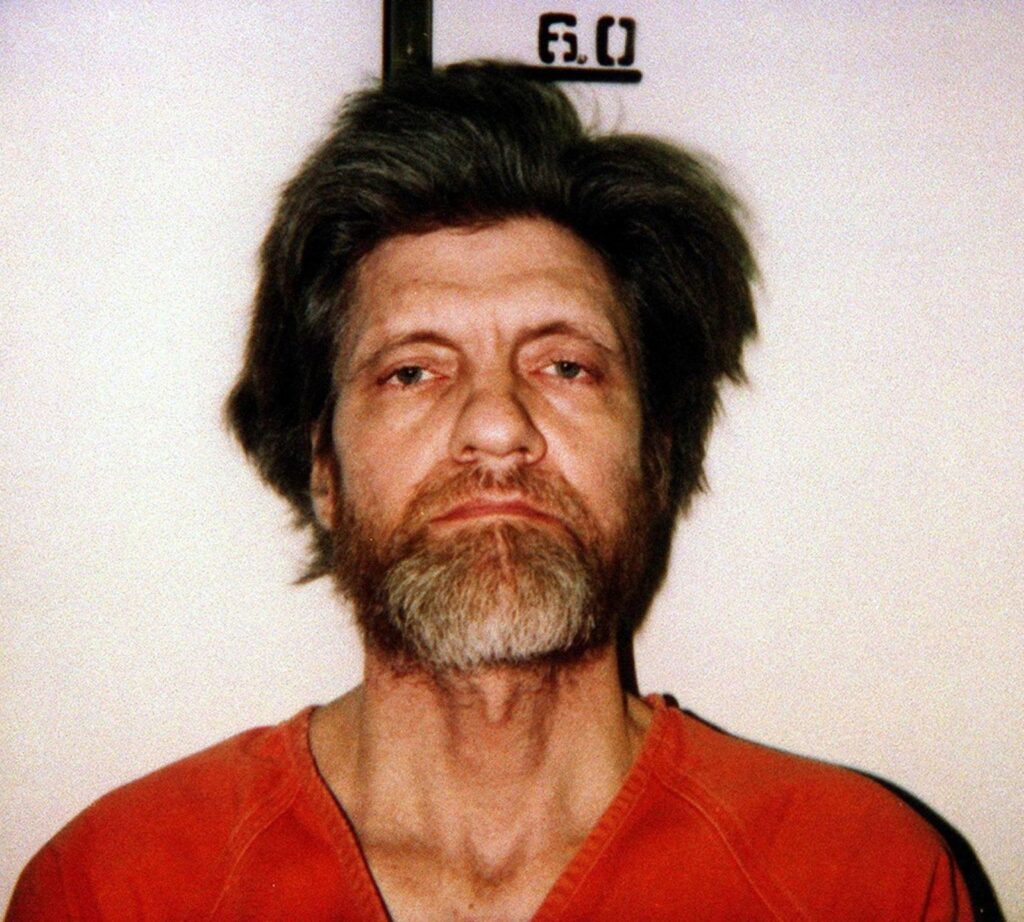
Theodore John Kaczynski was a former mathematics professor at UC Berkeley, a recluse in the Montana wilderness, and a domestic terrorist who killed three people and injured twenty-three others with mail bombs between 1978 and 1995. He died in federal custody in 2023. His methods were monstrous and unjustifiable, and nothing The Discerner endorses.
However, in 1995, he also wrote a document that the New York Times and the Washington Post published on the condition that he end his bombing campaign. That document, Industrial Society and Its Future, contains an analysis of the industrial-technological system that is partially correct and almost entirely without a solution. This is why a man who correctly diagnosed the problem chose bombing.
His diagnosis was that the industrial system requires people to live under conditions radically different from those under which the human race evolved. The most important damage it does is to what he called the power process, the human need for genuine goals requiring genuine autonomous effort. The system replaces this with surrogate activities: career, status competition, social activism, and scientific research pursued not because the person genuinely needs the outcome but because the system has removed all genuine need and left artificial substitutes in its place. The result is people who, in his words, function as parts of an immense social machine rather than as autonomous persons.
He wrote in paragraph 2: if the system survives, it may eventually achieve a low level of physical and psychological suffering, but only at the cost of permanently reducing human beings and many other living organisms to engineered products and mere cogs in the social machine. Furthermore, if the system survives, the consequences will be inevitable: there is no way of reforming or modifying the system so as to prevent it from depriving people of dignity and autonomy.
He saw the prison. He saw that reform was impossible. He saw that the trajectory led to the total elimination of genuine human agency. He was right about all of this. The BCI literature, behavioral modification research, and Zuboff’s documentation of surveillance capitalism all confirm his analysis from different directions, using peer-reviewed methods and institutional research he did not have access to.
He had no Christ. He had no Theosis. He had no sacraments, no Elder, no Church, no prayer rope to reach for when paranoia closed in. So he looked at the same destination the Orthodox tradition names, the reduction of the human person to a managed component in someone else’s system, and he made bombs.
St. Seraphim Rose, writing in a San Francisco basement in the early 1960s while still coming to Orthodoxy, described the endpoint of the same trajectory using the language of the Fathers: the artificial world erected by men who will to remove the last vestige of divine influence in the world promises to be so all-encompassing and omnipresent that it will be all but impossible for men to see, imagine, or even hope for anything beyond it. This world will be the vastest and most efficient prison men have ever known, for, in the precise words of Lenin, there will be no way of getting away from it, nowhere to go.
Two men, strangers, arrive at the same destination. The difference is that Rose had found it: the thing outside the system, the thing the system cannot reach, contain, automate, or modify. He had found the Orthodox Church. He spent the rest of his life explaining why it mattered. Kaczynski had found the description. He never found the answer. The absence of an answer was what the bombs were.
IX. The Thing They Fear
Transhumanists are afraid of death. The entire project, encompassing life extension, mind uploading, neural enhancement, the Singularity, and the merger with machine intelligence, is an elaborate and extremely expensive response to the fact that they are going to die, that they know where they are going, and that they are building a simulacrum of Heaven because they cannot face the alternative.
The desire for immortality is correct. The desire to transcend suffering is correct. The desire to see the broken body healed and the paralyzed man walk is correct. Each of these desires is a dim recognition of the resurrection, which the body already knows is its destiny, even when the mind has rejected the means by which that destiny is reached.
Theosis is not an upgrade. You cannot patent it. You cannot build it in a data center. It requires the body, the same body that will be resurrected, and it requires suffering, the Cross, and the cooperation of the human will with the grace of God over the course of a lifetime. There is no bypass. The transhumanist project is the refusal of that process: the insistence that the destination can be reached by engineering rather than by sanctification, that immortality can be manufactured rather than received, and that the image of God can be improved rather than restored.
It cannot. The people building the project know this, somewhere beneath the press releases, which is why the language that keeps escaping their controlled vocabulary is religious. Jesus-level technologies. Summoning. Portals. The demon. The words keep coming because the thing being reached for is genuinely theological, and the secular vocabulary keeps failing to contain it.
The demons knew who Jesus was before the disciples did. The people building the counterfeit know, somewhere beneath the fundraising decks and the FDA submissions, what they are counterfeiting.
I pray for them. I mean that without irony or condescension. The transhumanist is someone whose thirst for God has been redirected toward an electrode. That is a terrible condition, and the appropriate response is the same one that worked for me: an encounter with the Living God who led me to the Orthodox Church.
Part II of three. The Engineered Soul concludes in Part III: The City as Prison, on digital identity, smart cities, the 15-minute enclosure, and the Orthodox teaching on sanctuary.