It Started With a G
I was watching the Dodgers and noticed a patch on the sleeve, a simple, stylized letter G, placed on whichever arm faces the camera. Left arm for righties, right arm for lefties. Engineered for visibility in every broadcast frame. It represents Guggenheim Baseball Management, the ownership group. They say it’s just a corporate sponsor logo. Nothing to see here.
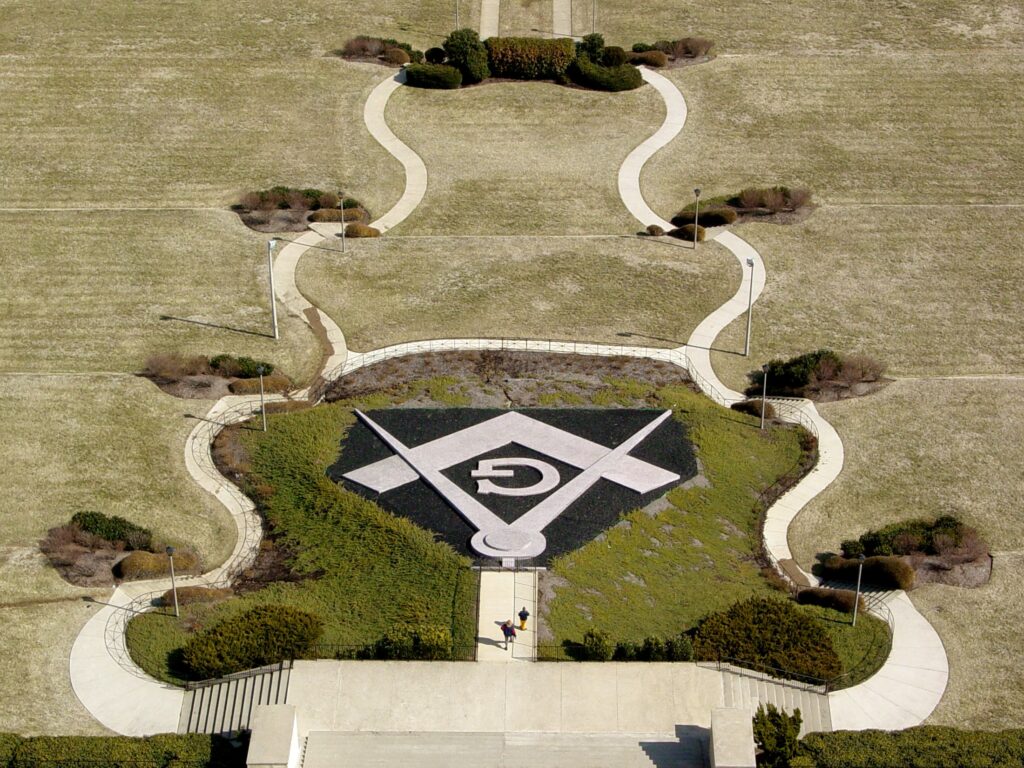
Except in a Masonic lodge, the letter G hangs above the altar at the center of every square-and-compass emblem in every lodge on earth. It stands for the Grand Architect of the Universe, the Masonic name for the deity before whom every initiate swears his oaths. The G is the central symbol of Freemasonry. And now it sits on the sleeve of the most-watched baseball team in America, engineered to face the camera on every pitch during Shohei Ohtani’s first season with the team, the most marketed athlete on earth, so that a hundred million viewers see it every night without knowing what they’re seeing.
Maybe it’s nothing. Maybe Guggenheim just has a G in its name. I started pulling the thread anyway. You probably shouldn’t read what I found, since it’s steeped in occultism.
The Field Is a Lodge Floor
Growing up in America, I never understood why baseball was considered the national pastime. Football made sense, violence, strategy, gladiatorial spectacle. Baseball? Guys standing in a field for three hours while nothing happens. Boring as watching paint dry, I thought. Then someone told me it wasn’t a sport. It was a ceremony. Once you see it, you can’t unsee it.
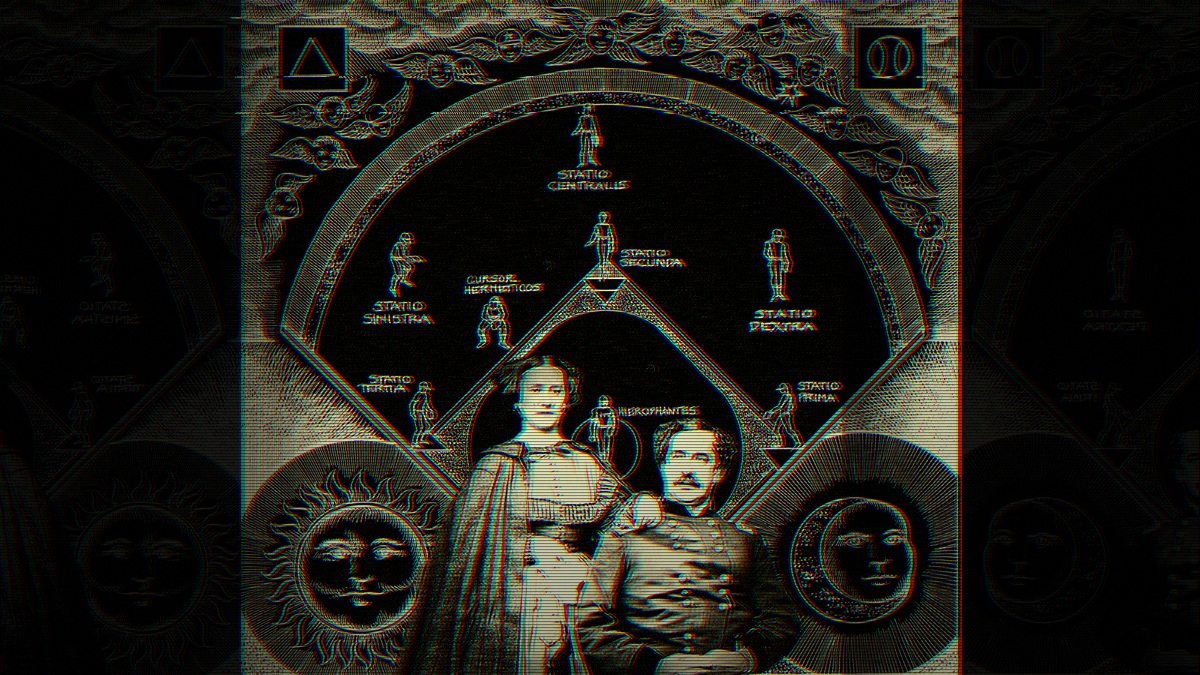
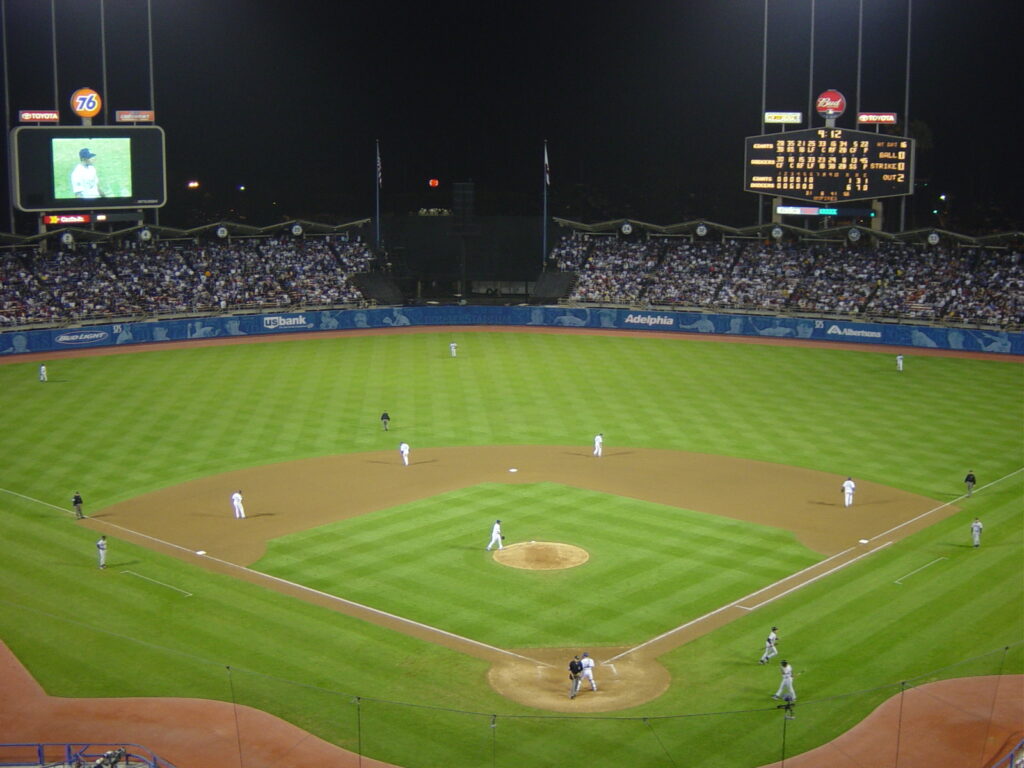
Look at the field. Really look at it. The diamond, four bases marking the cardinal directions, north, south, east, and west, is the same four-point cosmological framework found in Chinese, Norse, Egyptian, and Hindu traditions, as well as in Unitarian and Freemasonic cosmology. The pitcher’s mound sits dead center, the fifth element, the axis mundi, the point of the Masonic compass. In the square and compass emblem of Freemasonry, the letter G occupies the center. On the baseball field, the pitcher occupies the center. The pitcher is the G. As the Remnant Radio researcher writing under the name Pilgrim noted in a piece later published in Ritual America (Adam Parfrey and Craig Heimbichner, 2012), the baseball field from home plate to the outfield wall forms a compass. The bases, inverted, form the square. The field is the emblem of Freemasonry rendered in grass and dirt. The US Patent Office confirmed as much in 1900 when it refused to register the square and compass as a trademark on the grounds that it was already universally recognized as the emblem of Freemasonry. You are playing on a lodge floor. Enjoy the nachos.
The checkerboard pattern mowed into modern outfield grass isn’t there because the groundskeeper got creative. It’s the mosaic pavement, the black-and-white duality floor of every Masonic lodge on earth, the path of life, the game of life, the pawns on the board. In baseball, they mow it in contrasting greens rather than black and white, but the geometry is identical. Pilgrim noted this, the checkerboard as the duality of physical life, as opposed to the spiritual duality of the yin-yang. You are standing on the lodge floor, watching the ceremony from the profane side of the rope. The cold beer helps.
Then there’s the numerology, and once you see it, you’ll want to throw your baseball cap in the garbage. The Masonic dictionary is explicit: nine derives its value from being the product of three multiplied by itself, three times three. In Masonic language, 27 and 81 are esteemed as sacred numbers in the advanced degrees. Baseball: three strikes, three outs, nine fielding positions, nine innings, 27 total outs per game, 81 home games, 81 road games. Every single number in the structure of the game is a sacred Masonic number. And the modern baseball bat, standard weight, is 33 ounces. Thirty-three. The highest degree of Scottish Rite Freemasonry. You are swinging a 33-degree initiation wand at a ball on a lodge floor in a field shaped like a compass. America’s pastime, everybody.
The three bases represent the three degrees of the Blue Lodge. To score, the player must touch all three and return home. Pass through all three degrees to reach completion. Noel Joshua Hadley, in The Unexpected Cosmology, frames the Gnostic structure precisely: the batter faces the pitcher, the accuser, the Demiurge, the Grand Architect on the mound, armed with nothing but the bat, the sacred wand of the ancient mysteries, the law that thwarts the accuser. The ball is the soul. The batter fails, the soul returns, the ball goes back to the pitcher, and the player retreats to the dugout, the ancestral womb, awaiting another incarnation. He knocks it beyond the wall, beyond the firmament. His soul ascends, he rounds the bases, and he is free. The crowd goes wild without knowing why it feels so significant. That is the point. That has always been the point.
The philosopher Morris Raphael Cohen described baseball as a national religion. He was right, though probably not in the way he intended. Almost all ancient civilizations held ritualistic sporting events that blended athletic competition with religious meaning. The Mayans played ball games that ended in human sacrifice. The ball, the shape of the court, the rings, all cosmological. Playing engaged participants in the maintenance of the universe’s cosmic order. The Greeks built the Olympics around religious ceremonies at Olympia, a sacred truce between city-states in honor of Zeus. The Romans had the arena. The Freemasons, as Pilgrim notes, are deeply inspired by ancient cultures like the Egyptians, Babylonians, and Phoenicians. They study their rituals, mythology, and sacred geometry. So did they devise their own ritual game? They did. And they told us they did. Just quietly, in lodges, in jerseys with square-and-compass patches, in museums in Lexington, Massachusetts, in websites most people will never read.
Who Built This Thing
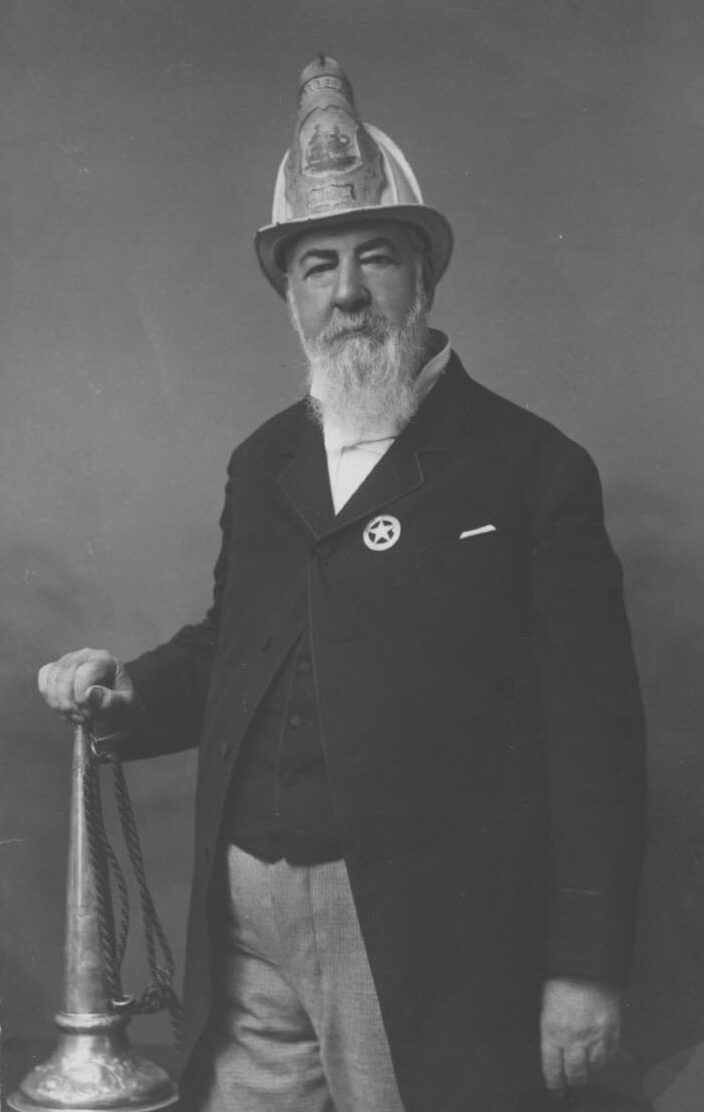
The inventor most credited, Abner Doubleday, had documented ties to the Theosophical movement and served in a leadership capacity in the American Theosophical Society after its founders, Helena Blavatsky and Henry Olcott, relocated to India in 1878. Theosophy is occultism with a respectable face, Eastern and Western esoteric traditions synthesized, aligned with Freemasonry. His tombstone at Arlington National Cemetery is an obelisk. The man credited with inventing America’s national ritual game is buried beneath Ra’s solar monument on ground consecrated by the nation’s military dead. Nobody mentions this on the Hall of Fame tour.
The more credible inventor, Alexander Cartwright Jr., whose plaque at the Baseball Hall of Fame names him the Father of Modern Baseball, was an undeniable Freemason. St. George’s Lodge No. 15, a functioning Masonic lodge in Ontario, published a piece on its own website confirming it cheerfully: Brother Alexander Cartwright helped formalize the rules of modern baseball, including the diamond infield, the 90-foot base paths, and the nine-player teams. They call him Brother. Cartwright served in a senior capacity within the Hawaiian Masonic lodge, overseeing cornerstone ceremonies for the island’s major civic buildings. He was also a financial advisor to the Hawaiian king. Co-founder William Wheaton was also a Freemason. And where did Cartwright’s Knickerbocker club play its first game? On a field in Hoboken, New Jersey, that they named Elysian Fields.
Elysian Fields. Not Green Meadow. Not the Hoboken Ball Ground. Elysian Fields, the final resting place of heroic souls in Greek mythology, paradise for those blessed by the gods, possibly deriving from the Egyptian ialu, the reed fields, the paradisaical afterlife of Egyptian religion. Cartwright and company were thinking in metaphysical terms. They named the field after the realm of immortal souls and staged the ritual of the soul’s journey there. The ceremony began in paradise and has been re-enacted on lodge floors mowed into the grass of every American city since. The name seeded itself across the country like a confession nobody was supposed to read, Elysian Park in Los Angeles, a street in New Orleans that Tennessee Williams used as a symbolic element in A Streetcar Named Desire, and Elysian Fields Quarterly, still publishing today as a popular baseball magazine. The name never left. Why would it?
The sportswriter who sold America on baseball, Henry Chadwick of the New York Times, arrived at the project trailing a family biography that would raise flags in any serious investigation. Grandfather was a close friend of the Wesley brothers. Father held an unspecified role in the French Revolution. Brother Sir Edwin Chadwick became England’s sanitary philosopher, developing environmental legislation to manage the consequences of the Industrial Revolution, early Agenda 2030 logic, out of chaos comes order. Four separate rabbit trails in the biography of the man who promoted baseball as America’s pastime through the newspaper of record. The New York Times has been swimming in this particular pool since at least 1856.
The Lodges Confirmed It
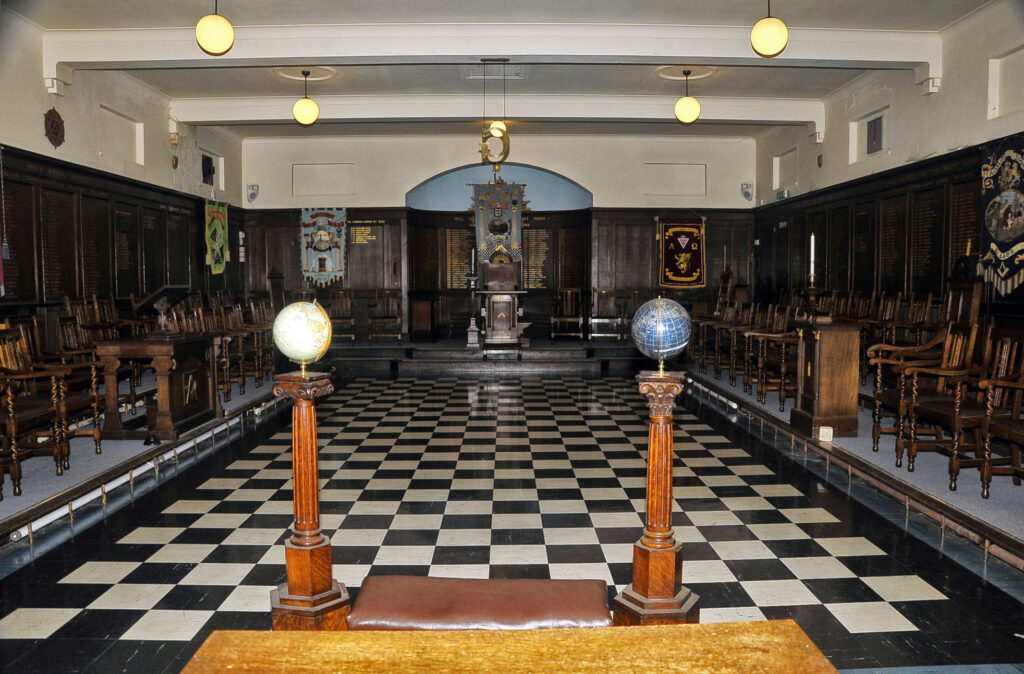
The lodges themselves confirmed the rest, because apparently they cannot help themselves. Aimee Newell, writing in California Freemason magazine, the official publication of the Grand Lodge of California, documents that Masonic baseball teams and leagues were common across America in the early twentieth century. The Scottish Rite Masonic Museum and Library in Lexington, Massachusetts, holds an archival jersey from a Masonic league team from between 1916 and 1925, a pinstriped shirt bearing the team name Ionic, with a square and compass patch on the sleeve and a G at the center. Because of course. Documented Masonic leagues in Detroit, western New York, and Duluth. A 1911 ticket in the museum’s collection admits the bearer to a game between Franklin Lodge No. 10 and Oriental Lodge No. 51. In 1935, an All-Star Masonic Game in Trenton, organized by Tall Cedars of Lebanon Forest No. 4, featured professional players who were also Freemasons. The sporting goods manufacturer making the lodge jerseys, Thomas E. Wilson, founder of Wilson Sporting Goods, whose name is on equipment in practically every American school gymnasium, was a lodge member in Chicago. They built the game, they built the equipment, they built the leagues, and then they told the Grand Masters of Illinois they needed to stop putting the word Masonic on things in public. In 1909 and 1910, consecutive Grand Masters of Illinois ruled that Masonic baseball clubs could not use the name Masonic Baseball League or any name with Mason or Masonic in it. The leagues could continue. Just lose the name. The game is ours. The sign comes down.
St. George’s Lodge No. 15, again an active Masonic lodge that posts this on its own website, reports that at least 58 of the 317 members of the National Baseball Hall of Fame were Freemasons. At least. Ty Cobb, Honus Wagner, Christy Mathewson, Cy Young, 511 career wins, the most in MLB history, lodge brother. Branch Rickey, the man who broke baseball’s color barrier by signing Jackie Robinson to the Brooklyn Dodgers in 1947, a Freemason.
And here is where it gets interesting. B’nai B’rith International, the Jewish fraternal organization founded in 1843, the oldest Jewish service organization in the world, with deep historical ties to both Freemasonry and American institutional power, celebrated Jackie Robinson’s legacy at a 2013 tribute to MLB Commissioner Bud Selig. Robinson’s widow Rachel and daughter Sharon were present, alongside B’nai B’rith leadership and MLB officials. The man who signed Jackie Robinson was a Freemason. The organization celebrating Robinson’s legacy alongside the MLB Commissioner was B’nai B’rith. The most celebrated moment of moral progress in baseball’s history runs through the fraternal networks. Branch Rickey was a Mason. Jackie Robinson’s signing was executed within a system built by Masons. B’nai B’rith was at the table when baseball celebrated it decades later. Those are the facts.
The Hall of Fame roster is a who’s who of the brotherhood, as documented by the lodges themselves. Babe Ruth. Ted Williams. Rogers Hornsby. The documented ones are the road markers. The rest stay behind the apron.
Hollywood Encodes the Mythology
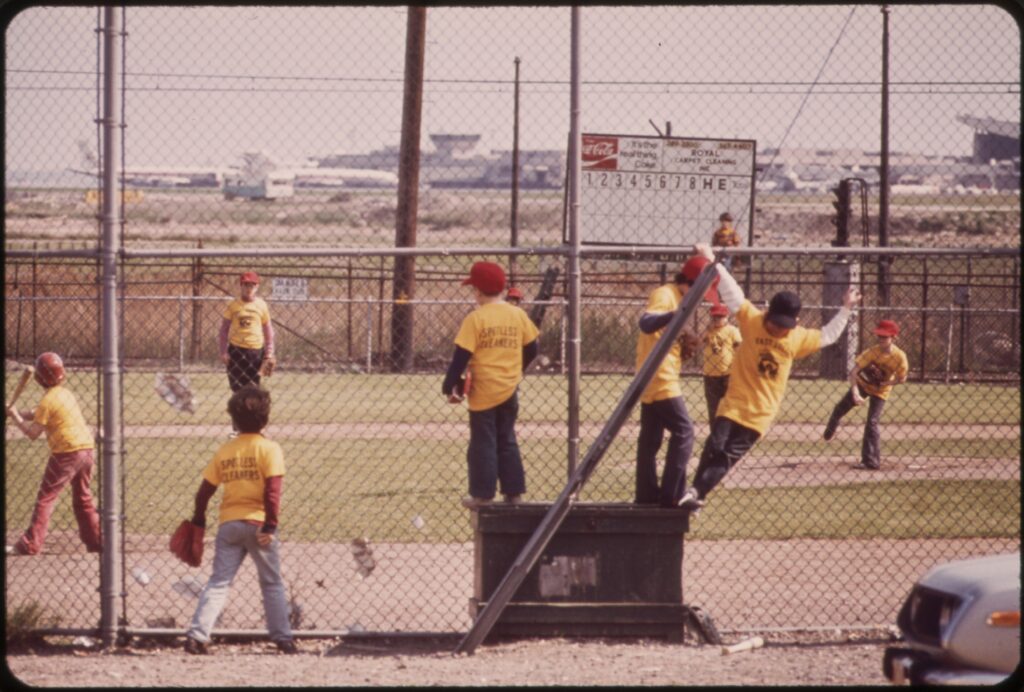
Hollywood, meanwhile, consecrates what the diamond establishes. Hadley reads the 1993 movie The Sandlot as a Masonic allegory, and he’s not wrong. Benny Rodriguez defeats The Beast, the English Mastiff guarding the balls knocked beyond the fence, Hades domesticated. The vision of Babe Ruth entering through the closet at night to initiate Rodriguez, the Past Master visiting the neophyte in darkness to confer the degree. Heroes get remembered, but legends never die. The contrast between the recycled soul in the dugout and the ascended immortal. Rodriguez is rewarded by the blind black man Thelonius Mertle, the blind bard of Homeric legend, with a ball signed by the entire 1927 New York Yankees. The blessing of the gods. The film’s domestic gross has been widely noted as approximately thirty-three million dollars. The number presents itself without comment.
What Some of Those Lodges Did
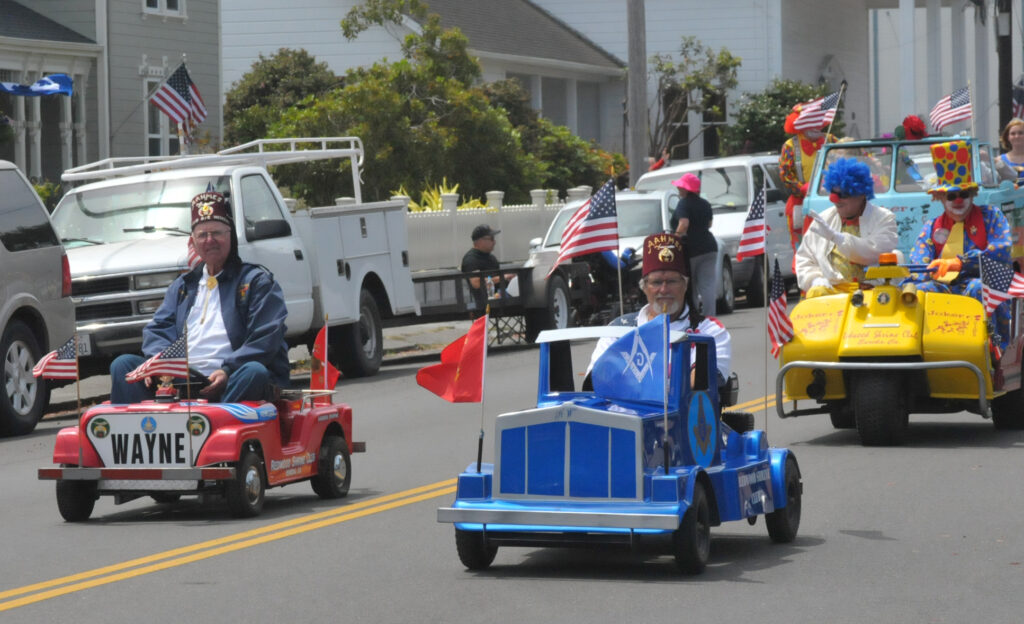
And then there’s what happens inside some of those lodges that nobody wants to discuss in polite company. The archive of survivor testimony on organized ritual abuse contains documented accounts describing Masonic connections. Kevin G., whose testimony has been circulated in alternative research communities, describes being targeted for ritual abuse at age four by men who, in his words, looked like your granddad, military haircuts, golf pants, Shriners. The Shriners are the appendant body of Freemasonry, the men in the little cars at the parades, the ones running the children’s hospitals. The testimony in these archives is disturbing, contested, and consistent across multiple survivors with no apparent connection to each other. The Discerner does not adjudicate these claims. We note that they exist, that they are numerous, that the pattern of institutional protection for accused Masons is documented in multiple jurisdictions, and that an institution claiming to be a fraternity of moral men committed to virtue while simultaneously running the national ritual game, the national media, the national currency, and the national political architecture has rather a lot to answer for before demanding the benefit of the doubt on anything.
The Ceremony Proceeds
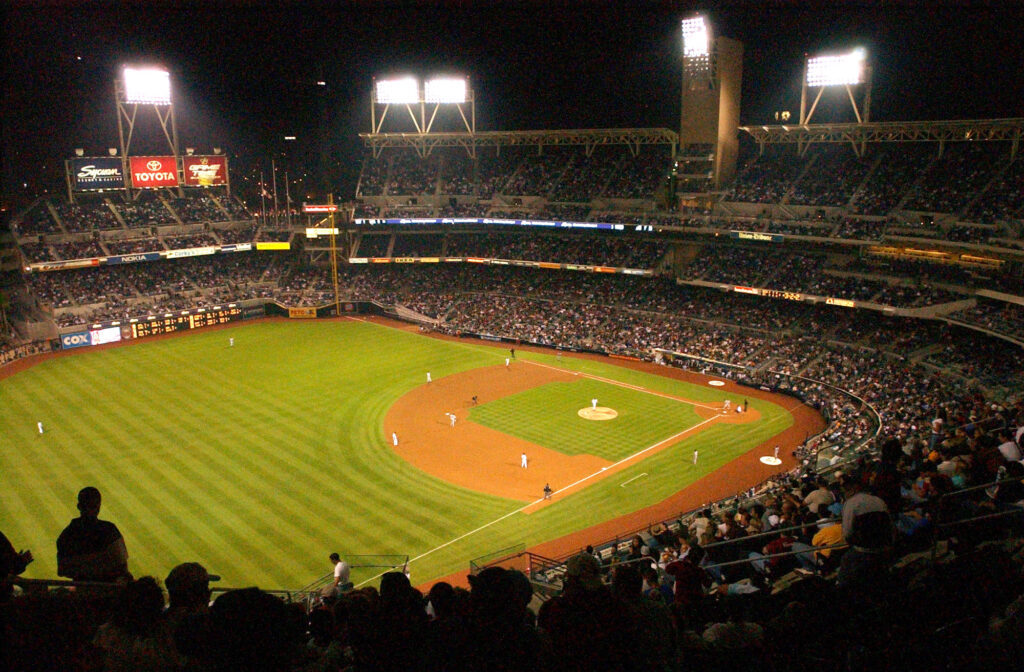
The game is a ceremony. The field is a lodge floor. The bat is a 33-ounce initiation wand. The players are initiates, most of whom have no idea. The crowd is the profane, which is precisely what the lodge calls the uninitiated, and most of them have no idea either. Hollywood encodes the mythology for the children. The sporting goods manufacturer is a lodge brother. The sportswriter promoting it works for a compromised newspaper. The founders are Theosophists and Freemasons who played the first game in a field named after the Greek paradise, buried themselves under obelisks, and let their own museum publish the jersey with the square and compass on the sleeve. The Grand Masters banned the name but left the game running. And every summer across every American city, on every diamond mowed into every public park and schoolyard, the ceremony proceeds. One hundred sixty-two times a year. Sacred numbers cycle across the sacred field while the crowd in the profane seats eats hot dogs and calls it patriotism. The G on the Dodgers’ sleeve faces the camera. The Grand Architect watches every pitch.
Church? You go to church? You’re a freak.
Did you see the Dominican man hit the ball with a stick?
Incredible.