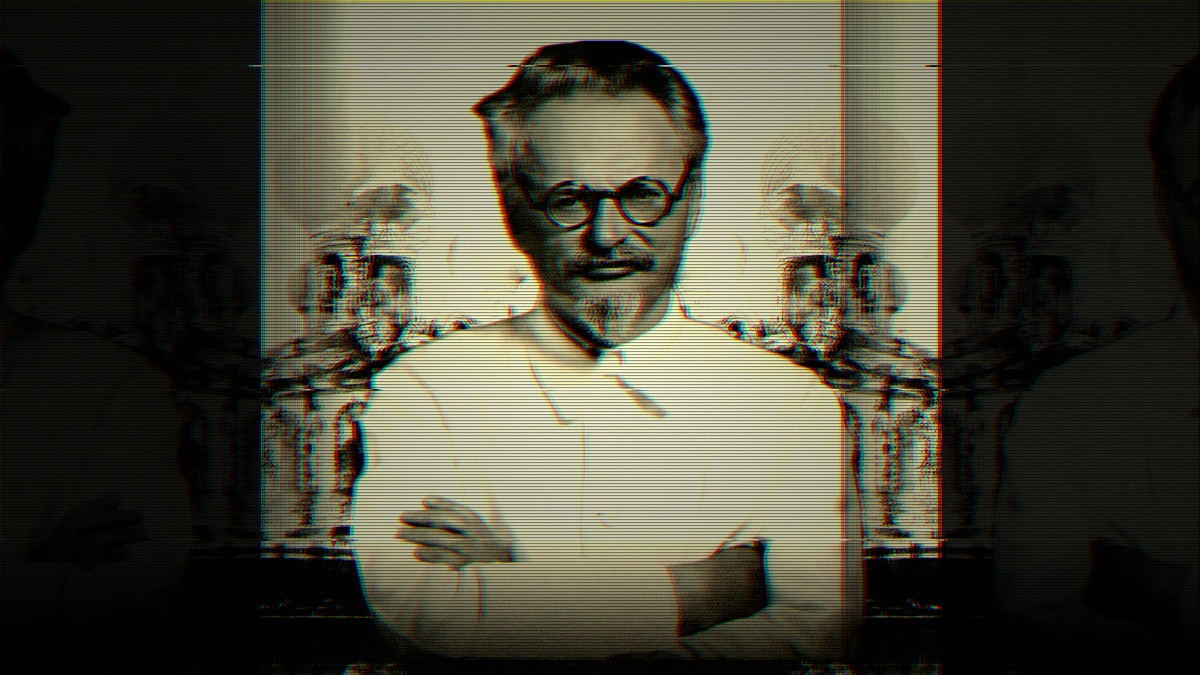
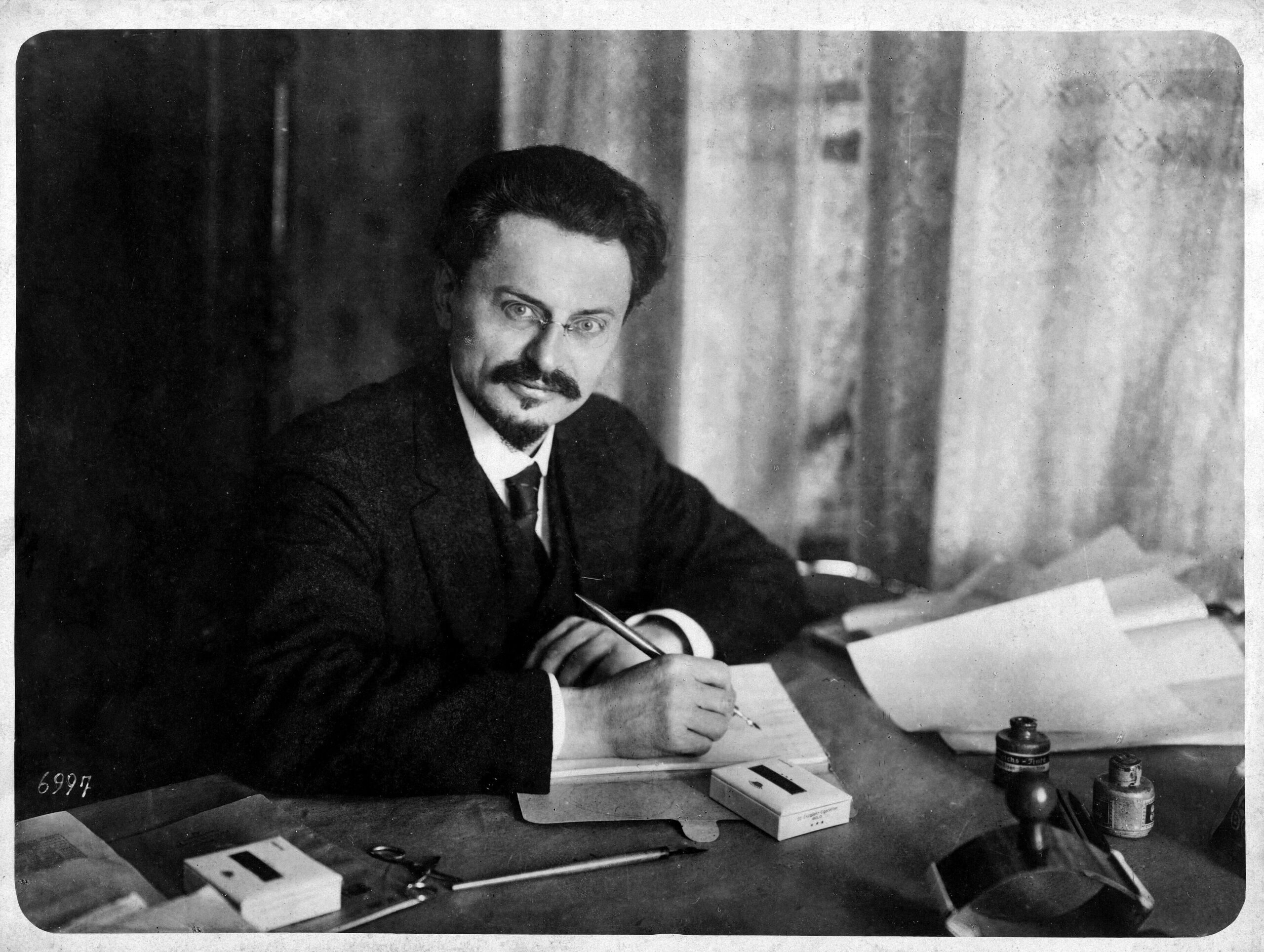
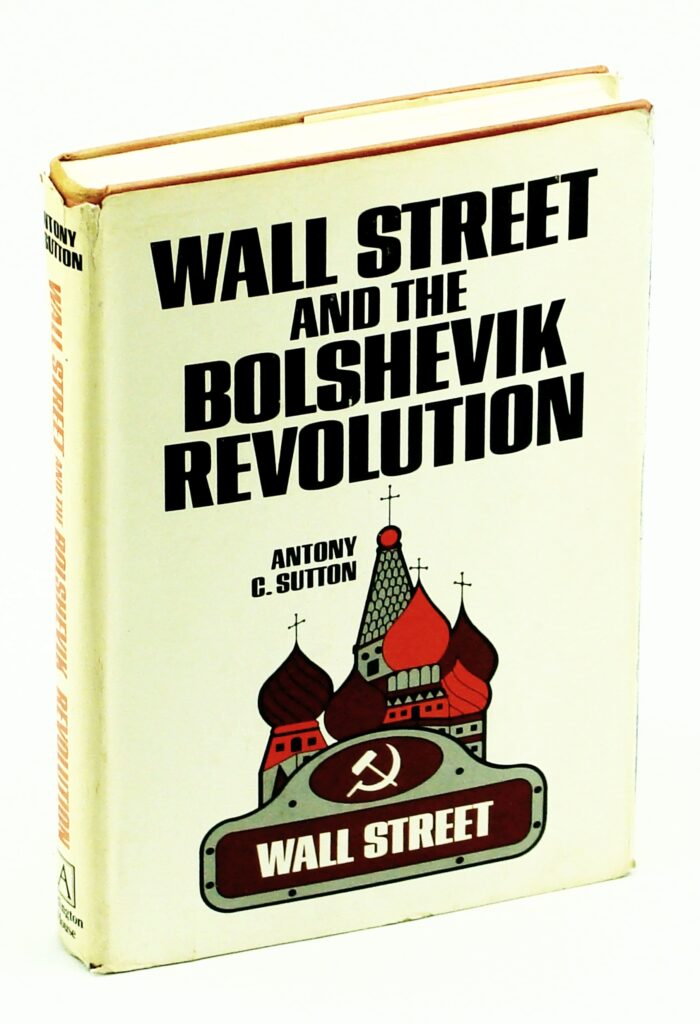
My earliest recollection of seeing communism as a created scam, being kept afloat by western banking and industry, came as a major shock in late high school. It was in a non-melodramatic situation of just reading some books on the subject. I am pretty sure they were “Wall Street and the Bolshevik Revolution” by Antony C. Sutton and later “The Black Book of Communism.” What I also found in my reading, that was to set me off, was when I read about the communist butcher Leon Trotsky, who one can read in his own books to confirm the outlier of where he went, but not what was truly said, as he was a typical compulsive Freemason liar.
Like all those that discover an “inside job” that wakes you up, I went around trying to get others to understand the implications, but it was passed off with “OK, but what is going on this weekend?” and “So what do you want to do about it?” So I went through further grumpy stages and the whole nine yards, but I was to go about for the rest of my life from that point onward following another piper. If others would not adapt to the ramifications of these facts, or give them the weight they deserve, I as sure as hell was not going to follow this frivolous approach to life. In fact, other people’s complacency and lack of seriousness drove me on.
So What Set Off Your Spidey-Sense?
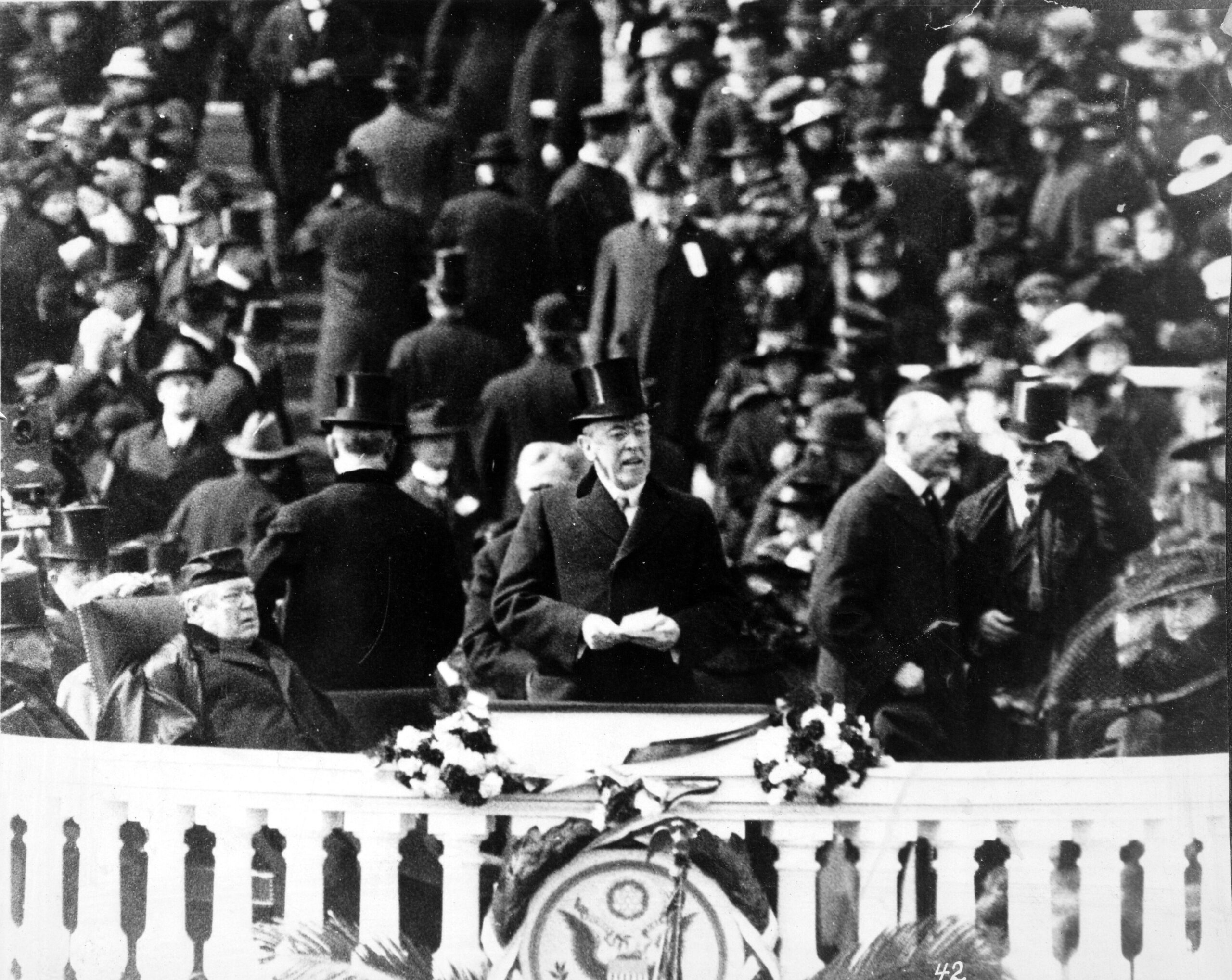
Simply put, before America had joined the ongoing Great World War (WWI) and the first February Revolution in Russia, Leon Trotsky and many other high-ranking communists had wined and dined with high-level American industrialists, politicians, and bureaucrats in New York City, USA. Due to Leon Trotsky’s miserable reputation throughout the world among all non-communists, President Woodrow Wilson needed to vouch for Leon Trotsky, his wife, and two boys to get him a US passport despite Trotsky not being a citizen. Being a foreigner and having no standing, as he had been in the USA likely only a month or two and would leave shortly, having been in the USA for as little as a mere total of three months, shows the height of corruption at the very top of the USA at that time and ever since. This all during a major restriction in the issue of passports underway at that time, due to spies related to the ongoing world war. Leon Trotsky and his wife and boys, obviously on someone else’s bill, stayed at a much more wealthy and lavish hotel for that time, had a chauffeur and a limousine at his disposal, and would freely board a ship with a whole assortment of key figures to later help start the second revolution in Russia in 1917, called the “November Revolution,” when the Bolsheviks usurped the moderate forces of the “February Revolution.” There were claims of weapons, explosives, and gold on this ship (S.S. Kristianiafjord), and no doubt endless incriminating paperwork, as it was stacked with people that would be connected to the creation of the later Soviet Union. In simple terms, this clearly shows the American Deep State was responsible for the creation of the communist regime of the Soviet Union from its inception.
As you are to see shortly, the British and other Scandinavian countries were also fully involved too. Let that sink in a bit, for I was dumbfounded for hours, and I was rightly to be that way. Being a Canadian with kin that were still alive that fought in WWI, and others that had died in my family in WWI, this was treachery of the highest order. Our lads were fighting in the trenches as American, British, and other countries’ leaders were working to take our ally Russia out of the war and leave our men facing the full onslaught of the Central Powers on the Western Front, which they then actually did in short order. All these are hanging offences, and more to the point would have been difficult for the police to get them to any scaffolding, as any western mob would likely have torn them limb from limb.
So is there more proof to confirm this? Yes, there is endless proof that no one denies to date, but due to most of that generation being long gone, though their spirits are certainly outraged by these facts, it is up to you to at least want justice and learn not to fall into the trap when WWIII starts.
Antony Sutton: Wall Street and the Bolshevik Revolution
Once these communists were on board the ship S.S. Kristianiafjord, it left port in New York on March 26, 1917. The Canadian Coast Guard, who were on a war footing and had not gotten the secret memo from their Masonic Brothers, would intercept the ship and take it to Halifax, Nova Scotia, and arrest almost everyone, promptly putting them into the nearest large-scale prison they had available. Only Trotsky’s wife and children were placed in a guarded hotel, and any other Americans without warrants out for their arrest. None of this is discounted by the old history books, only endlessly played down by any mainstream media source that has to deal with these facts.
Let’s list points from Wall Street and the Bolshevik Revolution by Mr. Sutton:
“In September 1916 Trotsky was politely escorted across the Spanish border by French police. A few days later Madrid police arrested the internationalist and lodged him in a ‘first-class cell’ at a charge of one-and-one-half pesetas per day. Subsequently Trotsky was taken to Cadiz, then to Barcelona, finally to be placed on board the Spanish Transatlantic Company steamer Monserrat. Trotsky and family crossed the Atlantic Ocean and landed in New York on January 13, 1917. Leon Trotsky stayed in the United States for approximately three months in early 1917.”
“Yet we know that the Trotsky family apartment in New York had a refrigerator and a telephone (very high status for the time), and, according to Trotsky, that the family occasionally traveled in a chauffeured limousine. This mode of living puzzled the two young Trotsky boys. When they went into a tearoom, the boys would anxiously demand of their mother, ‘Why doesn’t the chauffeur come in?’ The stylish living standard is also at odds with Trotsky’s reported income. The only funds that Trotsky admits receiving in 1916 and 1917 are $310, and, said Trotsky, ‘I distributed the $310 among five emigrants who were returning to Russia.’ Yet Trotsky had paid for a first-class cell in Spain, the Trotsky family had traveled across Europe to the United States, they had acquired an excellent apartment in New York — paying rent three months in advance — and they had use of a chauffeured limousine. All this on the earnings of an impoverished revolutionary for a few articles for the low-circulation Russian-language newspaper Nashe Slovo in Paris and Novy Mir in New York!”
“Joseph Nedava estimates Trotsky’s 1917 income at $12.00 per week, supplemented by some lecture fees. Trotsky was in New York in 1917 for three months, from January to March, so that makes $144.00 in income from Novy Mir and, say, another $100.00 in lecture fees, for a total of $244.00. Of this $244.00 Trotsky was able to give away $310.00 to his friends, pay for the New York apartment, provide for his family — and find the $10,000 that was taken from him in April 1917 by Canadian authorities in Halifax. Trotsky claims that those who said he had other sources of income are ‘slanderers’ spreading ‘stupid calumnies’ and ‘lies,’ but unless Trotsky was playing the horses at the Jamaica racetrack, it can’t be done. Obviously Trotsky had an unreported source of income.”
The U.S. Senate Overman Committee Starts an Investigation, and Then Stops
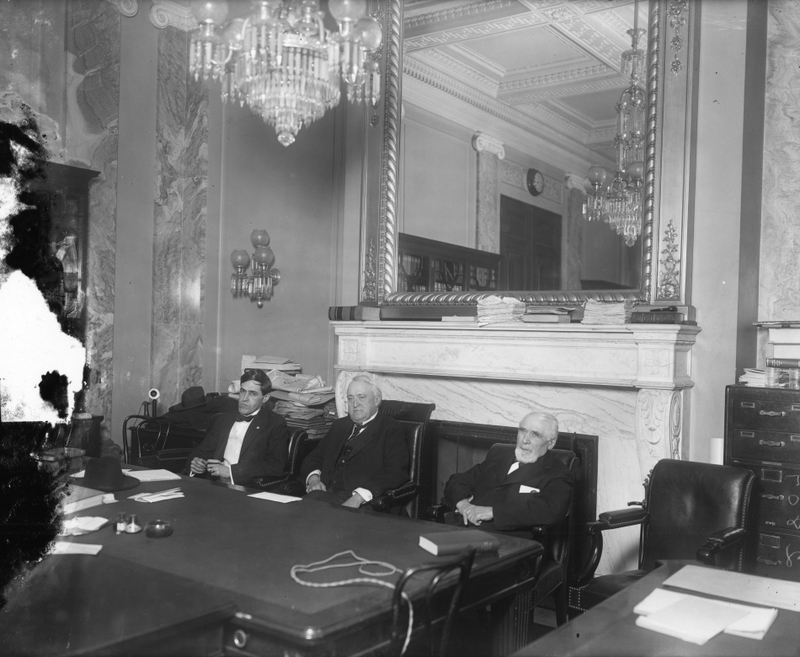
In 1919 the U.S. Senate Overman Committee investigated Bolshevik propaganda and German money in the United States, and incidentally touched on the source of Trotsky’s $10,000. Examination of Colonel Hurban, Washington attaché to the Czech legation, by the Overman Committee yielded the following:
COL. HURBAN: Trotsky, perhaps, took money from Germany, but Trotsky will deny it. Lenin would not deny it. Miliukov proved that he got $10,000 from some Germans while he was in America. Miliukov had the proof, but he denied it. Trotsky did, although Miliukov had the proof.
SENATOR OVERMAN: It was charged that Trotsky got $10,000 here.
COL. HURBAN: I do not remember how much it was, but I know it was a question between him and Miliukov.
SENATOR OVERMAN: Miliukov proved it, did he?
COL. HURBAN: Yes, sir.
SENATOR OVERMAN: Do you know where he got it from?
COL. HURBAN: I remember it was $10,000; but it is no matter. I will speak about their propaganda. The German Government knew Russia better than anybody, and they knew that with the help of those people they could destroy the Russian army.
(At 5:45 o’clock p.m. the subcommittee adjourned until the next day, Wednesday, February 19, at 10:30 o’clock a.m.)
It is quite remarkable that the committee adjourned abruptly before the source of Trotsky’s funds could be placed into the Senate record. When questioning resumed the next day, Trotsky and his $10,000 were no longer of interest to the Overman Committee. It seems silencing investigations for the usually stated reason of National Security was not invented in modern times, but started as early as 1919.
Woodrow Wilson Vouches for a Passport for Leon Trotsky
“President Woodrow Wilson was the fairy godmother who provided Trotsky with a passport to return to Russia to ‘carry forward’ the revolution. This American passport was accompanied by a Russian entry permit and a British transit visa. Jennings C. Wise, in Woodrow Wilson: Disciple of Revolution, makes the pertinent comment, ‘Historians must never forget that Woodrow Wilson, despite the efforts of the British police (Canadians in Halifax), made it possible for Leon Trotsky to enter Russia with an American passport.'”
“President Wilson facilitated Trotsky’s passage to Russia at the same time careful State Department bureaucrats, concerned about such revolutionaries entering Russia, were unilaterally attempting to tighten up passport procedures. The Stockholm legation cabled the State Department on June 13, 1917, just after Trotsky crossed the Finnish-Russian border, ‘Legation confidentially informed Russian, English and French passport offices at Russian frontier, Tornea, considerably worried by passage of suspicious persons bearing American passports.’ — U.S. State Dept. Decimal File, 316-85-1002.”
“The passenger list was long and mysterious. Trotsky was in the steerage with a group of revolutionaries; there was a Japanese revolutionist in my cabin. There were a lot of Dutch hurrying home from Java, the only innocent people aboard. The rest were war messengers, two from Wall Street to Germany…” — Lincoln Steffens, Autobiography (New York: Harcourt, Brace, 1931), p. 764. Steffens was the “go-between” for Crane and Woodrow Wilson.
Notably, Lincoln Steffens was on board en route to Russia at the specific invitation of Charles Richard Crane, a backer and former chairman of the Democratic Party’s finance committee. Charles Crane, vice president of the Crane Company, had organized the Westinghouse Company in Russia, was a member of the Root mission to Russia, and had made no fewer than twenty-three visits to Russia between 1890 and 1930. Richard Crane, his son, was confidential assistant to then Secretary of State Robert Lansing. According to the former ambassador to Germany William Dodd, Crane “did much to bring on the Kerensky revolution which gave way to Communism.” — William Edward Dodd, Ambassador Dodd’s Diary, 1933-1938 (New York: Harcourt, Brace, 1941), pp. 42-43.
Trotsky’s Ship the S.S. Kristianiafjord Is Taken to Halifax and Passengers Arrested
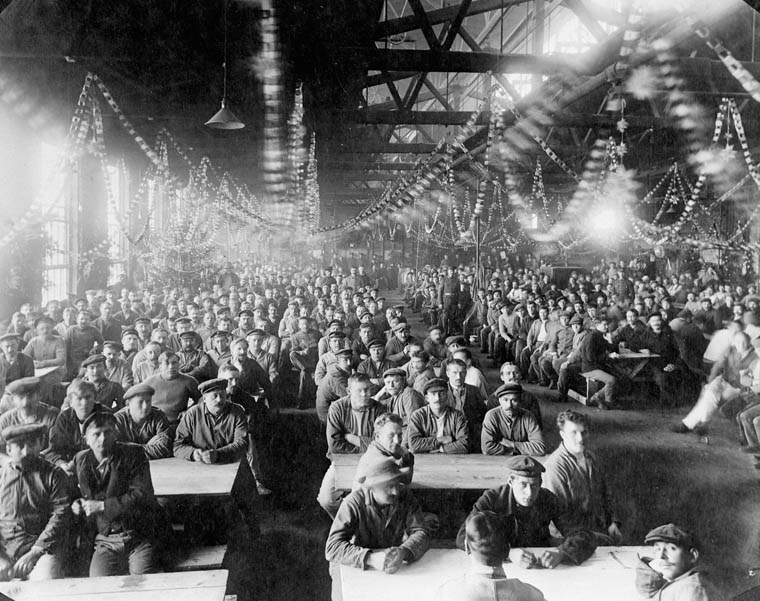
“On April 1, 1917, the naval control officer, Captain O. M. Makins, sent a confidential memorandum to the general officer commanding at Halifax, to the effect that he had ‘examined all Russian passengers’ aboard the S.S. Kristianiafjord and found six men in the second-class section: ‘They are all avowed Socialists, and though professing a desire to help the new Russian Govt., might well be in league with German Socialists in America, and quite likely to be a great hindrance to the Govt. in Russia just at present.’ Captain Makins added that he was going to remove the group, as well as Trotsky’s wife and two sons, in order to intern them at Halifax. A copy of this report was forwarded from Halifax to the chief of the General Staff in Ottawa on April 2, 1917.”
“No telegrams from the Russian consul general in New York are in the Canadian files, and it is known that this office was reluctant to issue Russian passports to Russian political exiles. However, there is a telegram in the files from a New York attorney, N. Aleinikoff, to R. M. Coulter, then deputy postmaster general of Canada. The postmaster general’s office in Canada had no connection with either internment of prisoners of war or military activities. Accordingly, this telegram was in the nature of a personal, nonofficial intervention. It reads:
‘DR. R. M. COULTER, Postmaster Genl. OTTAWA Russian political exiles returning to Russia detained Halifax interned Amherst camp. Kindly investigate and advise cause of the detention and names of all detained. Trust as champion of freedom you will intercede on their behalf. Please wire collect. — NICHOLAS ALEINIKOFF'”
“On April 11, Coulter wired Aleinikoff, ‘Telegram received. Writing you this afternoon. You should receive it tomorrow evening. R. M. Coulter.’ This telegram was sent by the Canadian Pacific Railway Telegraph but charged to the Canadian Post Office Department. Normally a private business telegram would be charged to the recipient and this was not official business. The follow-up Coulter letter to Aleinikoff is interesting because, after confirming that the Trotsky party was held at Amherst, it states that they were suspected of propaganda against the present Russian government and ‘are supposed to be agents of Germany.’ Coulter then adds, ‘… they are not what they represent themselves to be’; the Trotsky group is ‘…not detained by Canada, but by the Imperial authorities.’ After assuring Aleinikoff that the detainees would be made comfortable, Coulter adds that any information ‘in their favour’ would be transmitted to the military authorities. The general impression of the letter is that while Coulter is sympathetic and fully aware of Trotsky’s pro-German links, he is unwilling to get involved.”
“Coulter’s reactions, however, reflect more than the detached sympathy evident in his letter to Aleinikoff. They must be considered in the light of the fact that these letters on behalf of Trotsky came from two American residents of New York City and involved a Canadian or Imperial military matter of international importance. Further, Coulter, as deputy postmaster general, was a Canadian government official of some standing. Ponder, for a moment, what would happen to someone who similarly intervened in United States affairs! In the Trotsky affair we have two American residents corresponding with a Canadian deputy postmaster general in order to intervene in behalf of an interned Russian revolutionary.”
“On the same day (April 20) Captain Makins wrote Admiral Kingsmill explaining his reasons for removing Trotsky; he refused to be pressured into making a decision, stating, ‘I will cable to the Admiralty informing them that the Militia authorities are requesting an early decision as to their disposal.’ However, the next day, April 21, Gwatkin wrote Coulter: ‘Our friends the Russian socialists are to be released; and arrangements are being made for their passage to Europe.’ The order to Makins for Trotsky’s release originated in the Admiralty, London (Winston Churchill). Coulter acknowledged the information, ‘which will please our New York correspondents immensely.'”
“Dr. Robert Miller Coulter was a medical doctor of Scottish and Irish parents, a liberal, a Freemason, and an Odd Fellow. He was appointed deputy postmaster general of Canada in 1897.”
“Major General Willoughby Gwatkin stemmed from a long British military tradition (Cambridge and then Staff College). A specialist in mobilization, he served in Canada from 1905 to 1918. Given only the documents in the Canadian files, we can but conclude that their intervention on behalf of Trotsky is a mystery.”
“Canadian intelligence. Lieutenant Colonel John Bayne MacLean, a prominent Canadian publisher and businessman, founder and president of MacLean Publishing Company, Toronto, operated numerous Canadian trade journals, including the Financial Post. MacLean also had a long-time association with Canadian Army Intelligence. In 1918 Colonel MacLean wrote for his own MacLean’s magazine an article entitled ‘Why Did We Let Trotsky Go? How Canada Lost an Opportunity to Shorten the War.’ The article contained detailed and unusual information about Leon Trotsky… MacLean’s opening argument is that ‘some Canadian politicians or officials were chiefly responsible for the prolongation of the WWI, for the great loss of life, the wounds and sufferings of the winter of 1917 and the great drives of 1918.’ Further, states MacLean, these persons were (in 1919) doing everything possible to prevent Parliament and the Canadian people from getting the related facts. Official reports, including those of Sir Douglas Haig, demonstrate that but for the Russian break in 1917 the war would have been over a year earlier, and that ‘the man chiefly responsible for the defection of Russia was Trotsky… acting under German instructions.’ (Or more accurately American, British and Freemason Instructions.)”
“Trotsky was released ‘at the request of the British Embassy at Washington… acted on the request of the U.S. State Department, who were acting for someone else.’ Canadian officials ‘were instructed to inform the press that Trotsky was an American citizen travelling on an American passport; that his release was specially demanded by the Washington State Department.’ Moreover, writes MacLean, in Ottawa ‘Trotsky had, and continues to have, strong underground influence. There his power was so great that orders were issued that he must be given every consideration.'”
“The other report, also originating in Moscow, is a message dated March 17, 1918, three days earlier, and from Ambassador Francis: ‘Trotsky requests five American officers as inspectors of army being organized for defense also requests railroad operating men and equipment.’ — U.S. State Dept. Decimal File, 861.00/1341.”
Leon Trotsky’s Book “My Life” (From Chapter 23)
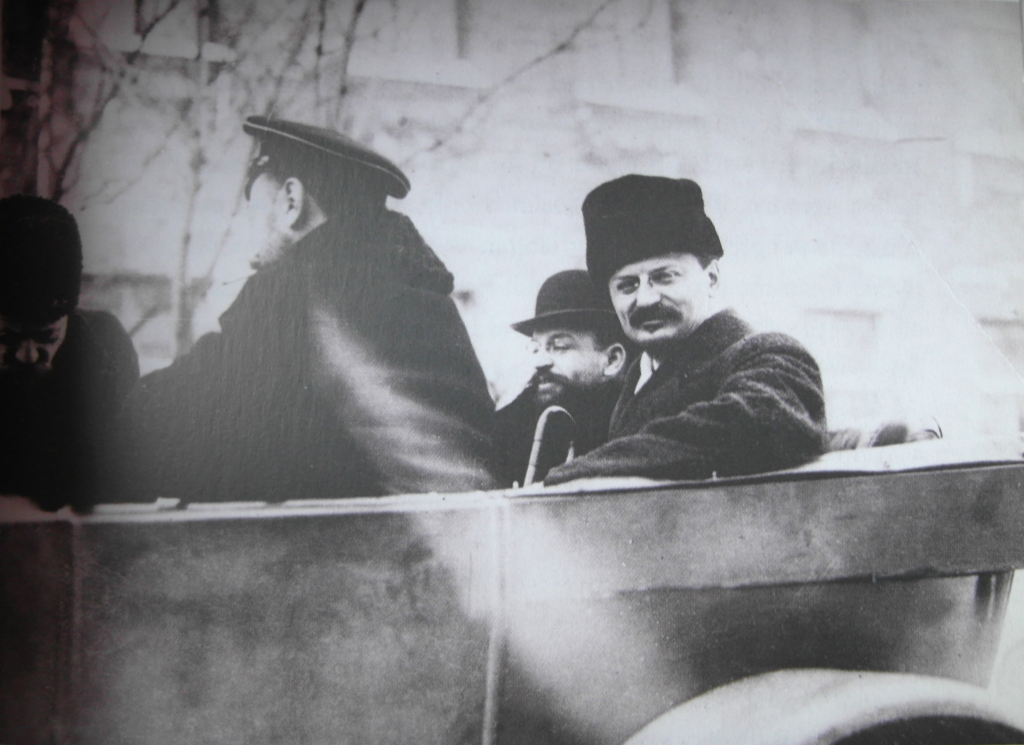
“At Halifax the British naval authorities inspected the steamship, and police officers made a perfunctory examination of the papers of the American, Norwegian and Dutch passengers. They subjected the Russians, however, to a downright cross-examination, asking us about our convictions, our political plans, and so forth. I absolutely refused to enter into a discussion of such matters with them. ‘You may have all the information you want as to my identity, but nothing else.’ Russian politics were not yet under the control of the British naval police. But that did not prevent the detectives, Machen and Westwood, from making inquiries about me among the other passengers after the double attempt to cross-examine me had proved futile. They insisted that I was a dangerous socialist.”
“Not until the next morning did the camp commander, Colonel Morris, in answer to our repeated demands and protests, tell us the official reason for the arrest. ‘You are dangerous to the present Russian government,’ he said briefly. The colonel, obviously not a man of eloquence, had worn an air of rather suspicious excitement since early morning. ‘But the New York agents of the Russian government issued us passports into Russia,’ we protested, ‘and after all the Russian government should be allowed to take care of itself.’ Colonel Morris thought for a while, moving his jaws, then added, ‘You are dangerous to the Allies in general.'”
“But this was too complicated for the colonel, who had made his career in the British colonies and in the Boer War. I did not show proper respect when I spoke to him, which made him growl behind my back, ‘If I only had him on the South African coast!’ That was his pet expression.”
“The Amherst concentration camp was located in an old and very dilapidated iron foundry that had been confiscated from its German owner. The sleeping bunks were arranged in three tiers, two deep, on each side of the hall. About eight hundred of us lived in these conditions.”
“Of these eight hundred prisoners, in whose company I spent almost a month, perhaps five hundred were sailors from German boats sunk by the British.”
“The whole month I was there was like one continuous mass meeting. I told the prisoners about the Russian revolution, about Liebknecht, about Lenin… the British colonel… forbade me to make any more public speeches. But this did not happen until the last few days of our stay at the camp, and served only to cement my friendship with the sailors and workers, who responded to the colonel’s order by a written protest bearing five hundred and thirty signatures. A plebiscite like this, carried out in the very face of Sergeant Olsen’s heavy-handed supervision, was more than ample compensation for all the hardships of the Amherst imprisonment.”
“The commander ordered forcible measures. Soldiers of the convoy carried out our luggage, but we stayed stubbornly in our bunks. It was only when the convoy was faced with the task of carrying us out bodily, just as we had been taken off the steamship a month earlier, and of doing it in the midst of a crowd of excited sailors, that the commander relented and told us, in his characteristic Anglo-Colonial way, that we were to sail on a Danish boat for Russia. The colonel’s purple face twitched convulsively. He could not bear the thought that we were escaping him.”
Trotsky freely acknowledged the role of Freemasonry and the Illuminati in his book “My Life: The Rise and Fall of a Dictator”; the paperback edition is My Life, as he states:
“It was during that period that I became interested in freemasonry. …(p.107) In the eighteenth century freemasonry became expressive of a militant policy of enlightenment, as in the case of the Illuminati, who were the forerunners of the revolution; on its left it culminated in the Carbonari. Freemasons counted among their members both Louis XVI and the Dr. Guillotin who invented the guillotine. In southern Germany freemasonry assumed an openly revolutionary character, whereas at the court of Catherine the Great it was a masquerade reflecting the (p.125) aristocratic and bureaucratic hierarchy. A freemason Novikov was exiled to Siberia by a freemason Empress. …(p.126) I discontinued my work on freemasonry to take up the study of Marxian economics. …The work on freemasonry acted as a sort of test for these hypotheses. …I think this influenced the whole course of my intellectual development (p.127)”
Trotsky in his autobiography tells of a “British financier,” who in 1907 gave him a “large loan” to be repaid after the overthrow of the Czar. Arsene de Goulevitch, who witnessed the Bolshevik Revolution firsthand, has identified both the name of the financier and the amount of the loan. In private interviews, he said, “I have been told that over 21 million rubles were spent by Lord Alfred Milner in financing the Russian Revolution.”
Back to Antony Sutton’s Book Quotes
“Before we leave Trotsky, some mention should be made of the Stalinist show trials of the 1930s and, in particular, the 1938 accusations and trial of the ‘Anti-Soviet bloc of rightists and Trotskyites.’ These forced parodies of the judicial process, almost unanimously rejected in the West, may throw light on Trotsky’s intentions.”
“The crux of the Stalinist accusation was that Trotskyites were paid agents of international capitalism. K. G. Rakovsky, one of the 1938 defendants, said, or was induced to say, ‘We were the vanguard of foreign aggression, of international fascism, and not only in the USSR but also in Spain, China, throughout the world.’ The summation of the ‘court’ contains the statement, ‘There is not a single man in the world who brought so much sorrow and misfortune to people as Trotsky. He is the vilest agent of fascism…'”
“This tentative, limited reassessment will be brought into sharp focus when we review the story of Michael Gruzenberg, the chief Bolshevik agent in Scandinavia who under the alias of Alexander Gumberg was also a confidential adviser to the Chase National Bank in New York and later to Floyd Odlum of Atlas Corporation. This dual role was known to and accepted by both the Soviets and his American employers. The Gruzenberg story is a case history of international revolution allied with international capitalism.”
The Marburg Plan
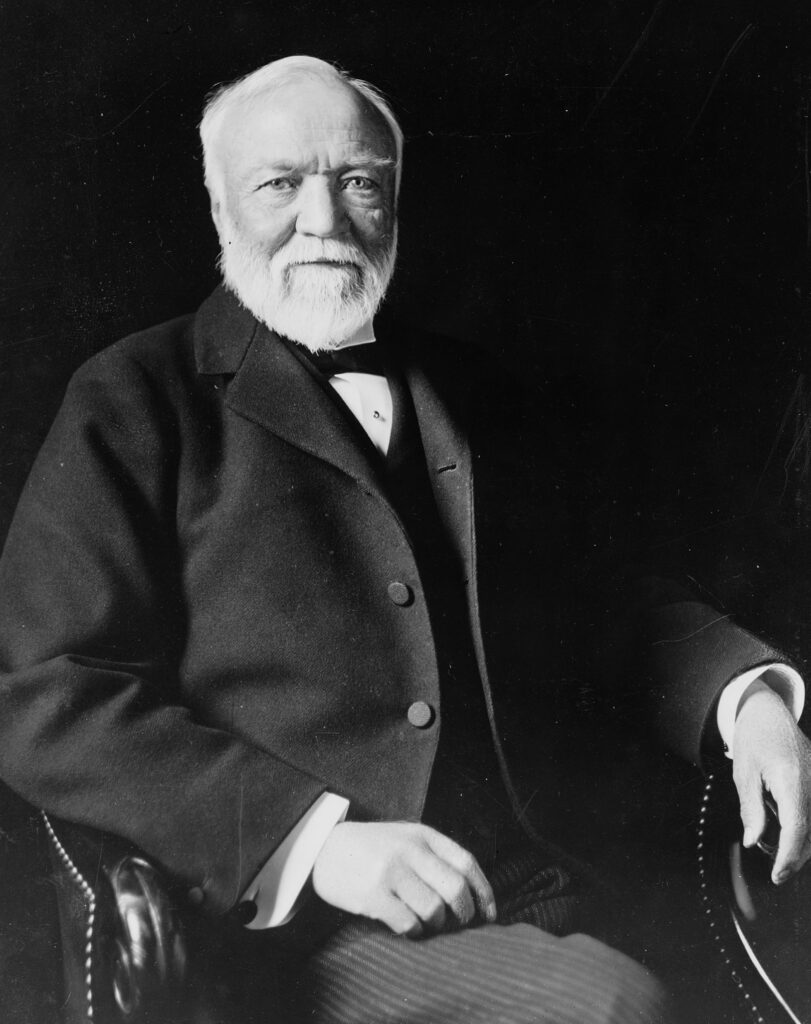
“The Marburg Plan, financed by Andrew Carnegie’s ample heritage, was produced in the early years of the twentieth century. It suggests premeditation for this kind of superficial schizophrenia, which in fact masks an integrated program of power acquisition: ‘What then if Carnegie and his unlimited wealth, the international financiers and the Socialists could be organized in a movement to compel the formation of a league to enforce peace.'”
“The governments of the world, according to the Marburg Plan, were to be socialized while the ultimate power would remain in the hands of the international financiers ‘to control its councils and enforce peace and so provide a specific for all the political ills of mankind.'”
“This idea was knit with other elements with similar objectives. Lord Milner in England provides the transatlantic example of banking interests recognizing the virtues and possibilities of Marxism. Milner was a banker, influential in British wartime policy, and pro-Marxist. In New York the socialist ‘X’ club was founded in 1903. It counted among its members not only the Communist Lincoln Steffens, the socialist William English Walling, and the Communist banker Morris Hillquit, but also John Dewey, James T. Shotwell, Charles Edward Russell, and Rufus Weeks (vice president of New York Life Insurance Company). The annual meeting of the Economic Club in the Astor Hotel, New York, witnessed socialist speakers. In 1908, when A. Barton Hepburn, president of Chase National Bank, was president of the Economic Club, the main speaker was the aforementioned Morris Hillquit, who ‘had abundant opportunity to preach socialism to a gathering which represented wealth and financial interests.'”
“From these unlikely seeds grew the modern internationalist movement, which included not only the financiers Carnegie, Paul Warburg, Otto Kahn, Bernard Baruch, and Herbert Hoover, but also the Carnegie Foundation and its progeny International Conciliation. The trustees of Carnegie were, as we have seen, prominent on the board of American International Corporation. In 1910 Carnegie donated $10 million to found the Carnegie Endowment for International Peace, and among those on the board of trustees were Elihu Root (Root Mission to Russia, 1917), Cleveland H. Dodge (a financial backer of President Wilson), George W. Perkins (Morgan partner), G. J. Balch (AIC and Amsinck), R. F. Herrick (AIC), H. W. Pritchett (AIC), and other Wall Street luminaries. Woodrow Wilson came under the powerful influence of — and indeed was financially indebted to — this group of internationalists. As Jennings C. Wise has written, ‘Historians must never forget that Woodrow Wilson… made it possible for Leon Trotsky to enter Russia with an American passport.'”
“This, therefore, is an explanation that fits the evidence. This handful of bankers and promoters was not Bolshevik, or Communist, or socialist, or Democrat, or even American. Above all else these men wanted markets, preferably captive international markets — and a monopoly of the captive world market as the ultimate goal. They wanted markets that could be exploited monopolistically without fear of competition from Russians, Germans, or anyone else — including American businessmen outside the charmed circle. This closed group was apolitical and amoral. In 1917, it had a single-minded objective — a captive market in Russia, all presented under, and intellectually protected by, the shelter of a league to enforce the peace.”
“Wall Street did indeed achieve its goal. American firms controlled by this syndicate were later to go on and build the Soviet Union, and today are well on their way to bringing the Soviet military-industrial complex into the age of the computer.”
Back to the Future: Can Marx and Engels Shine Any Light on This Subject?
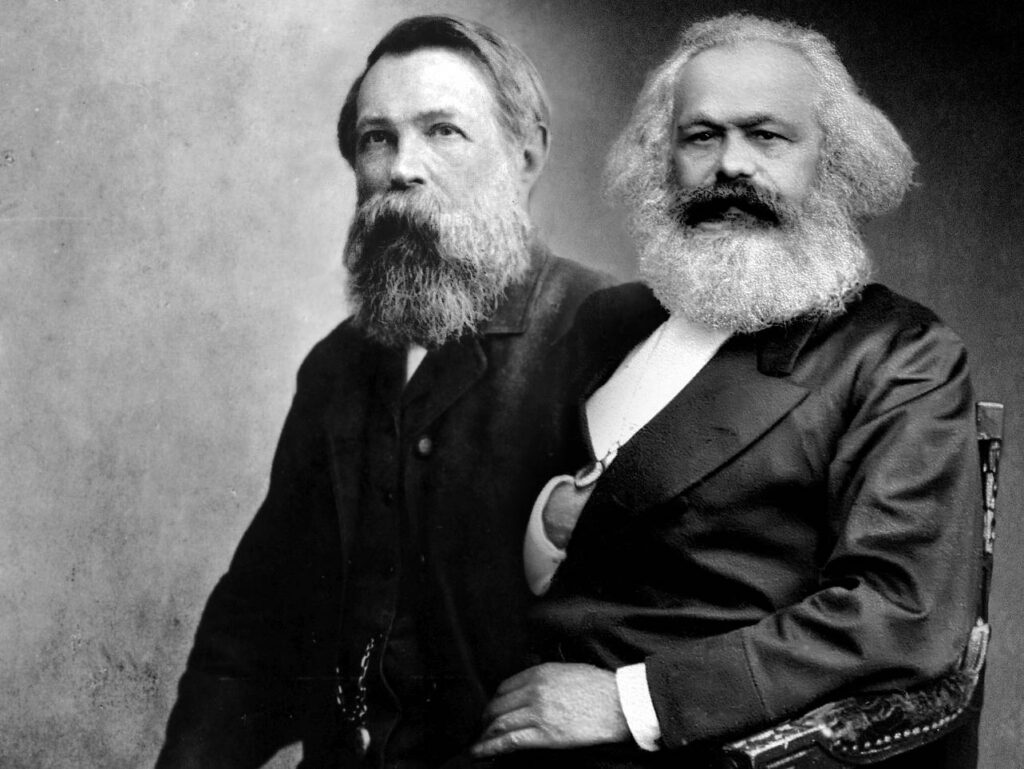
Friedrich Engels, the quieter half of the Marx/Engels tag team, came from a family with extensive banking interests and was the main source of funding for Marx and totalitarian communism in the early years. Marx, on the other hand, had less to do with the works attributed to his authorship than with serving as a lightning rod or a needed figurehead of communism. Marx’s lifestyle was shaped by his main UK handler, David Urquhart, a British diplomat and agent of the Foreign Office who served as the key go-between linking Marx to the kleptocratic cabal, and who was likely the main conduit between politicians and their street-level assets. The British Prime Minister Palmerston was the cabal’s leader in government circles, while David Urquhart was a key figure in efforts to distance politicians from agents like Karl Marx. Freemasons were getting an even worse reputation than they had ever before in the US. In the United States, an Anti-Masonic Party (1820s to 1830s) was created, as the Federalist Party had flopped as an obvious elite’s effort. Yet the Anti-Masonic Party was eventually subverted and later had a name change. That name change was the Republican Party, but please note that neither the Democrats nor the Republicans ever like to mention this.
Karl Marx’s personal history is the very opposite of that of a friend of workers. As a glutton, he was a black hole for money, which is very much what one would connect with a cliché of a Jew. Marx’s extramarital affairs, out-of-wedlock pregnancies, and endless boozing are not hidden in his official bios, but they are sold to us as “OK” because of his famous work and supposed concern for the workers of the world.
Marx lived part of his life and died in England. Marx and Engels had their books translated into English later so that these ideas could be propagated to Britain’s enemies first. All this time, he was in England and somehow survived despite having no book sales in English. Somehow, he was allowed to receive the proceeds from sales of his books abroad, sent to him in Jolly Old England via banks, or somehow he had deeper pockets or a big daddy.
Please remember that both these characters (Marx and Engels) were from German-speaking nations that were being bad-mouthed by the English-speaking press at the time, and we were shortly to have two world wars with these nations. Yet despite all this, the authors’ work from these countries was neither marginalized nor taken with a huge grain of salt. There were many authors from friendly countries and other English-speaking countries who could have been promoted instead, with more moderate, better-thought-out, non-totalitarian solutions. Also, there had been strong censorship in England since the time of King Henry VIII, but not in this case of world revolution, where someone was advocating the destruction of democracy, capitalism, and the monarchy by any means necessary. I guess the police didn’t know where Marx was for all his years in England?
Marx was not a man who cared for the poor. He did not save his pennies to help his fellow working class, and he would not curtail or limit his lusts so as not to leave working-class women barefoot, pregnant, and destitute. I am astonished that his lifestyle and trail of ruined lives are never critiqued to better understand the man behind the movement. The reason for this is quite obvious. He had strong PR at the time, with the British Government and the Freemasons on his side, and everyone debating his ideas promoted him as a star while ignoring his lifestyle. The idea of good press or bad press was used here, as many who attacked him were doing so, just like Jordan Peterson today. Karl Marx was able to steal the limelight from others, more reasonable, more responsible, and truer defenders of the working class.
Lenin, the German High Command, and the Anglo-American Roles
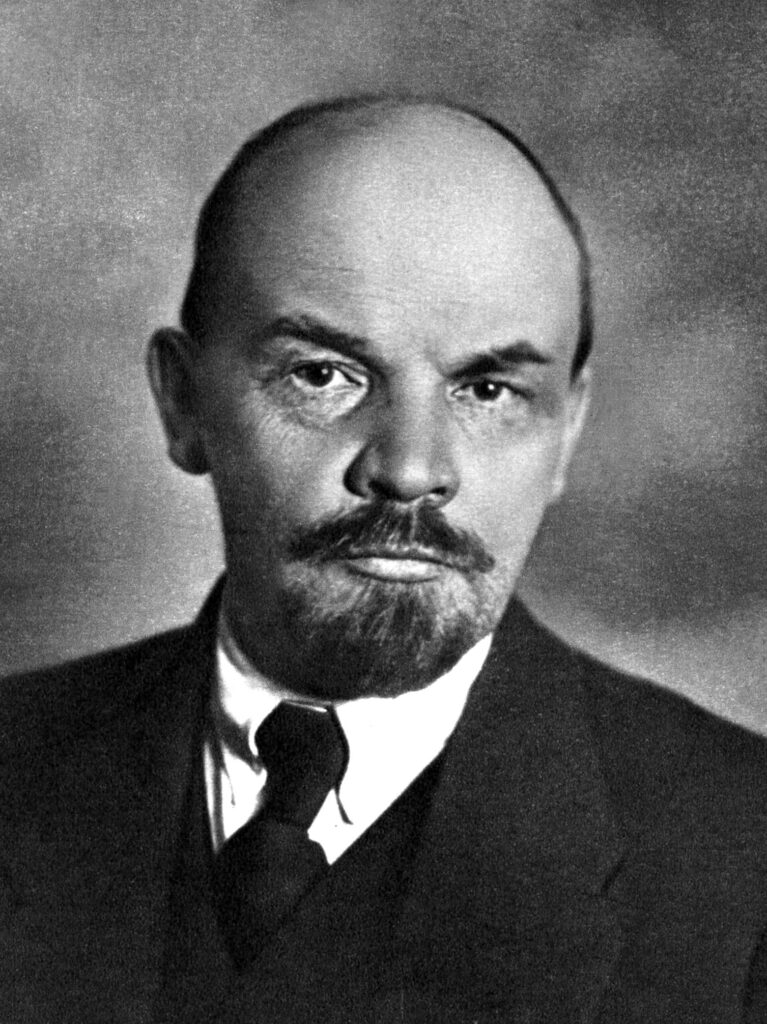
Weasels Dealing With Weasels Over the Bodies of Lions
It is quite obvious from Part 1 of World War Lies that the UK was wearing the pants in the Anglo-American Establishment, clearly because the British had been working their treachery for much longer and so had to educate their American lackeys to get them up to speed. Why were these negotiations with communists handled in the US? Well, the solution is staring you in the face, as America was not in WWI yet, and was funding both sides of the conflict, and so the Germans could more likely trust and hope that the Americans would help them win the war by getting the communists to overthrow Russia and plunge it into disarray at the minimum, and in the best-case scenario take Russia out of the war completely, which was undoubtedly what Lenin pledged to do to allow him to take a train across Germany and on to Russia with a hop, skip, and jump through a few Scandinavian countries. The supposed Lenin’s sealed train is a myth, as he went first class, as Trotsky did in the US, for he was far too important to the Germans at this point in the war to have him get sick and malnourished. Lenin would have also promised to give up lands in western Russia in any peace agreement, as that was exactly what happened. With what this relatively new alliance between Britain and America meant, the British could genuinely see if the American oligarchy would keep their end of the hidden alliance plots, over any objections from the American population, who were not interested in war or secretly taking sides in it behind the scenes.
The negotiations got pretty tight at times when the Bolsheviks took power in Russia, as the Germans kept continuing the war when they did not get what they were promised, or were simply being greedy. Lenin let Trotsky lead the peace negotiations, so as to avoid blame and allow Lenin not to have to hear from the Germans across the negotiating table what he had promised them in Switzerland, likely in front of other communists. Trotsky had likely pledged to the Anglo-Americans to continue the war as soon as they had taken full control, but the Germans were wise to any double cross and did not shift their troops west early, but kept moving them east as the Russian front had almost ceased to have Russian soldiers willing to fight for the second revolution. Therefore, huge tracts of land were given up in the peace treaty (Treaty of Brest-Litovsk), and the Anglo-Americans were likely not keen on Trotsky keeping his end of the bargain, and so would need to instigate options in their plans.
Trotsky had clearly made promises to the Anglo-American representatives that were very different from those the Germans had made with Lenin. There were many assassination attempts on Lenin, likely from the Anglo-American-supported communists, and this might have been for Trotsky to then take over the Soviet Union, but after Lenin’s death Trotsky got sick and Stalin outmaneuvered him to take control of the Soviet Union. Then Stalin banished Trotsky and later had an assassin put an ice pick through his head. After which all the Trotskyites became “Neo-cons” in the USA, moving from world revolution to wars across the world to bring the benefits of endless war to the Anglo-American Establishment. This comes to us from sources who tell us that Europe was to be split in two, like was done after WWII (Carroll Quigley). In fact the same has been suggested will happen after the future WWIII, as Russia will again take Eastern Europe from the EU, so remember you heard it here first, and if this comes into being you must then see all these articles as having just one more example of predictional support.
The Cold War ended too soon, as Mikhail Sergeyevich Gorbachev was meant to keep things together so as to bring about a melding of east and west into some socialist-capitalist state, which the west is now turning into. Unfortunately the people of the East had other plans, as they had had enough of communism, and no amount of western support for Gorbachev could save his sinking ship. The Soviet citizens had a saying that sounds very much like many western workers would say today: “They pretend to pay us, and we pretend to work.” Maybe the movie “Office Space” was thought up by someone thinking of the Eastern Bloc? Regardless, this is why the west kept building up Gorbachev in the media, as they had also done with Trotsky for years until his followers turned into Neo-cons, after Stalin had him killed. Trotsky, I think, as an international man of mystery, “got the point.”
Once the Kaiser’s Germany had surrendered, the allies quickly moved to send troops to Russia to supposedly publicly help defend and rescue the Czar and his forces that were called the “Whites.” In fact they were there to get the other aspects promised to them by Trotsky in Russia’s gold reserves and just about anything not nailed down, including art and trophies for the Rothschilds, who had sworn revenge, which is clearly why the Czar and his family were assassinated without trial. The west were now the barbarians, and if the communists had not given the west Russia’s wealth, which they had pledged when they were given money to overthrow the Czar in the first place, they would have had western forces really fight for the Whites and supply them with arms and money. Not surprisingly the Bolsheviks gave them the wealth of Russia, and so the allied armies would retreat from Russian soil after giving a token form of support, and would also let their supply of arms, and those they had secured from the former armies of the Czar, fall into the Soviet’s hands. By robbing the communists of their gold reserves they made them dependent on western financing, as properly designed by the Kleptocracy.
This is clearly supported and recorded via General Wrangel, the true hero of the White Armies, as he and other White Generals came to quickly see that the allies were not going to help them in any real terms, as it was always too many words and few diplomatic deeds, and when arms were given they were of lower usefulness, so the Whites were to learn they had been stabbed in the back, as the Germans had. This is covered in great detail in his book, “Always with Honor” by Pyotr Wrangel, which he wrote before his being poisoned in France. The most supportive to the Whites was France, and the British were the worst, with America and others falling in between, yet to say even France was all help would be an insult to the term, as it always had obstacles which came from the upper oligarchy, and less so from the French people and parliament, as fits with what was said in Part 1.
Disinformation from the Kleptocracy
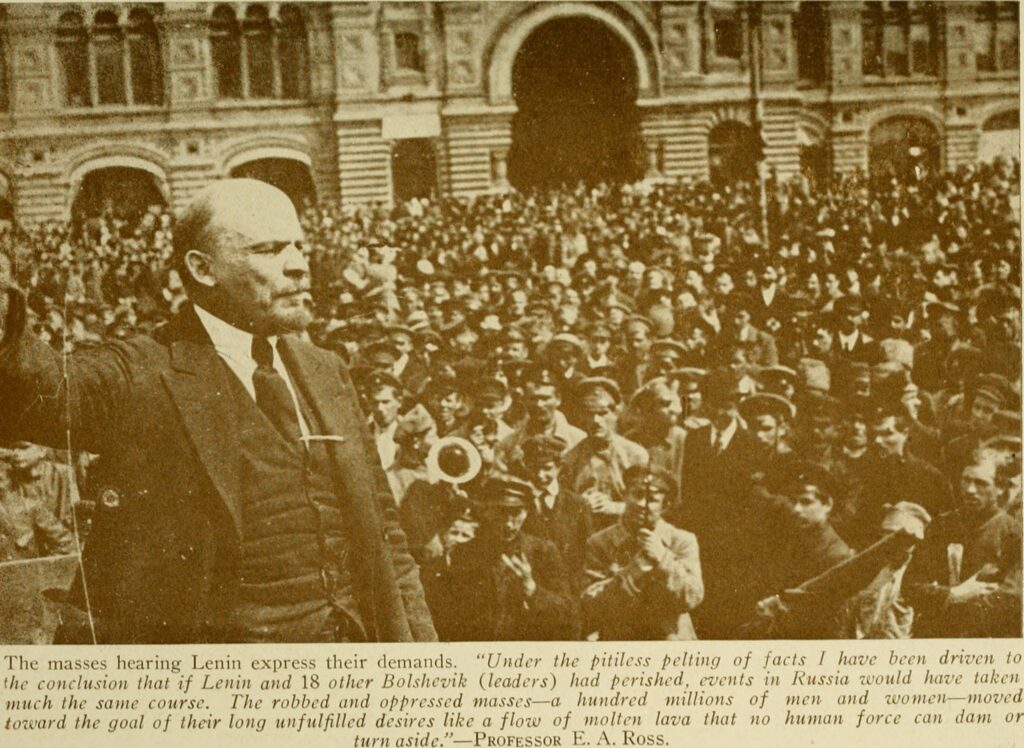
With all this evidence and more to come, one can easily dismiss the efforts to spread disinformation by those in power, but we can also learn from such efforts. The disinformation on the Soviets centers on the following list of those responsible for the success of the Soviet Union. Those include the German High Command first on the list, who certainly gave funds through Lenin-designed methods to keep him clear of appearing to be a paid traitor for Germany. While the $10,000 to Trotsky during his trip to the US could have also been given to him by a German representative, it was more likely given to him from anyone of the endless Anglo-American representatives he met in his three months in the US. This is the easiest link to cast off of all the disinformation given to us, looking at the better sources and events recorded in newspapers and congressional records of the time.
The second source presented was that wealthy Jews gave funds to the Soviets, which again is likely to have occurred, as the percentage of atheistic Jews in the Bolsheviks and Mensheviks was extremely distorted, but was even more so in the secret police who were responsible for the enforced famine genocide, likely due to Trotsky being a Jew and Lenin having partial Jewish blood. In the video linked below they will give you the Jews that are the best candidates outside the Communist Party, but then the video quickly lies and says the wealthy Jews withdrew their funds after the second revolution. Wealthy Jews had been funding all the efforts to unseat the Czar for over a hundred years, and were successful in killing two Czars we know of. Still the scale of what unfolded was too vast for just Jewish financiers to alone succeed in this.
Finally, the video we are about to link to states that Stalin and other communists’ robbing of banks, combined with support from the workers through donations, was also to play a big role in financing the Soviets’ ability to seize power. This last one is straight out of the Soviet/Trotsky/Neo-Con propaganda scrapbook, as it points to the poor peasants, who had no money and wanted change, into being instead wealthy enough to finance the revolution themselves. You cannot have it both ways! I am sure only the last few die-hard communists in the world will believe that.
Still, you can see in evaluating other disinformation from the Kleptocracy how it operates, as they use truth mixed with lies to distract us from the elephant in the room. Second to the Anglo-American giants of industry, Germany was very likely in second place, the Jews come in third place, and dead last the bank robbers and gullible peasants. The preference of supporting leftist parties and propaganda by the Deep State is due to the friendly tone to women and the heartstrings of emotional people, as they want to be lied to, as they do not like unhappy solutions. The Kleptocracy can thus wash away their selfish, greedy, monopolistic ways with a cover of caring for the peasants, which is in fact the very opposite of what they are. Like Hitler states, “in the big lie there is always a certain force of credibility because the masses would not believe others could have the audacity to fabricate something so monstrous.”
So please enjoy watching this clean video presentation from YouTube below, but once again notice how no proof of any connection is given, as you are supposed to believe the presenter because of his clear voice, clear video from the actual film period, and use of confident words. Here I have relied on authors of books who have used news items from the actual time period, and items from the US Congress from that time. I have also used your logic as to how these backward economies could have been able to create such huge war machines from the dues of peasants and Germans recovering from WWI and the Great Depression.
YouTube’s Red Century: https://www.youtube.com/watch?v=xBaKf4lvB8g
Gallipoli: The Intentionally Sabotaged Relief Effort for Russia
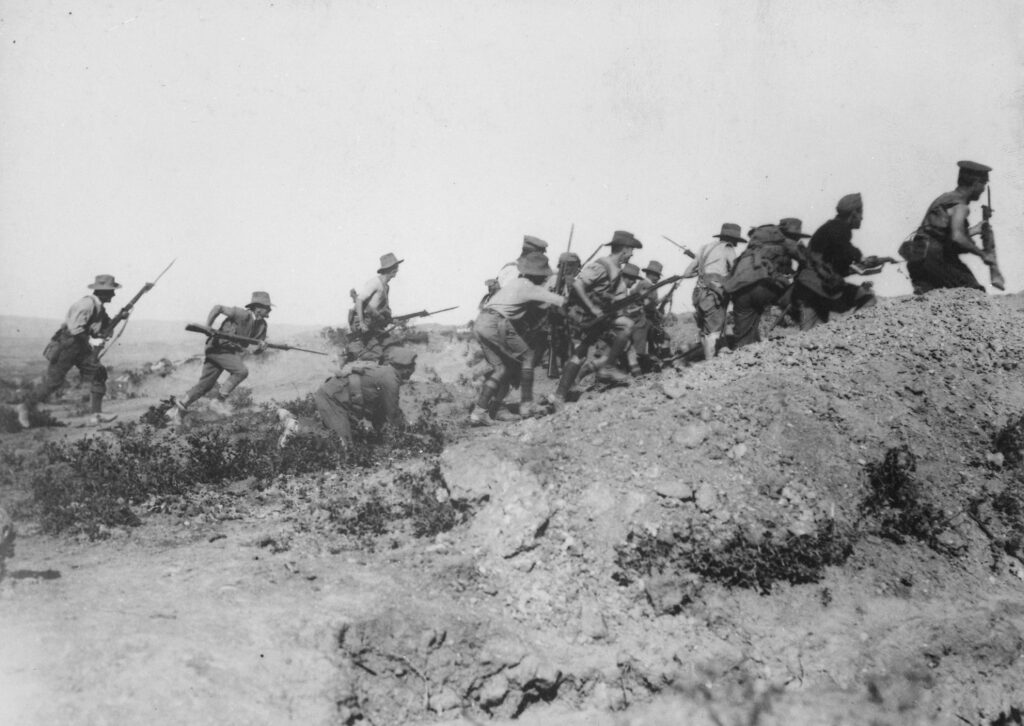
This leads to a very important theater of war in the south during WWI and just after. If we look at the Gallipoli Campaign, that cost so many ANZAC troops their lives, we can see earlier in this article Winston Churchill was head of the British Navy and was sending telegrams to Canada to order Trotsky back on the ship with his fellow communists and their arms and gold, and so following this theme to its conclusion we can see what happened on other fronts. The British had been helping the Ottomans (often referred to as the old sick man of Europe in the British press) as they were wanting to get Israel for their Jewish financiers among other targets. Instead they had decided on a new policy, as they meant to split up the Ottoman Empire later and have the Turks, led by Donme Jews (fake Turkish Muslims), help in the process. With the Ottomans in a weakened state they could take Israel, secure Egypt, and prevent any efforts to build train lines to the oil in the Middle East or further to India and their crown jewel.
Well, the British had proved for a century to be the best at keeping secrets and espionage, so when the Gallipoli Campaign was recorded as being leaked to the Central Powers of Germany, Austria-Hungary, and the Ottoman Empire, one has to ask how likely that would be? The Germans were able to send an able commander specialist to help the Ottomans prepare for the arrival of the British Fleet. Yet if the British goal was to not help supply Russia against the Germans, but look like they were, then leaking the plans would intentionally sabotage their own efforts as their elites wanted.
Winston Churchill was to take the blame for the fiasco of the Gallipoli Campaign, but this did not stop him from being later anointed as Prime Minister of the UK, for he likely proved his loyalty to the Kleptocracy in how he sacrificed the flower of Australia and New Zealand and other southern troops in this campaign. Churchill would cross the floor in the British Parliament many times, to the Liberals and back to the Conservatives, and even allowed Labor Party members to have seats in his cabinets when he became Prime Minister in WWII. These British Deep State moves allowed Churchill to pass on cabinet meeting information of different parties, as at this time most still thought England was ruled by parliament, cabinet, and the king.
Let’s look at the Gallipoli Campaign to see if we can smell a rat. The plan, as outlined by Churchill, was to send the British Fleet up the Bosporus from the Greek Aegean Sea, to then sit outside the capital city of Istanbul (formerly known as Constantinople, the former capital of the Eastern Roman or Byzantine Empire). The plan was brilliant, and even now I would endorse such a plan, but it was in execution that everything was undone to not make it work. Given that the Ottomans would have mined the Bosporus, some preparation by the British would have obviously included a large group of barges and any other low-level ships that could be shifted to the shore once they hit a mine, or removed as they were mostly made of wood at the time, so as to allow for a new one to be brought up to move forward all the faster. If the mines were magnetic the barges could be chosen to have metal plating on the bottom of their hulls. This could have been done in two or three lanes depending on the width of the channel, but any thorough mine-sweeping by destroyers would have to be done later, once the capital was under fire by the British capital ships. Now, I have some naval background, as did my father, and we came to the same quick solution to what happened. Barges, tugboats, and any small craft ships are used to move garbage and other goods along rivers. They are both cheap and have a skeleton crew of a handful. Being made of mostly wood at that time, they would have been likely to have little to no metal flying about when they hit a mine. Obviously it would be much easier getting them out of the way after any mine contact, as heavy metal capital ships were made of such metal parts and their taller structures and weight would mean them blocking the route, and therefore much more difficult to remove after contact. Anyone knowing how the Greeks and Ottoman Turks hate each other would also mean an easy sell to get Greek fishing craft to do the job too, if there were not enough British ones to be brought there, which is hard to see as they had them everywhere in such a sea nation.
It seems us armchair admirals can easily think of solutions, as the British Navy leaders did the exact opposite and sent capital ships first, and so when they hit mines became hard to move to the side or remove from the scene, and of course were costing many lives as destroyers have hundreds of sailors. Then the Ottoman and German artillery was brought up to pound the ships from positions hidden from the cannons of the British capital ships on the shore. So as things intentionally stalled, and the solution was to put men on the land to deal with the Ottoman artillery, which was what the German commander wanted, as it changed the naval battle into a land battle again. The Turks had prepared the ground and the ANZAC troops were cut down in droves, as one can see in the movie Gallipoli (1981) by Peter Weir, starring Mel Gibson and Mark Lee. The results were to the liking of the Kleptocracy, as the campaign was cancelled, so the Ottomans remained in the war, no supplies and western soldiers were to get to Russia fighting the Germans, Austrians, and Ottomans, while later things were also slow in supplying the Whites versus the Reds in the Civil War, even with Istanbul under allied occupation.
Once the brilliant White General Wrangel took full command he was able to lead White troops to a point of turning things around in an amazing fashion. He might have won the whole country back, if not for some reason the Poles backed out of the war, or had they been undermined through diplomatic threats, or withdrawal of supplies from the west, or simply had their plans leaked to the communists. There are endless ways to undermine an ally from the inside when that ally is dependent on your good graces, as the Poles were after they were given their country back. White General Wrangel duped the Reds on all fronts and was able to withdraw almost all his troops onto ships he had picked up from anywhere he could get them, and due to not waiting for the slow and ever-useless allies, got them all to the now-captured Ottoman capital. You can find ships if you are looking for them, it seems. Even then, as the Reds wanted all the Whites returned for concentration camps and firing squads, the West still dragged their feet and undermined the Whites until the French people got word of what was going on, and then the thousands of Whites would be settled in a few western countries.
Communist Movements in the Interwar Period
During the interwar period, communist movements gained significant traction in Western and Central Europe, particularly in Germany and Hungary, where revolutionary attempts occurred but ultimately failed to establish lasting regimes. The Hungarian communists were exceptionally brutal to Hungarian citizens. These movements once again had supposedly only had funding that officially came from party dues of people that were so poor that they wanted communism to relieve them of their plight. More likely there were deeper pockets from western banks and industrialists that could give real money in amounts for weapons and bribery to support what would allow Hungary, and even Germany, to have communist governments. We have had people that have told us for decades that communism is an economic system that “does not work,” then simply swallow the sinker that communism is a threat because they are spreading arms to other countries. So communist governments have excess funds to fund revolutions in other countries, do they? They also built state-of-the-art industry after their specialists fled or were shot? Or maybe, just maybe, they got funds and Western know-how from western interests that wanted to build up their industrial complexes so as to make the threat of communism viable. The West could keep control of the Soviet Union and other communist countries by control of funds, if they had a private national bank run by western interests, which funny enough is what Marx states in his Manifesto. In return, western industrialists got cheap resources at bargain-basement prices for decades.
Between WWI and WWII there were still plenty of wars that would be comparable to World Wars, as millions died in them, and the Spanish Flu continued to kill more than WWI anyway. Funny how vaccinated US doughboys, who would travel to Europe, were followed by the greatest pandemic of modern times? Also you will notice how the history books are not very forthcoming on the Spanish Flu, and if they do mention it, fail to quote the extreme numbers. I wonder how Covid-1984 will be recorded in history?
The World Wars Continued
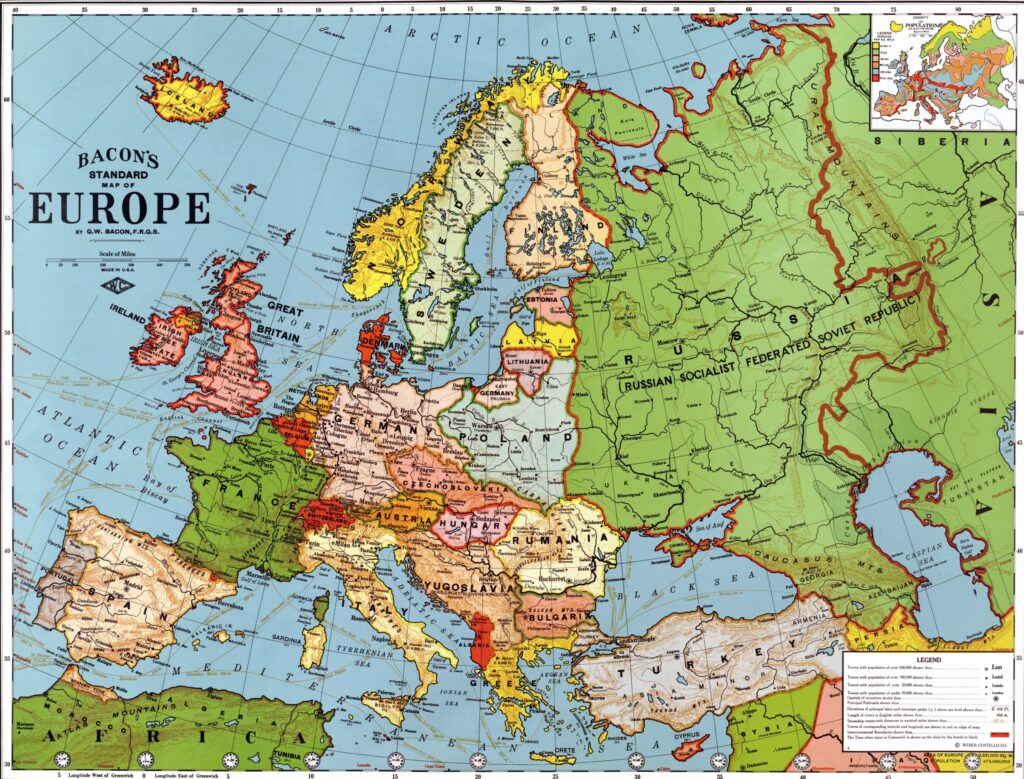
Russian Civil War (1917-1923): A multi-party conflict following the Russian Revolution, involving Red Army forces, White movement factions, Green factions, and foreign interventions, which led to the formation of the Soviet Union.
Polish-Soviet War (1919-1921): A military conflict between the Second Polish Republic and the Russian Reds (communists) over territorial control in Eastern Europe.
Greek-Turkish War (1919-1922): Fought between Greece and the Turkish National Movement, resulting in the collapse of the Greek occupation of Anatolia and the fall of the Ottoman Empire.
Irish War of Independence (1919-1921): A guerrilla war between the Irish Republican Army and British forces, leading to the creation of the Irish Free State, that the British had initially funded both sides in, in the hopes of getting to enter WWI if the Germans had failed to attack through Belgium.
Turkish War of Independence (1919-1923): A campaign headed by Donme Jews of the Turkish nationalists against the partitioning of the Ottoman Empire, leading to the establishment of the Republic of Turkey.
Spanish Civil War (1936-1939): A major civil war that served as a proxy conflict for emerging fascist nations of Italy and Nazi Germany and the Soviet Union.
Colonial and Imperial Wars
Somaliland Campaign (1900-1920): Also known as the Dervish State campaign, fought between the British Empire and the Dervishes led by Mohammed Abdullah Hassan.
Great Syrian Revolt (1925-1927): A large-scale uprising in Syria against French mandatory rule.
Rif War (1921-1926): A conflict between Spain and France against the Rif Republic in northern Morocco.
Second Anglo-Afghan War aftermath / Mahsud Waziri Campaigns: Various British military actions in the tribal areas of the North-West Frontier of British India.
Chaco War (1932-1935): A major military conflict between Bolivia and Paraguay over the possession of the Gran Chaco region.
Italo-Ethiopian War (1935-1936): Italy’s invasion and conquest of Ethiopia, a key precursor to World War II.
Second Sino-Japanese War (1937-1945): Began in 1937 with Japan’s full-scale invasion of China, often considered the start of WWII in Asia, though major hostilities predated the 1939 European outbreak.
As you can see, once the Great War ended the wars continued. As for Trotsky escaping Canada, it is of note that the Prime Minister at the time, Robert Borden, who was a Conservative Party member, would have had to “OK” (hand gesture that makes three 6s) all that had gone on, while our boys were suffering and dying in France. From realizing this I never trusted a conservative politician again. In the future to come the League of Nations was to fail to keep the peace, as the United Nations has also failed to keep the peace. Instead the UN has abandoned its main function to get involved with everything else not prime to the most important mandate for peace. The Kleptocracy loves war because they can get changes that are otherwise impossible in peaceful times. World War Lies is a must for them!